The Conversations Continue: From Research to Impact
What does it mean for education research to make a real difference in schools? That question sat […]
Read More
In Singapore’s high-stakes education landscape, assessment reforms promise a gentler, more holistic journey for children. Yet in classrooms and staffrooms, teachers continue to confront parents’ deep-seated anxiety about exams and future survival. Drawing on qualitative interviews with primary school teachers from the Parent Matters research project at the National Institute of Education (NIE), this feature explores how parental worry persists despite policy shifts, and how teachers quietly shoulder the emotional labour of calming parents, protecting children and fronting assessment reforms. It also situates these tensions within a broader story of meritocracy, inequality and the social pyramid that shapes family life and schooling.
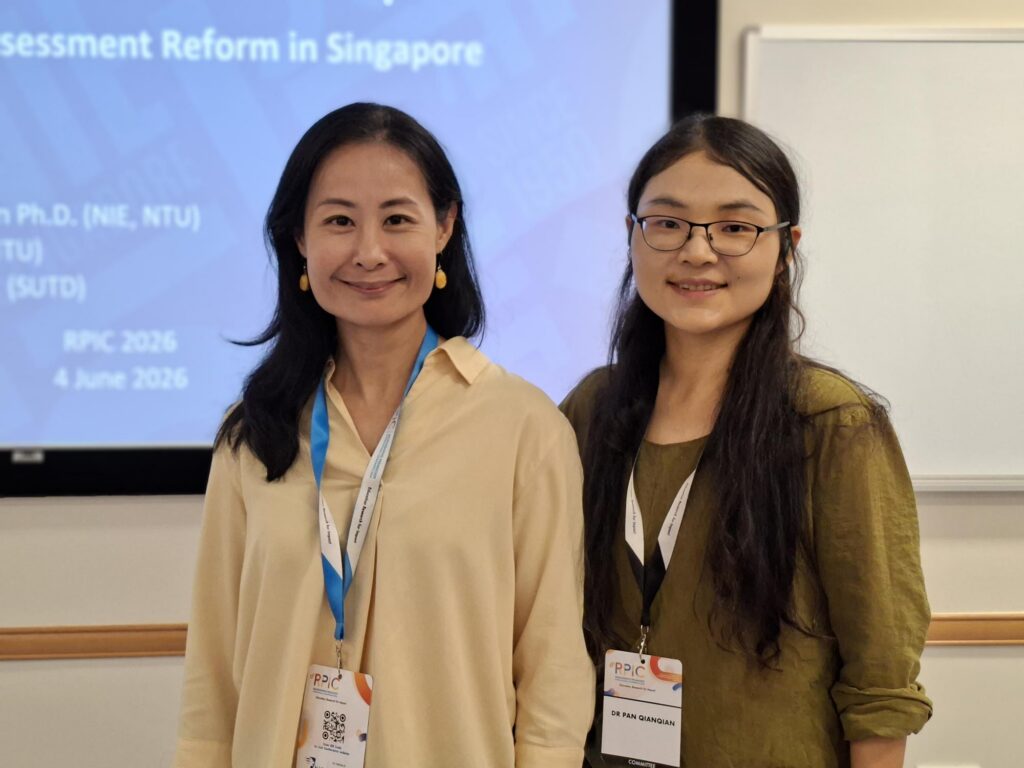
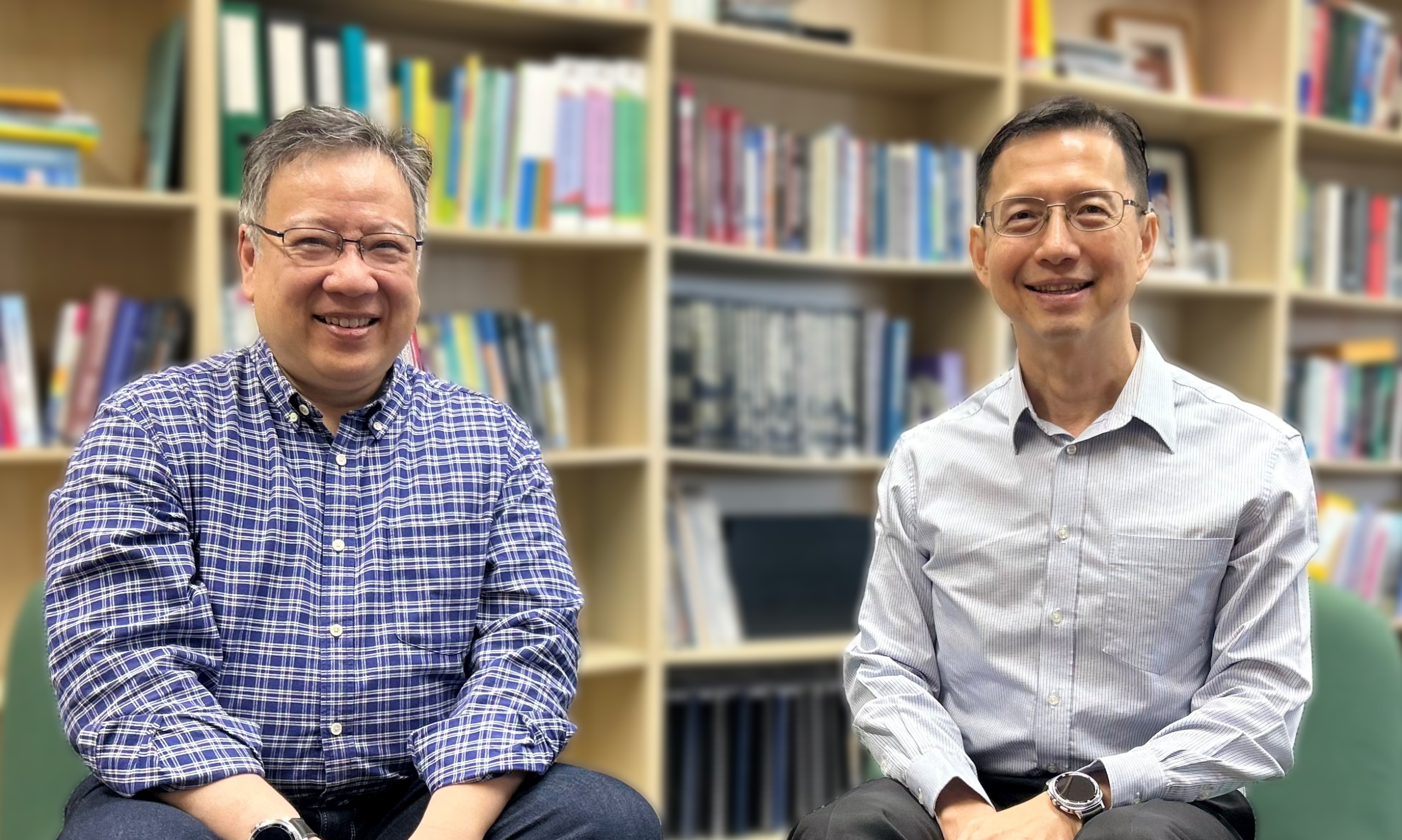
From left: Ms Wendy Huang and Dr Pan Qian Qian, NIE.
In the official narrative, assessment reforms soften the edges of schooling. From 2019, schools remove all exams at Primary 1 and 2, phase out mid-year exams across all primary levels and introduce bite-sized assessments. By 2021, PSLE T-scores give way to achievement levels based on broad percentage bands, signalling a move away from fine-grained ranking.
On paper, the system is kinder. In practice, teachers see something else.
“Teachers perceive that parents’ anxiety levels have remained high with regards to assessments, even with reforms that are designed to reduce emphasis on exams and promote holistic learning instead,” explains NIE Senior Research Associate Ms Wendy Huang, presenting findings from the teacher data set in the Parent Matters project led by Education Research Scientist Dr Pan Qian Qian from NIE’s Centre for Research in Pedagogy & Practice.
The research uses a qualitative approach – focus groups and interviews with 10 primary school teachers – to understand how educators read parents’ motivations, behaviours and fears around assessment. Far from being “just anecdotal”, the data reaches what researchers call saturation: by the 8th interview, new conversations sound strikingly similar.
Across these accounts, one pattern is unmistakable: anxiety does not disappear when exams do. It shifts, mutates and seeps into everyday interactions between parents, teachers and children.
Teachers describe a hidden layer of work Wendy calls emotional labour. Borrowing from sociologist Arlie Russell Hochschild, she frames this as the effort needed to manage other people’s feelings while presenting the right emotions on the job.
One recurring role is that of customer service representative. Even though no one explicitly asks, teachers find themselves constantly soothing distressed parents whenever assessment results or changes come up.
“Across the interviews, the common teacher behaviour is calming and reassuring parents when talking about assessments,” Wendy notes. “From the teacher’s perspective, assessments trigger strong feelings in parents that they have to manage.”
Almost every teacher has at least one painful story of a parent who challenges their marking, demands re-checks or becomes aggressive. For some, it is rare but unforgettable. For one, it is routine enough to be exhausting.
Another role is that of child advocate and counsellor. Teachers worry when they see children cracking under pressures that originate at home – extra tuition, relentless practice papers, schedules with no room to breathe.
“We do see burnouts,” one teacher shares. “The child is showing a lot of stress… ‘I can’t cope with it, my mother is giving too many tuitions, and I can’t breathe.’”
Teachers recognize that parents and educators both care about children, but they often diverge on what “care” looks like. Many parents prioritize weighted assessments and especially the Primary School Leaving Examination or PSLE. They respond by adding more classes and more work, while teachers see this as harmful over-support.
“We’re telling them, but they’re not listening,” a teacher recounts. Parents, she says, feel trapped: “They feel that, ‘I know my child best… Ultimately, who’s going to help my child succeed in life?’”
Teachers often become the bridge between education policy and the families it affects. When reforms are introduced, they are usually the first people parents turn to with questions, concerns and misconceptions. Whether explaining why mid-year examinations have been removed, why bite-sized assessments are intended to support learning rather than increase testing, or what is meant by the idea that there are multiple pathways to success, teachers help translate policy into everyday classroom practice.
These conversations are not always straightforward. Parents naturally want reassurance that their children are progressing well and may interpret reforms differently from how they were intended. For many teachers, answering these questions becomes part of the job. They are expected not only to implement change in the classroom, but also to explain it in ways that parents can understand.
“Teachers and parents don’t share understanding about reform intent,” Wendy sums up. “But teachers are the face of policy, so they must explain and persuade parents. That is another form of emotional labour.”
“Teachers, you may not have much influence on students’ lives outside of school,” Wendy tells her audience. “But in your classroom, what will you do to create space for joy and a taste of freedom from the weight of assessments?”
“But in your classroom, what will you do to create space for joy and a taste of freedom from the weight of assessments?”
– Wendy asks teachers what they will do to create joy
From the interviews, Wendy sketches a worrying picture: children are effectively going to two schools at once.
In the teacher-led world, educators try to privilege assessments for learning – formative tasks, qualitative feedback, holistic development. They want to help children grow as whole persons, not just as test-takers.
In the parent-led world, families focus on assessments of learning – especially those that look like PSLE-style tests. Here, evidence of learning is narrowly defined: if marks improve on the next worksheet or mock paper, the child must have learned more.
“Parents are conducting formative assessment using summative materials,” Wendy observes.
This is not because parents don’t care about learning. They care deeply, but they equate learning with test performance, especially at high-stakes checkpoints. Their own “formative” work takes the form of item-by-item analysis of practice papers, aimed at closing gaps for the next round of testing.
The result is a kind of double schooling: one guided by holistic goals in the classroom, another driven by exam logic at home. “No wonder they’re so tired,” Wendy remarks. Teachers, meanwhile, are left trying to protect students’ current well-being, while parents keep one anxious eye fixed on future survival.
Wendy closes with a teacher’s observation: “For the students right now, they don’t love learning. They can’t wait to stop learning.” If children learn to associate “learning” only with testing, tuition and exhaustion, the costs go far beyond any exam cycle.