The Conversations Continue: From Research to Impact
What does it mean for education research to make a real difference in schools? That question sat […]
Read More
Students often know what the right thing to do is, yet acting on that knowledge is rarely straightforward. How can teachers help students navigate the tensions between their values, emotions and the competing influences around them? In this article, Ms Tan Fangxi, a Teaching Fellow at the Singapore Centre for Character and Citizenship Education (SCCCE) at the National Institute of Education (NIE), and Ms Serina Tan and Ms Lynn Yeo from Hougang Secondary School introduce the O.L.A.Y. framework. Presented at the Redesigning Pedagogy International Conference 2026, the framework seeks to make moral thinking more visible and equips students with the judgement to navigate an increasingly complex world.
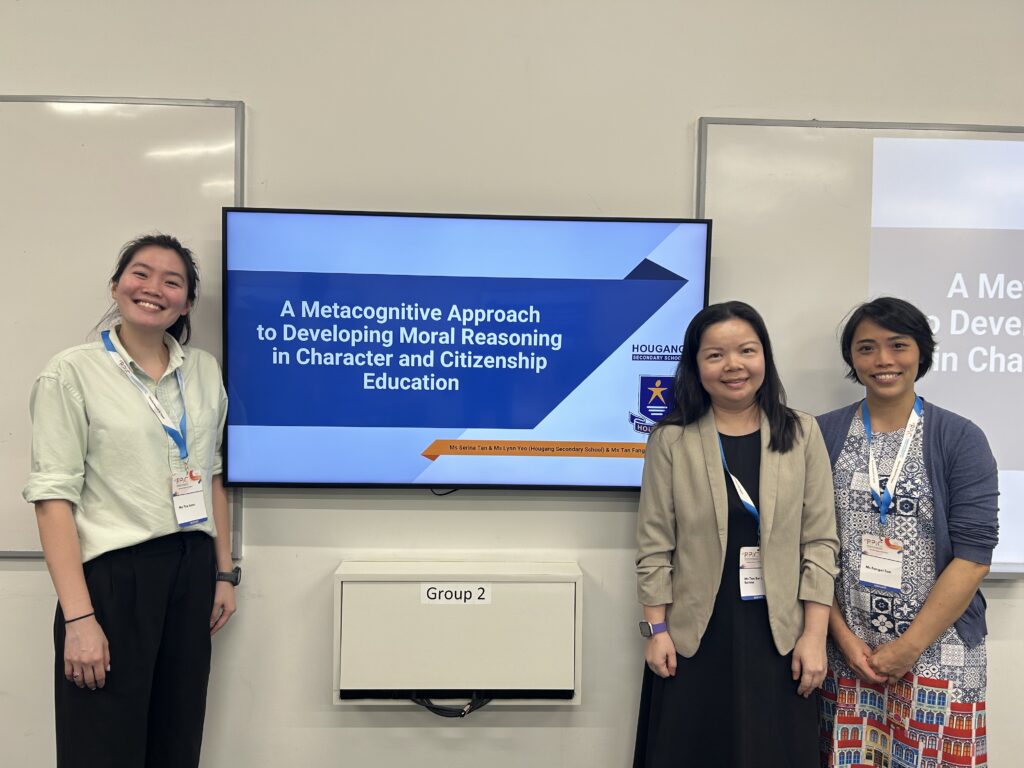
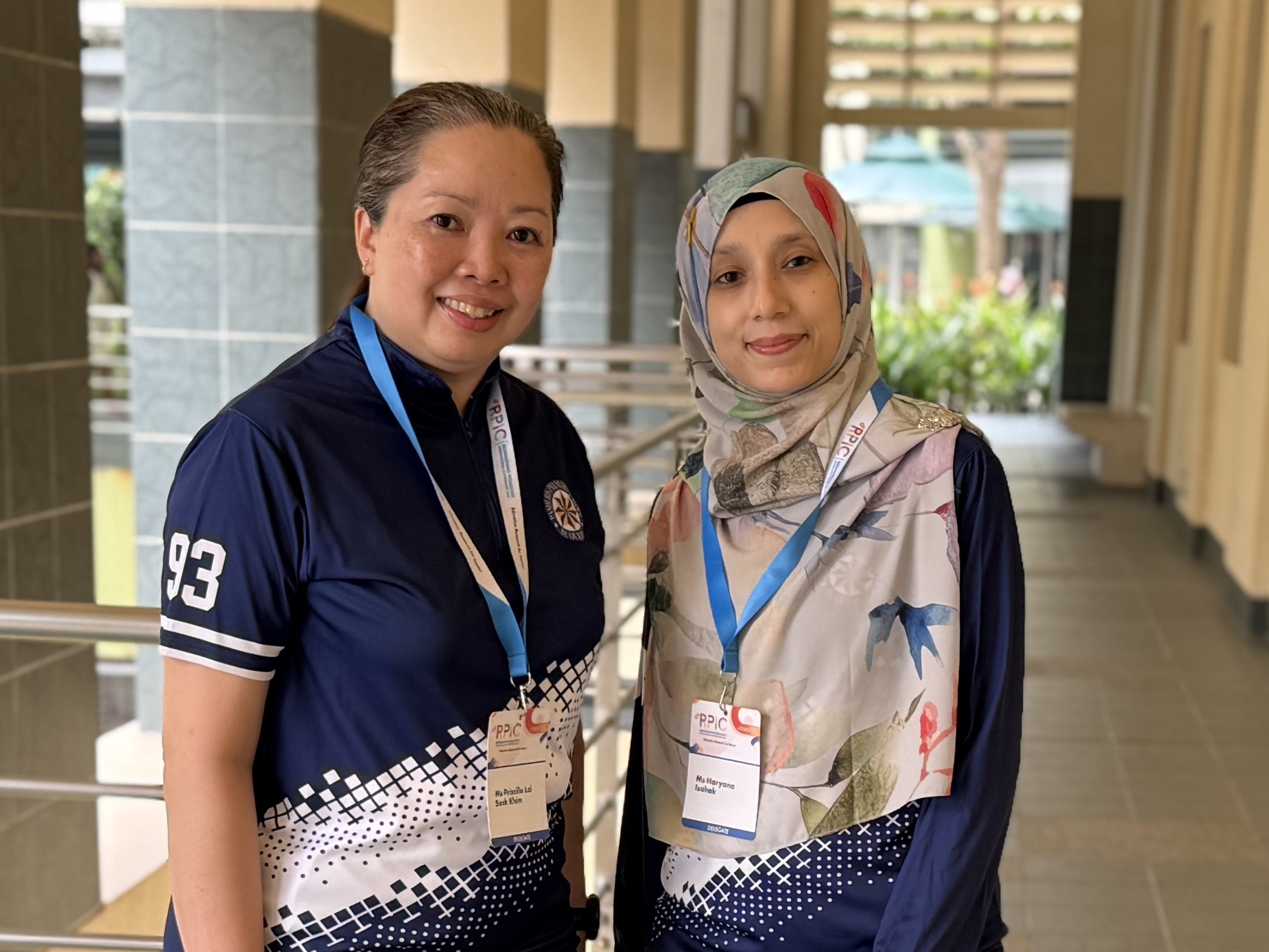
From left: Ms Lynn Yeo and Ms Serina Tan, Hougang Secondary School; and Ms Tan Fangxi, Singapore Centre for Character and Citizenship Education (SCCCE), NIE.
Today’s students are growing up in a world shaped by constant connectivity, diverse perspectives and competing influences. Beyond their families and schools, they encounter a steady stream of ideas and opinions through social media, online communities and their peers, often navigating situations that offer no clear-cut answers.
“For students whose formative years have been shaped by the Covid-19 pandemic, which was marked by restricted social interaction and limited real-life engagement, this complexity is all the more acute,” Ms Tan Fangxi, a Teaching Fellow at the Singapore Centre for Character and Citizenship Education (SCCCE) at the National Institute of Education (NIE), says. “As educators, we should ask ourselves: How can we support our students to navigate a world that is open, complex and sometimes sends very contradictory messages?”
“One of the key things that can bridge moral knowing, moral feeling and moral action is metamoral cognition – a higher-order cognitive process where individuals monitor, evaluate and regulate their own moral thinking“
– Fangxi shares more about metamoral cognition
She points out that although many students know the right thing to do, acting on that knowledge can be far more challenging. Fear of rejection, peer pressure and uncertainty can create a gap between moral reasoning and moral action.
“Developing good character, therefore, requires more than teaching values or discussing ethical principles,” she explains. “It also means helping students recognize how they think, feel and make decisions when faced with real-life dilemmas.”
This understanding led a team of NIE researchers and teachers from Hougang Secondary School (HS) to ask a different question. Rather than focusing solely on whether students arrive at the “right” answer, how can teachers make students’ moral thinking visible?
“One of the key things that can bridge moral knowing, moral feeling and moral action is metamoral cognition – a higher-order cognitive process where individuals monitor, evaluate and regulate their own moral thinking,” Fangxi shares. “It helps adolescents assess what they know, reflect on their own judgement and weigh it against the many external influences and advice they receive, whether positive or negative.”
To help students become more conscious of how they reason through moral dilemmas, the team conceptualized and developed the O.L.A.Y. framework – a structured discussion protocol that guides students through four stages: Own, Listen, Analyse and Review Your Decision.
“The framework is implemented during Character and Citizenship Education (CCE) lessons, triggered by an authentic moral dilemma that resonates with students’ everyday experiences,” Ms Serina Tan, Head of Department (CCE) at HS, explains.
“Through videos depicting situations such as peer pressure, bullying or unkind behaviour online, students are prompted to identify the positive and negative influences affecting the characters before considering what they themselves would do,” she continues.
The first stage, Own, invites students to make an individual decision and explain the reasoning behind it. By articulating their thoughts from the outset, students make their moral reasoning explicit rather than keeping it internal.
Next is Listen, where teachers facilitate the sharing of students’ responses and encourage small-group and whole-class discussions. Listening to their classmates’ perspectives exposes students to different ways of interpreting the same situation and broadens their understanding of the factors that influence decision-making.
During the Analyse stage, students deepen their thinking through role play and scenario-based activities. By exploring how different individuals might think, feel and respond in the same situation, they have opportunities to rehearse moral decision-making in a safe and supportive classroom environment.
Finally, in Review Your Decision, students revisit their original responses and reflect on whether – and why – their thinking has changed. Rather than viewing a change of mind as a sign that their initial response is wrong, the framework encourages students to recognize how dialogue and reflection can deepen their understanding of complex issues.
“The goal is not for every student to arrive at the same conclusion,” Serina clarifies. “Instead, the framework values the reasoning behind students’ decisions and the insights they gain about themselves and others.”
When students continue to hold different viewpoints, the process helps them become more aware of the tensions involved in moral decision-making. More importantly, it equips them with the reflective habits and judgement needed to navigate similar situations beyond the classroom.
“The goal is not for every student to arrive at the same conclusion. Instead, the framework values the reasoning behind students’ decisions and the insights they gain about themselves and others.”
– Serina explains more about the O.L.A.Y. framework
Students’ responses following the CCE lessons reveal a more nuanced picture of learning. Some have become firmer in their conviction not to be negatively influenced by peers, while others have shifted from certainty to uncertainty – not because they are less sure of what is right, but because they have become more aware of the complexities involved in making moral decisions.
“One student shares that her conviction has changed from ‘No, I won’t be negatively influenced’ to ‘Maybe’,” Ms Lynn Yeo, Subject Head (CCE) at HS, recounts. “She realizes the tension between choosing to do the right thing and choosing to stand by her friends.”
Even among students whose positions remain unchanged, she observes a marked deepening in their thinking. They demonstrate a greater awareness of the competing pressures at play and a clearer understanding of the values guiding their decisions.
The impact of this reflective process has surfaced in unexpected moments. When one of Lynn’s students is caught skipping class, she does not deny what has happened or make excuses. Instead, she admits candidly, “I know I shouldn’t be hanging out with friends like that.” For Lynn, it is a small but significant moment – evidence that the framework has equipped the student not only with the language to reason through moral dilemmas, but also with the self-awareness to recognize her own choices when faced with them.
“By making thinking visible, students build not only moral knowledge, but also the metacognitive habits that enable them to apply that knowledge when it matters most,” she remarks. “These are the habits that help them navigate the complex and often contradictory world they encounter every day.”