The Conversations Continue: From Research to Impact
What does it mean for education research to make a real difference in schools? That question sat […]
Read More
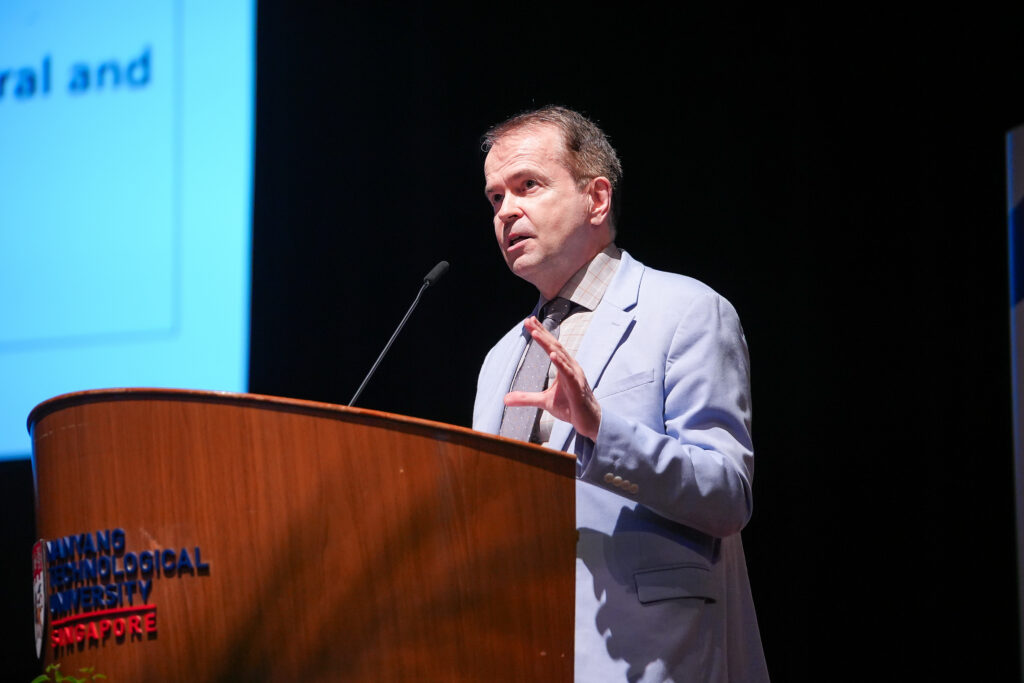
The concept of “flourishing” has become increasingly prominent in education discourse, moving beyond its origins in philosophy and branches of psychology into policy and practice discussions. At the Redesigning Pedagogy International Conference (RPIC) 2026, Professor Kristján Kristjánsson from the University of Birmingham traces the rapid rise of flourishing in education and explores what this shift means for curriculum, teaching, and the aims of education. This article is based on his keynote address titled “The Flourishing Bandwagon in Education: From 2020 Onwards” at the RPIC 2026.
The idea of flourishing can be traced back more than 2,000 years to Aristotle’s concept of eudaimonia. In recent decades, however, the concept has been further developed through philosophical work in education and psychological traditions such as self-determination theory and positive psychology.
Today, flourishing is no longer a marginal academic idea. Since 2020, it has gained significant momentum and is increasingly reflected in educational research, policy discussions and practice. Despite its growing prominence, flourishing is not a singular or straightforward concept. Rather, it is best understood as multidimensional.
In my 2020 book, Flourishing as the Aim of Education: A Neo-Aristotelian View (Kristjánsson, 2020), I proposed a definition of flourishing centred on a simple core idea: flourishing encompasses both subjective experiences and objective conditions. It involves the development of human capacities in ways that are meaningful and valuable.
This is why many contemporary accounts of flourishing are described as hybrid. They bring together subjective elements, such as happiness, life satisfaction and a sense of meaning, with objective dimensions, including health, relationships, character and social functioning.
One influential example is the Human Flourishing Program at Harvard University, which conceptualizes flourishing through domains such as happiness and life satisfaction, mental and physical health, meaning and purpose, character and virtue, close social relationships, and, in some accounts, financial and material stability.
Similarly, the United Nations Educational, Scientific and Cultural Organization’s (UNESCO) work on flourishing in education emphasizes both the development of human potential and the conditions that enable individuals to live well, including supportive relationships, meaningful activity and nurturing environments.
While there is no single, universally accepted definition of flourishing, there is considerable overlap across these accounts, particularly in their emphasis on meaning, relationships, character and the conditions that support human development.
At the same time, an important question remains: does flourishing risk becoming too broad a concept, and if so, does this breadth diminish its conceptual precision?
“At the same time, an important question remains: does flourishing risk becoming too broad a concept, and if so, does this breadth diminish its conceptual precision?”
– Professor Kristjánsson, on the conceptual boundaries of flourishing
The growing attention to flourishing is closely linked to shifts in how the aims of education are understood and articulated at the policy level.
For many decades, international policy frameworks, including those associated with the Organisation for Economic Co-operation and Development (OECD) from the 1960s onwards, have tended to frame education through the lens of human capital. Within this perspective, education is valued primarily for its contribution to economic productivity and national development.
While this framing remains influential, it is increasingly being complemented by broader conversations about the purposes of education, including well-being, meaning and human flourishing.
Part of what has driven this shift is a set of concerns emerging from within some of the world’s highest performing education systems, including Singapore, Finland and Estonia. Despite strong results in international assessments, these systems reported rising levels of student stress, anxiety and mental health, prompting a re-examination of what education is ultimately for.
In response, UNESCO was among the first international organizations to publish a report on flourishing in 2022. The OECD subsequently developed the idea further, culminating in its 2025 report, which explicitly positions human flourishing as the overarching aim of education. Together, these developments reflect how education is increasingly understood not only in terms of measurable outcomes, but also in relation to how individuals live, develop and thrive as human beings.
One of the themes of this conference is impact. While I am pleased to see flourishing gaining traction in policy circles, I often find myself asking a simple question: what impact will it actually have in schools?
A report published by the OECD or UNESCO may help shape international conversations, but if it simply gathers dust on a shelf, its influence will be limited. The challenge is not simply adopting flourishing as an educational aspiration, but translating it into teaching, curriculum and teacher preparation.
This raises an important question: if we are to genuinely embrace flourishing as the aim of education, how much curricular change is needed? Is it enough for teachers to approach familiar subjects differently – to use literature, science or history as opportunities to inspire awe, enchantment, and to explore meaning, purpose and human development? Or does flourishing require a more fundamental rethinking of curriculum and schooling?
Some scholars, such as John White, argue for the latter. He suggests that if we are serious about flourishing, we may need to rethink the way learning is organized altogether, moving beyond traditional subject-based timetables towards interdisciplinary themes such as war and peace, climate change, and health, taught by teachers working across disciplines. Whether one agrees with this proposal or not, it reminds us that flourishing is not merely a slogan. It has practical implications for how schools are organized and how learning is experienced.
Equally important is the role of teachers. For schools to contribute to human flourishing, educators must be prepared for that responsibility. They should be supported through teacher education and professional learning to nurture not only academic achievement, but also students’ sense of meaning, purpose, character and well-being.
At the same time, we should be careful not to place the responsibility solely on teachers. Flourishing cannot be achieved through classroom practice alone. It requires supportive policies, school cultures, families and communities working together. In this sense, flourishing is not about replacing traditional educational goals. Rather, it broadens our understanding of what education is for and invites us to consider not only what students know, but also how they live, develop and thrive as human beings.
“Equally important is the role of teachers. For schools to contribute to human flourishing, educators must be prepared for that responsibility. They should be supported through teacher education and professional learning to nurture not only academic achievement, but also students’ sense of meaning, purpose, character and well-being.”
– Professor Kristjánsson, on the important role teachers play
The history of education is full of ideas that briefly capture attention before fading away, while others reshape how we think about teaching and learning.
For my part, I hope the flourishing discourse continues to evolve. It has already moved well beyond a small circle of philosophers and psychologists to engage educators, policymakers and education systems around the world. That, in itself, is encouraging. My hope is that we continue to examine it critically, refine it where necessary and ensure that it enriches both educational policy and classroom practice. After all, the ultimate value of any educational idea lies not in the reports we write, but in the difference it makes to the lives of learners.
References
Kristjánsson, K. (2020). Flourishing as the Aim of Education: A Neo-Aristotelian View. London: Routledge