The Conversations Continue: From Research to Impact
What does it mean for education research to make a real difference in schools? That question sat […]
Read More
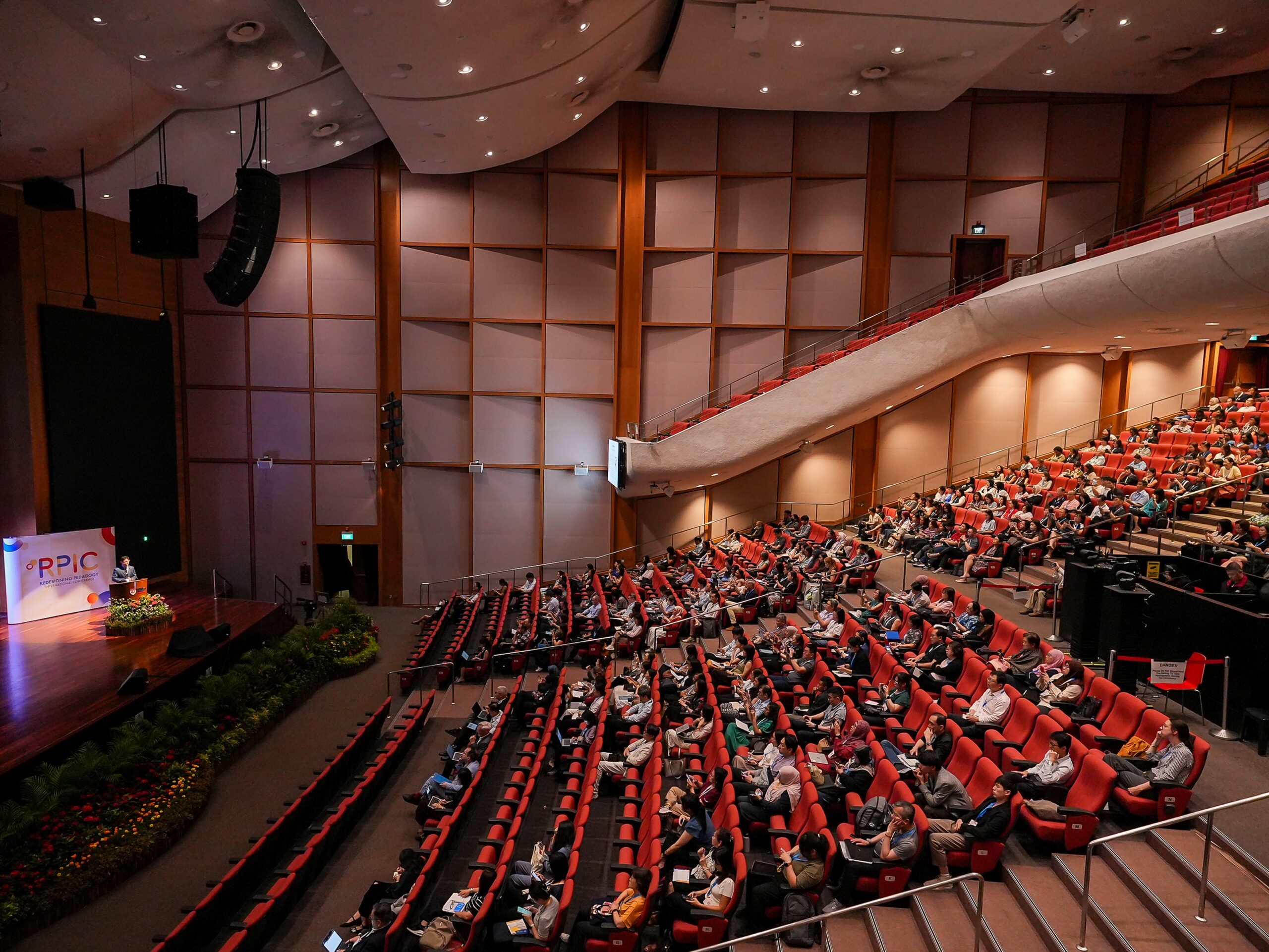
Great research deserves a second life beyond the page – in the policies, classrooms and communities it was meant to improve. Yet there are times when valuable studies remain confined to academic journals, never reaching the people who could benefit most from them. This is the challenge posed by Martin Knapp, Professor of Health and Social Care Policy at the London School of Economics and Political Science (LSE), during his keynote address, “Research Impact – How to Achieve It and Why It Matters,” at the Redesigning Pedagogy International Conference (RPIC) 2026. Speaking not as an education specialist but as an economist whose work spans mental health, social care and public policy, he argues that excellent research only fulfils its purpose when it changes lives, directly or indirectly.
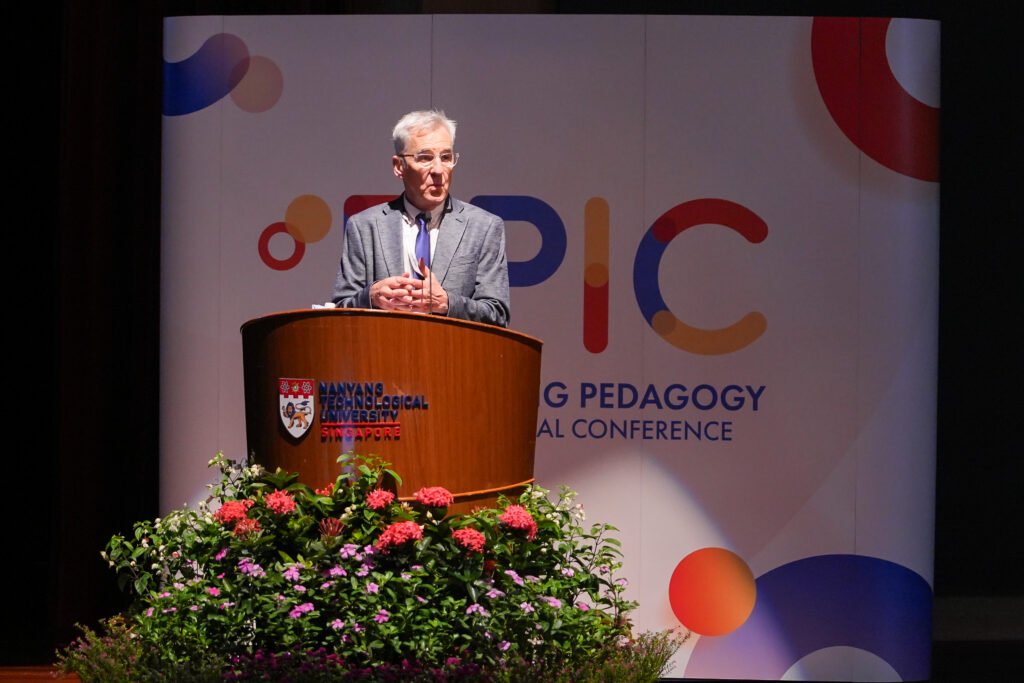
“The episode illustrates an important distinction: what matters is not simply achieving impact, but ensuring that robust, trustworthy evidence shapes public understanding and policy.”
– Professor Knapp, on evidence-informed policymaking
For Professor Martin Knapp, research impact extends far beyond academic citations or journal publications. While academic impact measures how research influences subsequent scholarship, its broader purpose surely generally lies in improving society – shaping policies, informing professional practice and influencing the everyday decisions educators make.
“We all make everyday decisions based on instinct,” he observes. “But when decisions affect the education and future lives of young people, we need stronger foundations than intuition.”
He stresses that excellent, good-quality research, can feed through to benefit individuals, organizations and nations. But why does this matter? He offers five reasons.
The first is evidence over anecdote. We all make everyday decisions on gut instinct; for small choices, that may be fine. But decisions that shape the education and future lives of whole generations of young people demand something firmer than a hunch; evidence about what works, why it works, and for whom are crucial.
The second is fairness; evidence can be used to close attainment gaps and to correct the disadvantages that different children carry.
The third is better policymaking. Impact can change policy thinking and hopefully change policy design and implementation for the better.
The fourth is improved pedagogy: evidence can empower the educators delivering teaching on the ground.
The fifth is the broader societal good, the wider economic and social benefits that ripple out from a well-educated population.
However, he also cautions that impact itself is not automatically positive. One of the most sobering examples is the now-discredited claim linking the MMR vaccine to autism. Although the research has been thoroughly disproven, it has influenced public opinion long enough to reduce vaccination rates and contribute to preventable illness and deaths.
“The episode illustrates an important distinction: what matters is not simply achieving impact, but ensuring that robust, trustworthy evidence shapes public understanding and policy,” he says.
If producing excellent research is only the first step, how does it actually reach classrooms, schools and policymakers?
Professor Knapp offers an unexpectedly personal answer.
Fifty years ago, he published his first academic paper. As a young researcher, he imagined it might change the world. Instead, it attracted almost no attention. Hoping at least to impress his then-girlfriend, an English graduate and teacher, he mailed her a copy. She was unimpressed – not by the ideas, but by the writing.
The story has remained with him ever since.
“Too much good research simply sits on library shelves, rarely read outside academia,” he reflects. “Publishing findings in academic journals, important as it is, does not guarantee that they will influence practice. Instead, impact must be intentionally cultivated.”
Moving beyond dissemination, he suggests, requires deliberate effort across the whole research system. Drawing on work by the OECD, he sets out several levers.
The first is to co-produce evidence: researchers should do not simply disappear whilst undertaking their studies, only emerging at the end to announce their findings. They need to connect with the people who might use the evidence throughout the process.
The second is to align incentives so that researchers are encouraged to do work with the potential for impact and to engage with the communities who could use it.
The third is to leverage knowledge brokers, intermediaries skilled at translating sometimes-obscure academic language or complex findings into messages that practitioners can digest and apply.
The fourth is to integrate research into teacher training, where research skills are typically thin, so that those we want to use evidence understand how it was generated and what methods produced it.
And the fifth is to establish strategic leadership that builds trust and supports continuous learning, so research keeps improving as policy and practice develop.
Alongside the question of how to achieve impact sits the question of what impact actually is. Here Professor Knapp draws on a characterization by a former head of an autism research charity, who described impact as resting on four elements.
It begins with robust, good-quality research.
It requires relevance: the evidence must speak to a real policy discussion, a practice quandary, a challenge facing a community.
It depends on relationships, knowing who needs to hear about the evidence and who can make things happen with it.
And it needs careful timing, i.e., identifying the optimal window in which change can actually occur.
Together, these point to the practical questions any researcher hoping for impact must ask: what, why, for whom and when?
Although Professor Knapp approached education as an economist, he is careful to dispel a common misconception.
“I am not arguing that economic evidence should be privileged over other considerations. But economic arguments can certainly enhance the impact of the other evidence we have,“ he remarks.
Economics, he explains, comes down to one idea: scarcity.
“We never have enough money, staff or services to do everything we would like, so choices must be made,” he says, while joking that he helps students remember the idea through his own surname, “Knapp” which in Germanic languages means “scarce”; he was, as he continues, born to be an economist.
“Economics enters education in four ways: as topics (levels of school funding, teacher salaries), as causes (e.g., how socioeconomic status shapes learning), as consequences (the economic effects of good and bad experiences), and as arguments (analysis of the best way to act under constraint),” he explains.
His central claim is modest but powerful: economic evidence can strengthen the case for acting on good research.
Throughout his keynote, Professor Knapp illustrated this through examples from his own research on children’s mental health, bullying and neurodiversity.
Longitudinal studies have shown that children experiencing mental health difficulties often require greater support across education, healthcare and social services throughout their lives. Similarly, experiences of bullying during childhood continue to affect mental health and well–being decades later.
The encouraging finding, however, is that interventions supported by strong evidence also make economic sense. School-based mental health programmes, anti-bullying initiatives and effective support for autistic children not only improve educational and life outcomes but also reduce long-term societal costs.
“For policymakers faced with difficult budget decisions, such evidence strengthens the case for investing in proven interventions,” he notes. “Economic analysis helps quantify the costs of inaction as much as the benefits of action.”
“For policymakers faced with difficult budget decisions, such evidence strengthens the case for investing in proven interventions. Economic analysis helps quantify the costs of inaction as much as the benefits of action.”
– Professor Knapp, on the value of economic evidence in policymaking
Underlying Professor Knapp’s keynote was a simple but compelling message: impact is not an afterthought.
“Research should not end when a paper is published or a project concludes. Instead, researchers should think from the outset about how their work can inform decisions, improve practice and benefit the people it is ultimately intended to serve,” he argues.
Achieving that impact requires more than producing high-quality evidence. It depends on asking relevant questions, building partnerships, communicating findings clearly and recognizing opportunities for change when they arise.
“For educators, policymakers and researchers alike, the challenge is not simply to generate more evidence, but to ensure that good evidence reaches the people who can use it,” he contends. “Excellent research deserves more than a place on the shelf. Its greatest value lies in the difference it makes – in classrooms, in policies and ultimately in people’s lives.”