The Conversations Continue: From Research to Impact
What does it mean for education research to make a real difference in schools? That question sat […]
Read More
How can teachers design learning experiences that prepare students to truly thrive and flourish? In this article, three teachers reflect on insights from Redesigning Pedagogy International Conference 2026 – from interdisciplinary learning and productive struggle to the thoughtful integration of AI. Their reflections speak to a shared conviction: that meaningful learning is shaped by collaboration, professional agency and purposeful innovation.

At RPIC 2026, you and your fellow teachers from White Sands Primary School shared your ongoing work on designing interdisciplinary learning experiences through professional learning teams. What sparked this journey?
Our team is inspired by the belief that learning becomes more meaningful when students can make authentic connections across subjects. In real life, problems are rarely confined to a single discipline, so we wanted our students to see how knowledge, skills and values can work together in meaningful contexts.
We also recognize that competencies needed for the future such as critical thinking, collaboration, communication and adaptability are best developed through integrated learning experiences rather than isolated subject lessons. This aligns closely with the Ministry of Education’s (MOE) vision of developing Emerging 21st Century Competencies (E21CC) through authentic learning opportunities.
In one of our projects, for instance, students draw connections between Art, Music and English through shared experiences, creative expression and reflection. This allows them to apply learning in multiple ways, engage different strengths and develop deeper conceptual understanding.
Ultimately, our motivation is not to combine subjects, but to create richer learning experiences that are joyful, relevant and purposeful for students while helping them to transfer learning across context.
What is one key takeaway from the conference that you believe can help your team strengthen and evolve this approach further?
One key takeaway is the importance of using AI not merely as a productivity tool, but as a thought partner that enhances learning while preserving human agency, creativity and ethical decision-making.
The conference reinforced the idea that technology should support, rather than replace, the cognitive and social processes central to learning. As a team, this has encouraged us to think more intentionally about how AI can be integrated into transdisciplinary projects. AI can help students gather information, generate ideas, receive feedback and explore different perspectives, while teachers continue to guide critical thinking, ethical use and reflection.
An equally important insight is that AI literacy must go hand in hand with information literacy and responsible digital citizenship – aligning with MOE’s emphasis on creating and sharing information thoughtfully and responsibly.
Moving forward, we hope to design learning experiences where students learn not only with AI but also about AI, developing the discernment, creativity and responsibility they will need as future-ready learners.
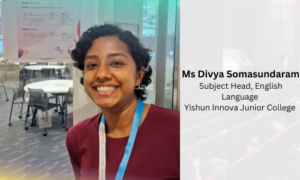
How did interacting with educators and researchers from diverse contexts deepen your professional growth at RPIC 2026?
One of the most meaningful aspects of RPIC 2026 is engaging with educators, researchers and curriculum specialists from within and beyond Singapore. Through conversations with colleagues from MOE schools, polytechnics and countries such as Australia and Brunei, I am reminded that many challenges in education are universal.
What I find particularly valuable is hearing how others exercised professional agency within their own contexts. Whether discussing AI, curriculum implementation or student engagement, participants share thoughtful responses to complex issues. These exchanges – both after presentations and during the Unconference sessions – challenge me to consider alternative approaches to familiar problems.
The conference also introduced me to research-informed frameworks that have helped me make sense of current educational debates. One enduring tension that has emerged is balancing measurable outcomes with broader aims such as developing students’ civic, moral and ethical competencies. Beyond the formal sessions, reconnecting with colleagues from different stages of my professional journey reinforces the importance of communities of practice in sustaining growth. Collectively, the experience leaves me with a renewed sense of purpose and optimism.
What is one key takeaway from RPIC 2026 that you hope to apply in your own teaching practice?
My key takeaway is the importance of designing learning experiences that preserve productive struggle. Several sessions reinforce the idea that learning is not simply about arriving at the correct answer, but about engaging in the thinking processes that lead to deeper understanding. The struggle is not an obstacle to learning; it is the learning.
This resonated strongly in light of ongoing discussions about AI in education. Rather than focusing solely on preventing misuse, presenters encouraged participants to think about learning about AI, learning with AI and learning beyond AI – helping students use these tools thoughtfully while developing capabilities that technology cannot replace.
In my own practice, I hope to create more opportunities for students to grapple with uncertainty, test ideas and refine their thinking before receiving support. I am also interested in exploring approaches such as productive failure and purposeful play, which challenge the assumption that efficiency always leads to better learning.
Ultimately, the conference reinforces my belief that technology should augment, rather than replace, human agency. As educators, we must make deliberate decisions about which cognitive tasks can be supported by AI and which should remain central to human learning and development.
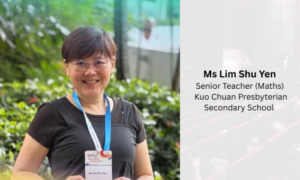
How has interacting with educators and researchers from diverse contexts at RPIC 2026 deepened your professional growth?
Attending the conference has broadened my perspective on education. Listening to keynotes and engaging with educators and researchers reminded me that education is not just about academic achievement, but also about nurturing students as individuals, in particular, helping them build confidence, think critically, manage emotions and find meaning in learning.
A key reflection for me is that student growth does not happen through curriculum alone. It is shaped by relationships, classroom culture, feedback and the way teachers design learning experiences. Sessions on human strengths, flourishing, feedback regulation, productive failure and AI highlight the enduring importance of teachers in guiding students’ development.
I also came to see that research becomes meaningful only when it connects to classroom practice. Theory must meet reality, and collaboration between teachers and researchers is essential, since teachers understand the daily challenges and needs of students.
The conference has also encouraged me to rethink curriculum design. Students learn more meaningfully when subjects come together through real issues such as sustainability, climate change or AI. A climate challenge, for instance, may draw on scientific knowledge, data analysis, persuasive writing and social awareness simultaneously. This approach makes learning more engaging and encourages deeper exploration.
Overall, RPIC 2026 has inspired me to be more intentional, reflective and student-centred, while reaffirming the critical role teachers play in shaping growth.
What is one key takeaway from RPIC 2026 that you hope to apply in your own teaching practice?
One key takeaway is designing learning experiences where students take greater ownership, while remaining guided by the teacher – an idea that brings together themes of productive failure, feedback, flourishing and AI.
In my teaching, I want to create more opportunities for students to try, struggle a little and discuss before consolidating their learning. Productive failure reminds me that mistakes can be powerful when tasks are planned with care. When misconceptions surface, teachers can use them as learning points rather than simply correcting answers.
I also want to be more intentional about feedback. Students do not respond to feedback with their minds alone – they respond with emotions, behaviour and motivation. Feedback must therefore be clear, fair, respectful and actionable.
With AI becoming more prevalent, I hope to guide students to use it wisely: to extend their thinking, not replace it. Think first, use AI second and remain critical of the output.
Ultimately, RPIC 2026 reminds me that teachers remain central to learning. We design the tasks, build safe environments, guide thinking and help students grow into confident, resilient and independent learners.
Subscribe to our newsletter to receive the latest information about our articles and events. Email us at sgteach@nie.edu.sg for assistance.
On topics related to teaching and learning, we invite you to contribute articles that focus on the following:
We welcome contributions that explore how educators are shaping the future of learning in a rapidly changing world marked by technological advancements and global challenges.
If you have a classroom or education research story to share, we invite you to send in your contribution articles.
Submit your contribution here:
SingTeach complies with the Personal Data Protection Act 2012 of Singapore
For questions, please contact the editorial team: sgteach@nie.edu.sg