Knowledge Resource Bank

Local Evidence Synthesis on Instructional Core

This LES explores how interactions within the Instructional Core influence classroom practice and student learning in Singapore.

 Summary

  • This Local Evidence Synthesis (LES) synthesises findings from 14 NIE-funded Instructional Core (IC) studies examining how teachers, students and content interact in Singapore classrooms to shape teaching and learning.

Key Insights

  • Teacher-directed instruction continues to play a significant role in classroom practice, with student-centric strategies increasingly incorporated where curricular demands and assessment requirements allow.
  • Teachers demonstrate responsiveness to diverse learner needs through instructional adaptations, though the depth and consistency of differentiated and inquiry-based practices vary due to contextual factors such as time constraints, class size, and access to professional learning.
  • Assessment and metacognitive practices have strengthened over time, with further scope to expand opportunities for students to engage more actively in self-assessment, reflection, and shared responsibility for learning.

Recommendations

  • Adopt a more balanced and flexible use of pedagogies, enabling greater student agency through collaborative, dialogic and inquiry-based learning.
    Strengthen support for teachers—through time, training, and school-level structures—to better meet diverse learner needs and implement differentiated and formative practices.
    Deepen metacognitive and Assessment for Learning (AfL) practices, giving students more opportunities to reflect, self-assess and regulate their own learning.

Local evidence synthesis (LES) on Instructional Core

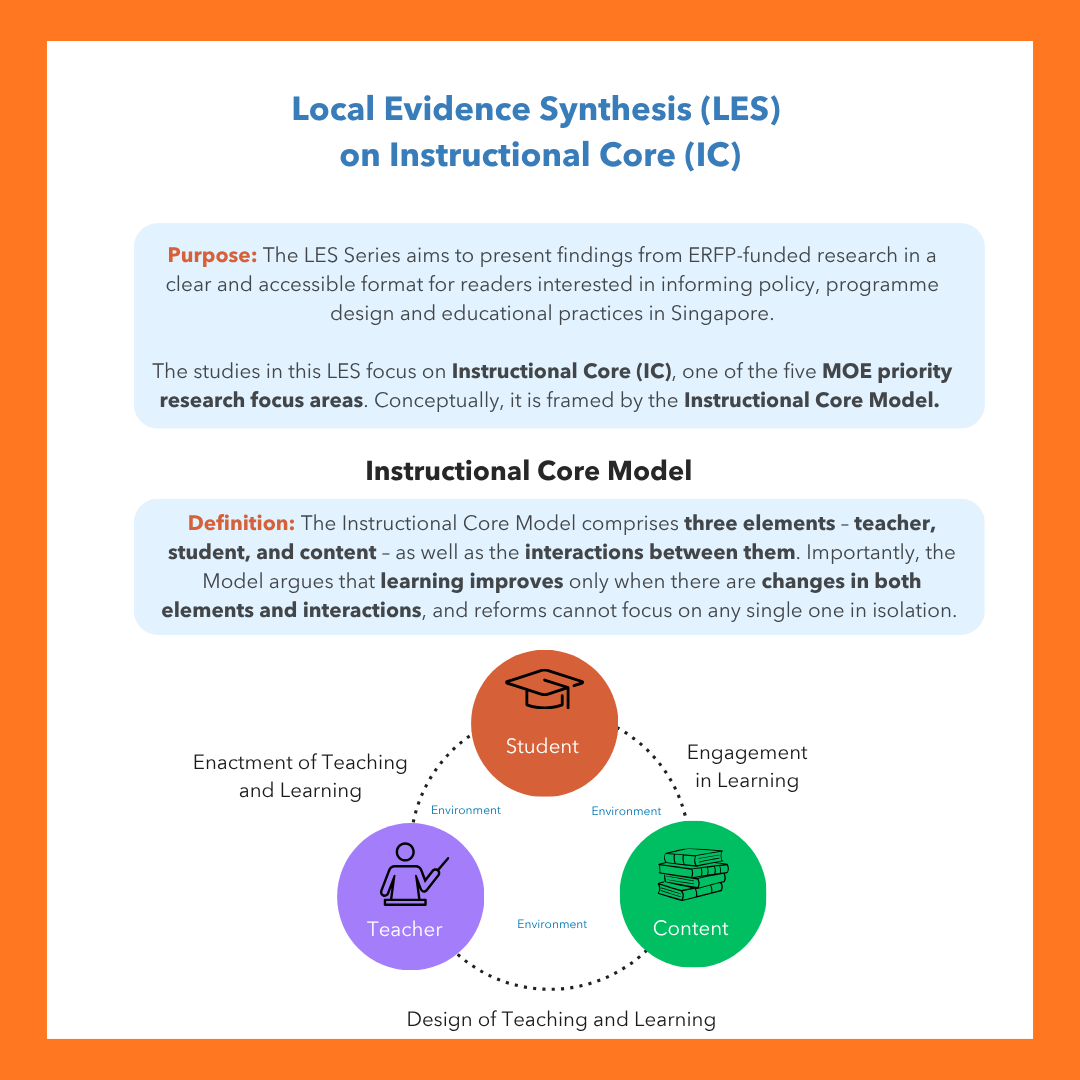
Infographic introducing the Local Evidence Synthesis (LES) on Instructional Core (IC). A blue box explains the LES Series aims to present findings from ERFP-funded research in a clear and accessible format to inform policy, programme design, and educational practices in Singapore. The studies focus on Instructional Core (IC), one of five MOE priority research focus areas, framed by the Instructional Core Model. The model is defined as comprising three elements — teacher, student, and content — along with the interactions between them; learning improves only when changes occur in both elements and interactions. An interconnected Venn-style diagram illustrates the three elements (Student, Teacher, Content) within an Environment, with labels indicating "Enactment of Teaching and Learning" between Teacher and Student, "Engagement in Learning" between Student and Content, and "Design of Teaching and Learning" between Teacher and Content.


Overview of Instructional Core

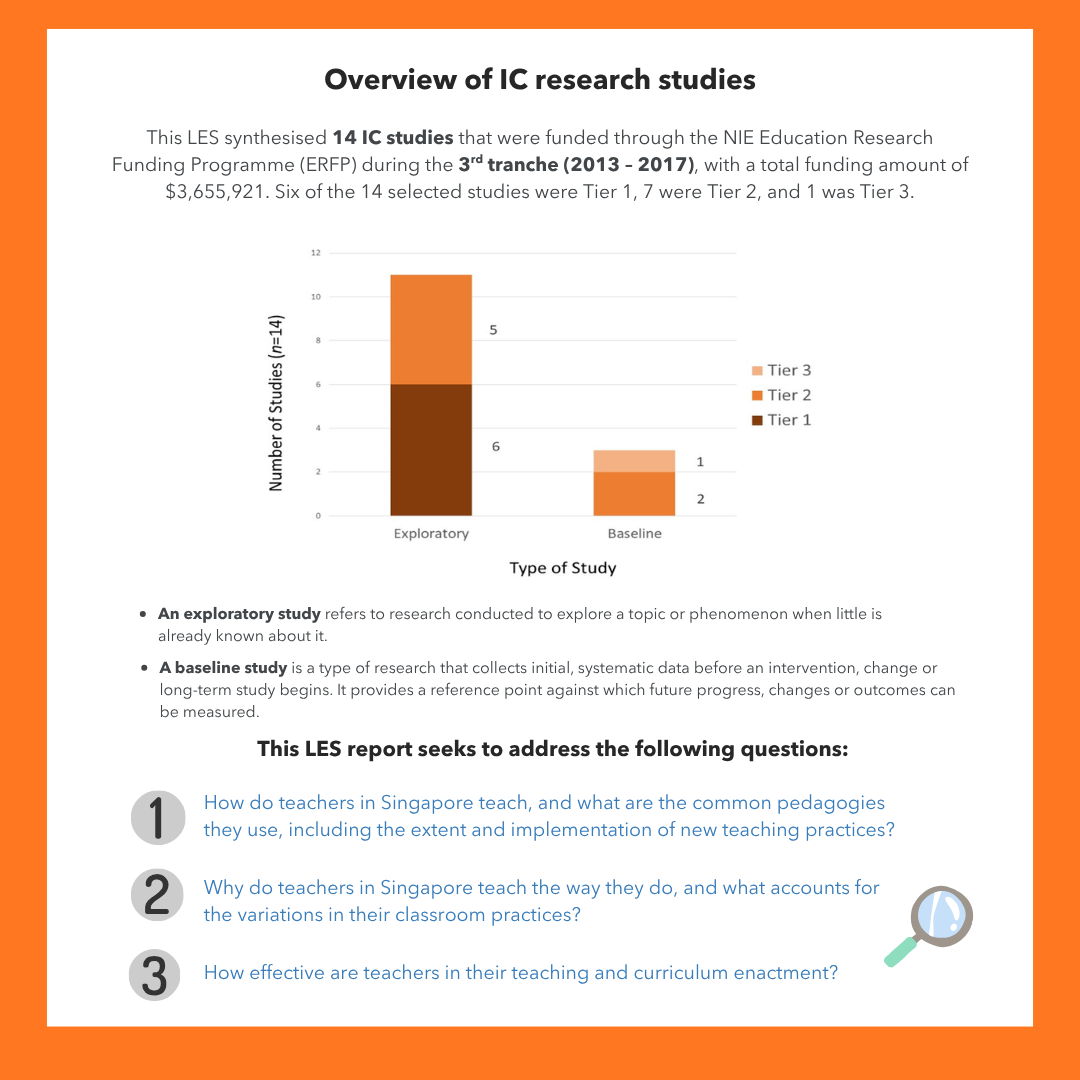
Infographic providing an overview of IC research studies. States that this LES synthesised 14 IC studies funded through the NIE Education Research Funding Programme (ERFP) during the 3rd tranche from 2013 to 2017, with total funding of $3,655,921; six were Tier 1, seven were Tier 2, and one was Tier 3. A stacked bar chart shows the breakdown by type of study: 11 exploratory studies (6 Tier 1, 5 Tier 2) and 3 baseline studies (2 Tier 2, 1 Tier 3). Defines exploratory studies as research conducted when little is known about a topic, and baseline studies as research that collects initial systematic data before an intervention to provide a reference point. Three research questions the LES report addresses are listed: (1) How do teachers in Singapore teach and what common pedagogies do they use, including the extent and implementation of new teaching practices? (2) Why do teachers teach the way they do, and what accounts for variations in classroom practices? (3) How effective are teachers in their teaching and curriculum enactment?


Insight 1: Teacher-directed Pedagogies Continue to be More Dominant

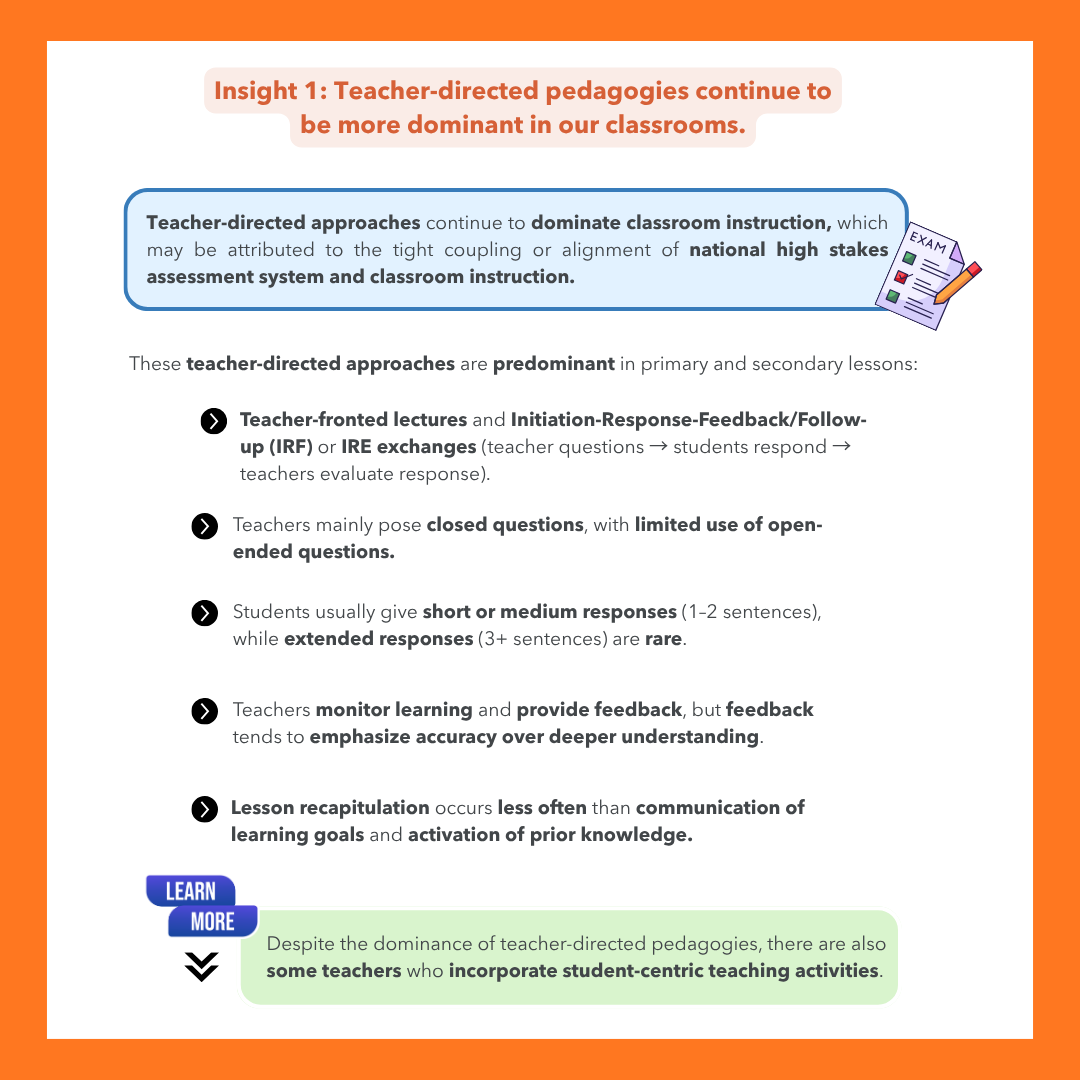
Infographic titled "Insight 1: Teacher-directed pedagogies continue to be more dominant in our classrooms." A blue summary box attributes this dominance to the tight alignment between the national high-stakes assessment system and classroom instruction. Five bullet points describe predominant teacher-directed practices in primary and secondary lessons: teacher-fronted lectures and Initiation-Response-Feedback or IRE exchanges; mainly closed questions with limited use of open-ended questions; students typically giving short or medium responses of one to two sentences with extended responses of three or more sentences being rare; feedback emphasising accuracy over deeper understanding; and lesson recapitulation occurring less frequently than communication of learning goals and activation of prior knowledge. A green callout at the bottom notes that despite this dominance, some teachers do incorporate student-centric teaching activities. Illustrated with a cartoon of exam papers and a pencil.

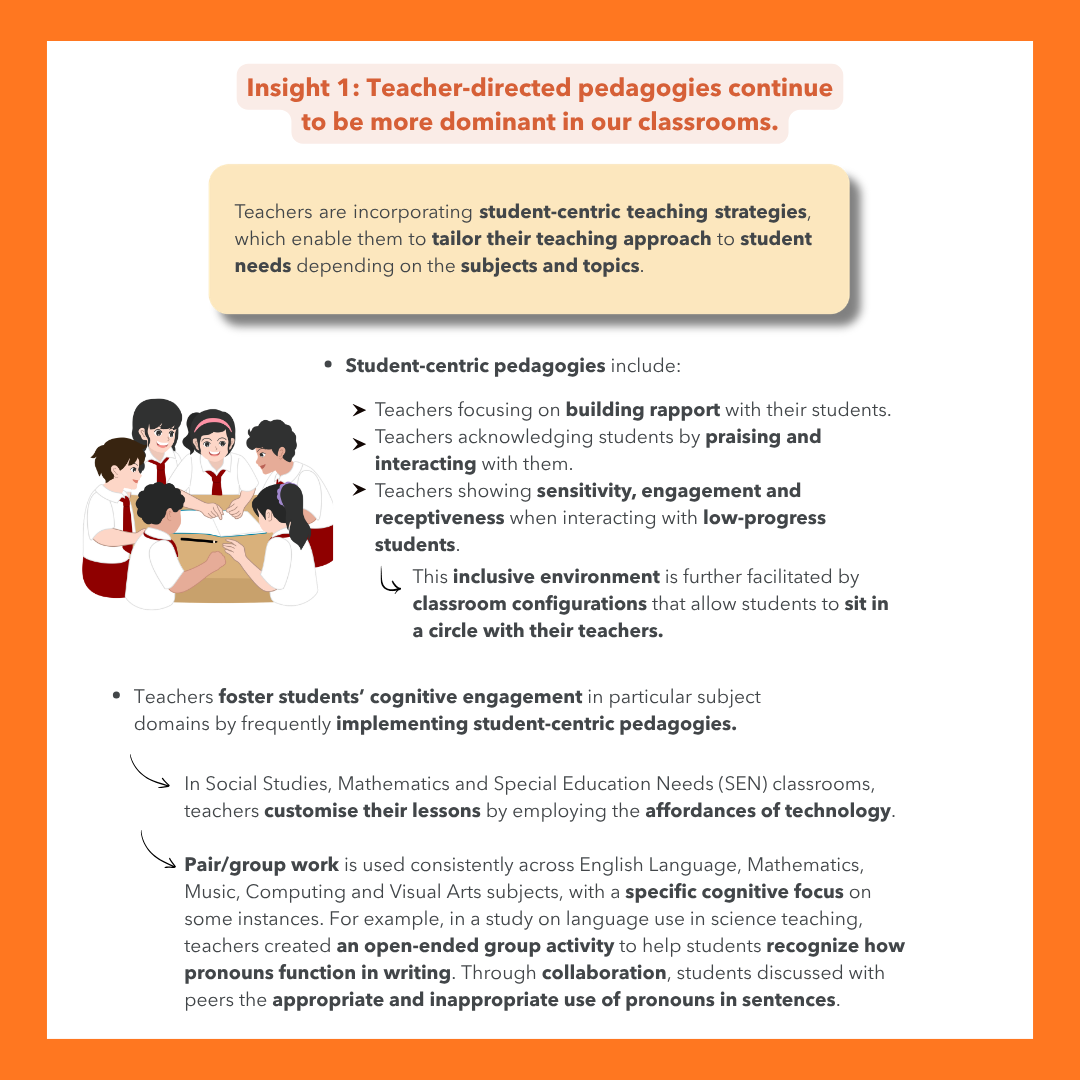
Infographic continuing Insight 1, explaining how some teachers incorporate student-centric strategies. A beige box notes that student-centric teaching strategies allow teachers to tailor their approach to student needs depending on subject and topic. Student-centric pedagogies listed include building rapport with students, praising and interacting with them, showing sensitivity and receptiveness with low-progress students, and using circular seating configurations to create an inclusive environment. The infographic also notes that teachers foster students' cognitive engagement through student-centric pedagogies in specific subject domains: in Social Studies, Mathematics, and SEN classrooms, teachers customise lessons using technology; pair and group work is used across English, Mathematics, Music, Computing, and Visual Arts. An example describes an open-ended group activity in science teaching that helped students recognise how pronouns function in writing through peer collaboration. Illustrated with a cartoon of students working together around a table.


Insight 2: Barriers in Employing Differentiated Instruction (DI)

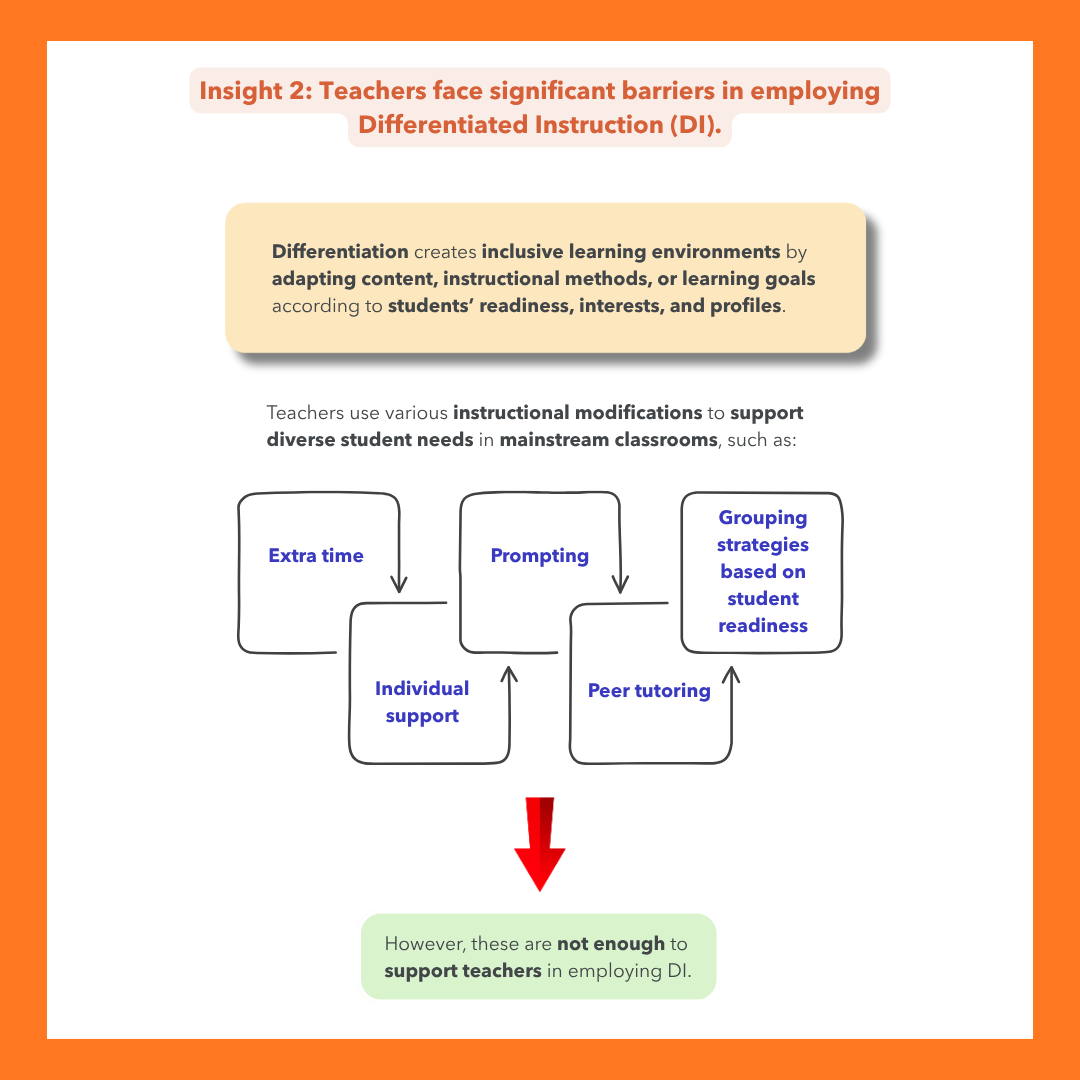
Infographic titled "Insight 2: Teachers face significant barriers in employing Differentiated Instruction (DI)." A beige box defines differentiation as creating inclusive learning environments by adapting content, instructional methods, or learning goals according to students' readiness, interests, and profiles. A diagram shows five instructional modifications used to support diverse student needs in mainstream classrooms: extra time, prompting, individual support, peer tutoring, and grouping strategies based on student readiness, depicted as interconnected boxes. A large red downward arrow points to a green conclusion box stating these modifications are "not enough to support teachers in employing DI."

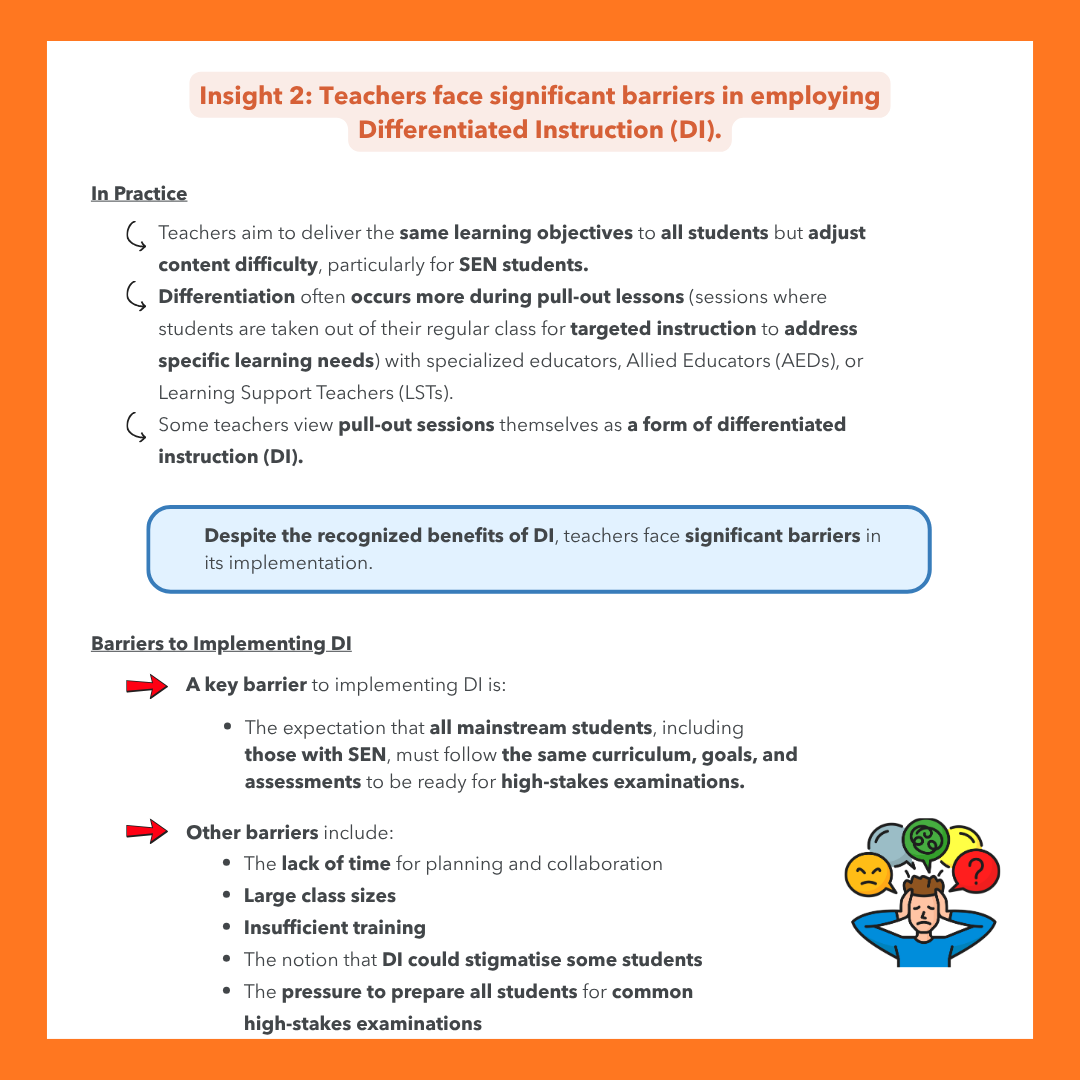
Infographic continuing Insight 2, covering DI in practice and barriers to its implementation. Under "In Practice": teachers aim to deliver the same learning objectives to all students but adjust content difficulty, particularly for SEN students; differentiation occurs more often during pull-out lessons with specialised educators such as Allied Educators (AEDs) or Learning Support Teachers (LSTs); and some teachers view pull-out sessions themselves as a form of DI. A blue callout highlights that despite recognised benefits, teachers face significant barriers to DI implementation. Under "Barriers to Implementing DI": a key barrier is the expectation that all mainstream students, including those with SEN, must follow the same curriculum, goals, and assessments in preparation for high-stakes examinations. Other barriers listed include lack of time for planning and collaboration, large class sizes, insufficient training, concern that DI could stigmatise some students, and pressure to prepare all students for common high-stakes examinations. Illustrated with a cartoon of a stressed person surrounded by emoji-style thought bubbles.


Insight 3: Strategies in Teaching and Learning

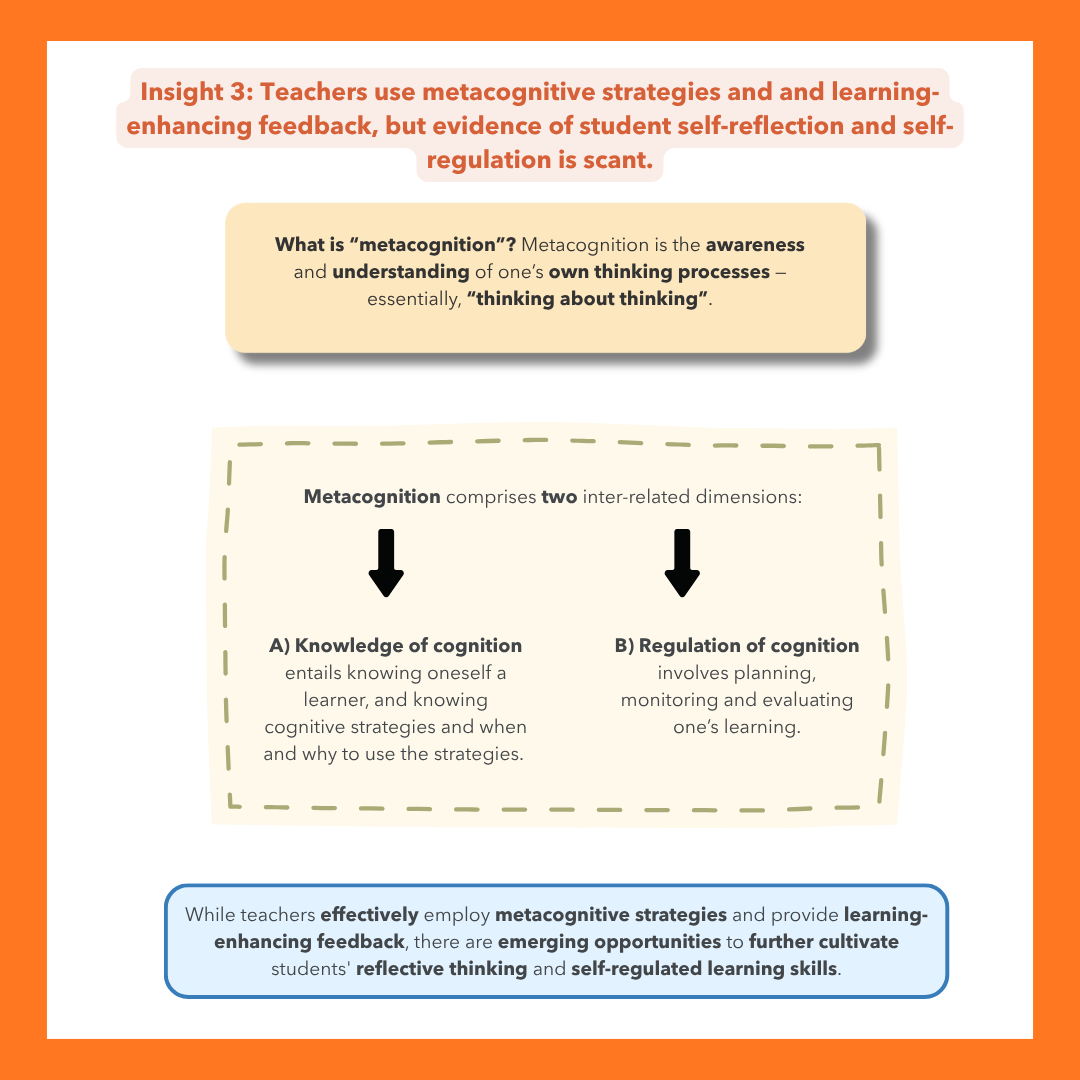
Infographic titled "Insight 3: Teachers use metacognitive strategies and learning-enhancing feedback, but evidence of student self-reflection and self-regulation is scant." Defines metacognition as the awareness and understanding of one's own thinking processes, summarised as "thinking about thinking." A dashed-border box explains that metacognition comprises two inter-related dimensions: (A) Knowledge of cognition — knowing oneself as a learner and understanding when and why to use cognitive strategies; and (B) Regulation of cognition — involving planning, monitoring, and evaluating one's learning. A blue summary box concludes that while teachers effectively employ metacognitive strategies and provide learning-enhancing feedback, there are emerging opportunities to further cultivate students' reflective thinking and self-regulated learning skills.

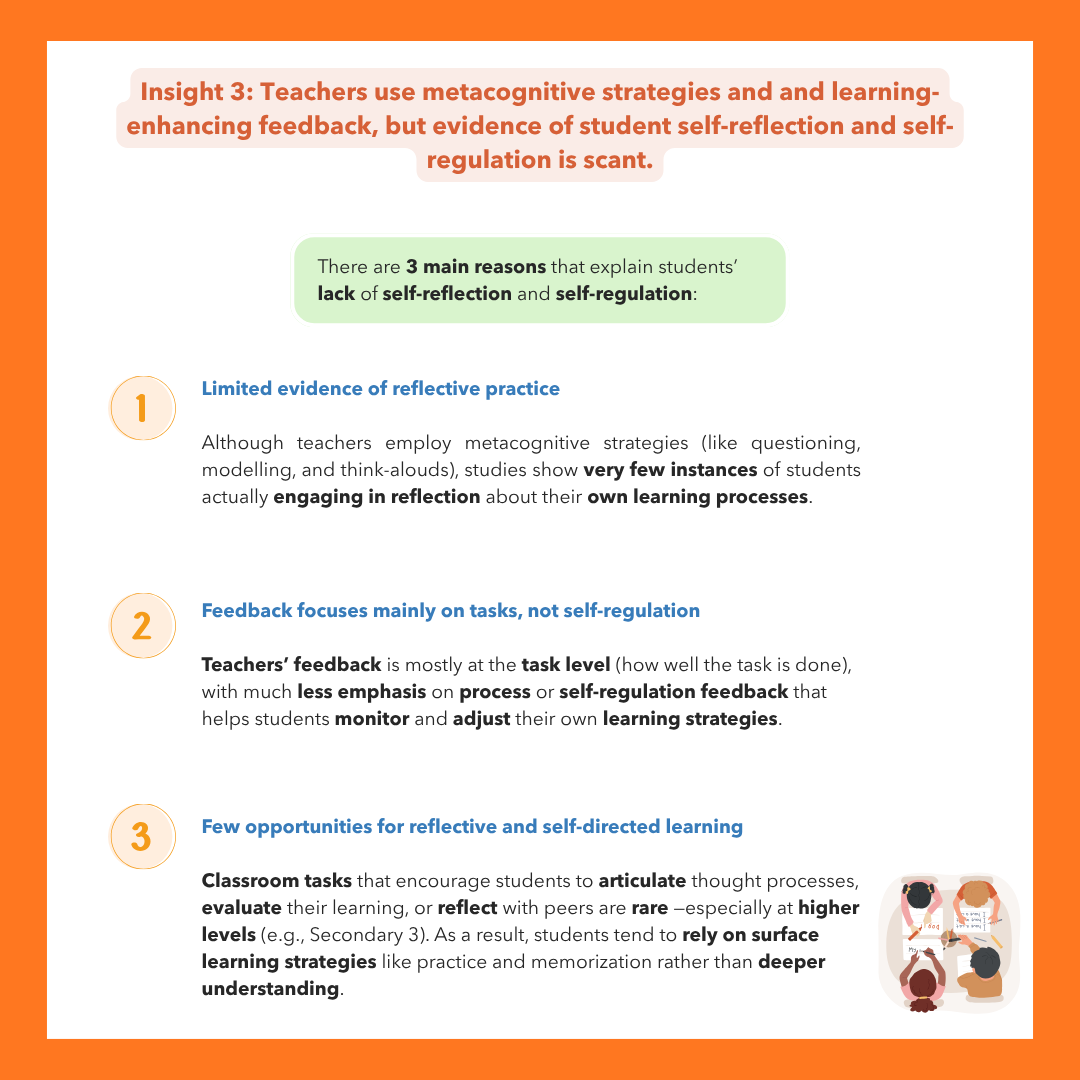
Infographic continuing Insight 3, presenting three main reasons for students' limited self-reflection and self-regulation. Reason 1: Limited evidence of reflective practice — although teachers use metacognitive strategies such as questioning, modelling, and think-alouds, studies show very few instances of students actually engaging in reflection about their own learning processes. Reason 2: Feedback focuses mainly on tasks, not self-regulation — teachers' feedback is predominantly at the task level, with much less emphasis on process or self-regulation feedback that helps students monitor and adjust their own learning strategies. Reason 3: Few opportunities for reflective and self-directed learning — classroom tasks that encourage students to articulate thought processes, evaluate their learning, or reflect with peers are rare, especially at higher levels such as Secondary 3, leading students to rely on surface learning strategies like memorisation rather than deeper understanding. Illustrated with a cartoon of students in a peer discussion circle.

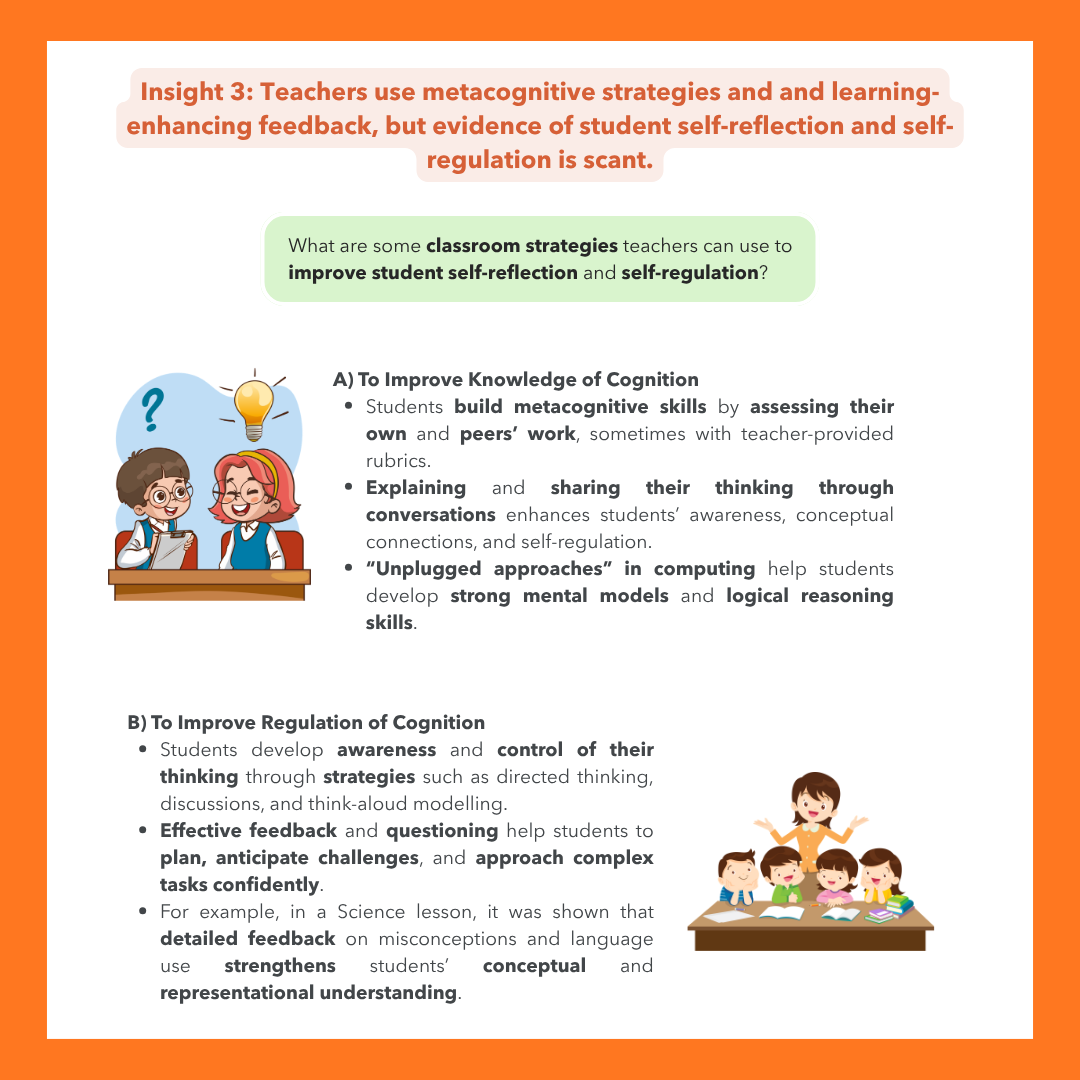
Infographic continuing Insight 3, presenting classroom strategies to improve student self-reflection and self-regulation. Section A, To Improve Knowledge of Cognition: students build metacognitive skills by assessing their own and peers' work, sometimes using teacher-provided rubrics; explaining and sharing thinking through conversations enhances awareness, conceptual connections, and self-regulation; "unplugged approaches" in computing help students develop strong mental models and logical reasoning skills. Section B, To Improve Regulation of Cognition: students develop awareness and control of their thinking through directed thinking, discussions, and think-aloud modelling; effective feedback and questioning help students plan, anticipate challenges, and approach complex tasks confidently; an example from a Science lesson shows that detailed feedback on misconceptions and language use strengthens students' conceptual and representational understanding. Illustrated with cartoons of students discussing with a teacher and working in small groups.


Insight 4: Limits to Formative Assessment Use

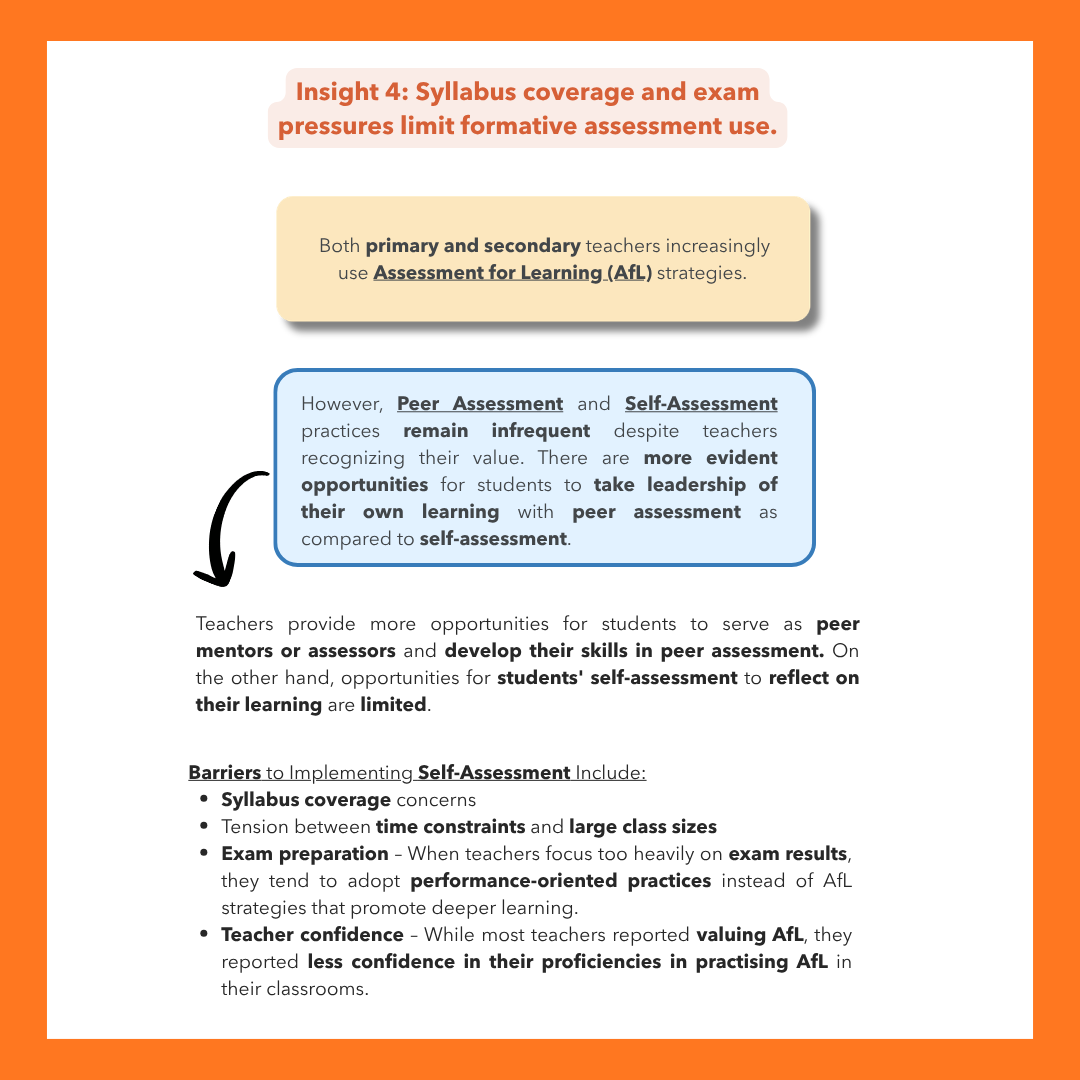
Infographic titled "Insight 4: Syllabus coverage and exam pressures limit formative assessment use." A beige box states that both primary and secondary teachers are increasingly using Assessment for Learning (AfL) strategies. A blue box notes that peer assessment and self-assessment remain infrequent despite teachers recognising their value, and that there are more evident opportunities for students to take leadership of their learning through peer assessment compared to self-assessment. Body text explains that teachers provide more opportunities for students to serve as peer mentors or assessors, while student self-assessment opportunities to reflect on their learning are limited. Barriers to implementing self-assessment are listed: syllabus coverage concerns, tension between time constraints and large class sizes, exam preparation pressure causing teachers to adopt performance-oriented practices over AfL, and low teacher confidence in AfL proficiency despite most teachers reporting that they value it.


Insight 5: Use of Inquiry-based Pedagogy

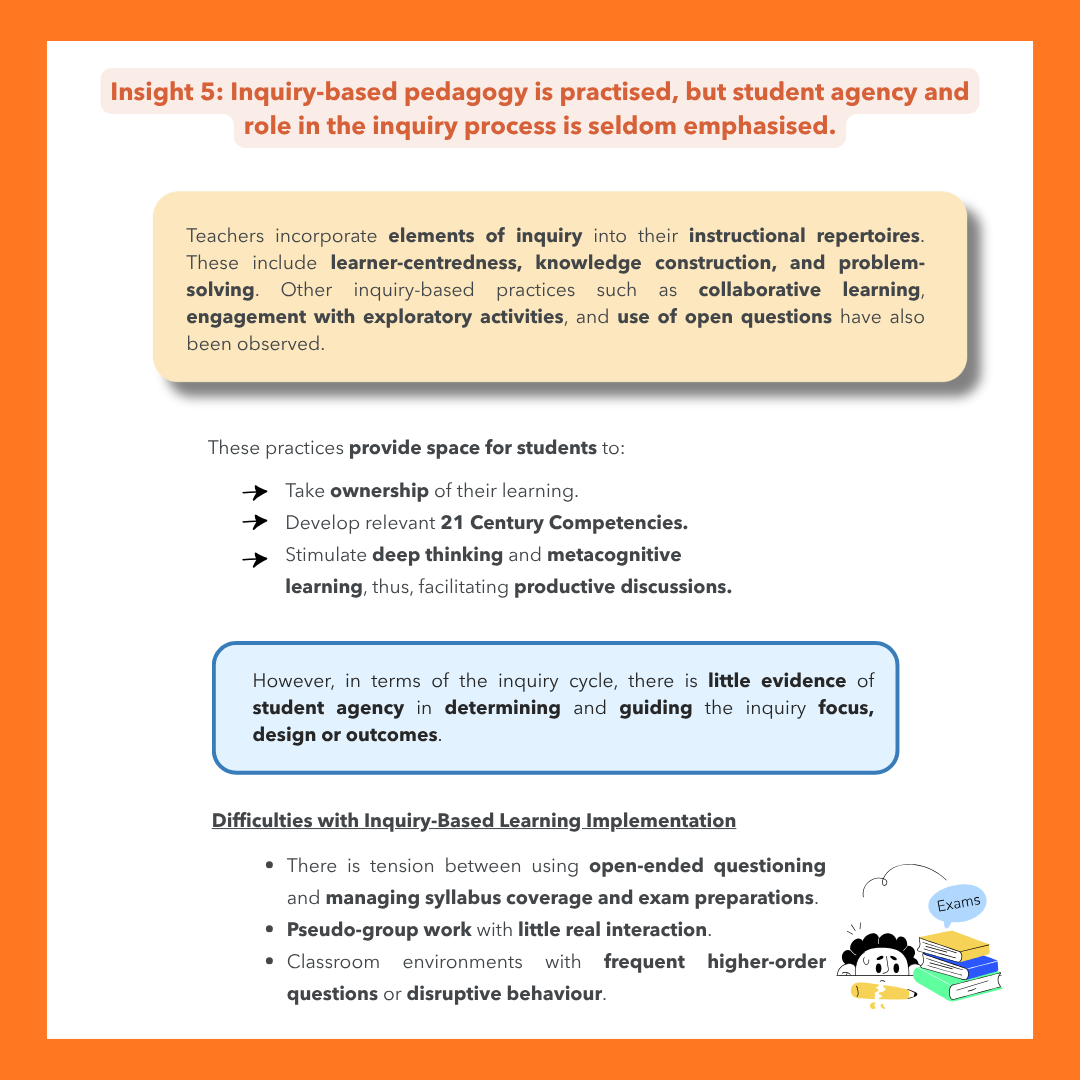
Infographic titled "Insight 5: Inquiry-based pedagogy is practised, but student agency and role in the inquiry process is seldom emphasised." Contains four sections: a beige box listing inquiry elements teachers incorporate, including learner-centredness, knowledge construction, problem-solving, collaborative learning, exploratory activities, and open questions; a bullet list of benefits to students such as ownership of learning, 21st Century Competencies, and deep thinking; a blue box noting little evidence of student agency in determining inquiry focus, design, or outcomes; and a section on difficulties with inquiry-based learning implementation, including tension between open-ended questioning and exam preparation, pseudo-group work, and classroom behaviour challenges. Illustrated with a cartoon of a stressed student surrounded by books and an "Exams" thought bubble.


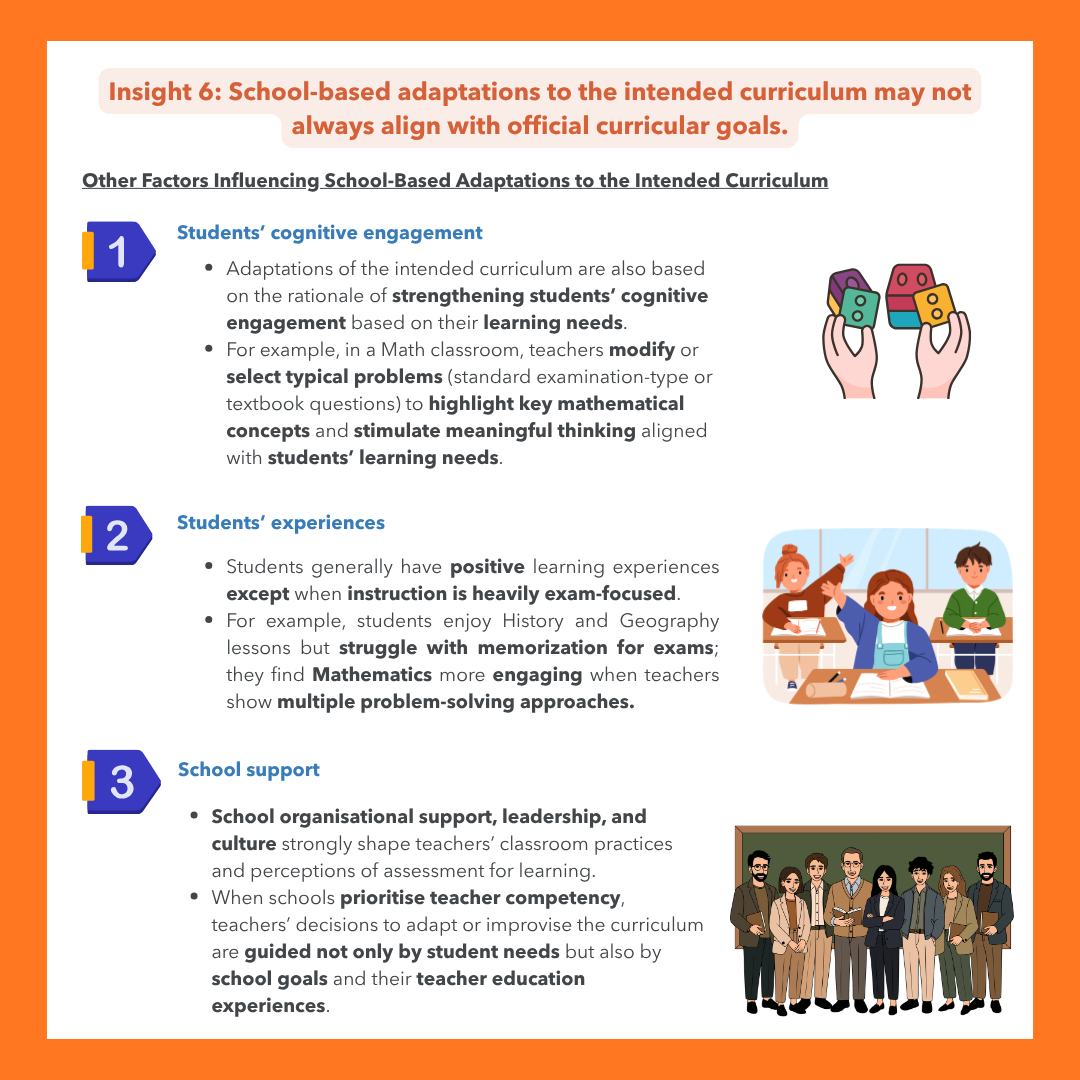
Insight 6: Curriculum Adaptations vs Curricula Goals

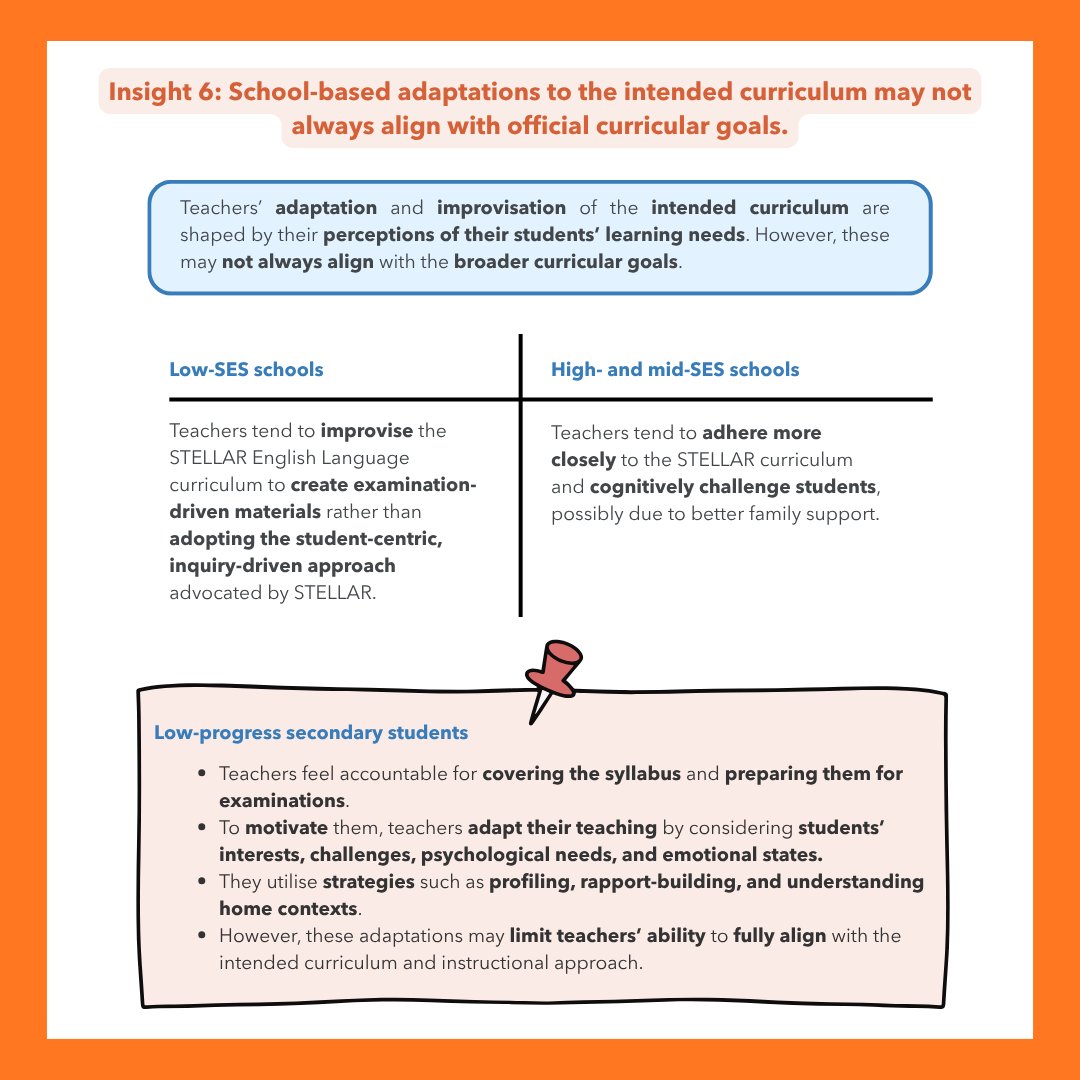
Infographic titled "Insight 6: School-based adaptations to the intended curriculum may not always align with official curricular goals." A blue box explains that teachers' curriculum adaptations are shaped by their perceptions of student learning needs but may not align with broader curricular goals. A two-column comparison table contrasts Low-SES schools, where teachers improvise the STELLAR English curriculum to create examination-driven materials rather than adopting its student-centric, inquiry-driven approach, with High- and mid-SES schools, where teachers adhere more closely to STELLAR and cognitively challenge students. A pink pinned note covers low-progress secondary students, noting teachers feel accountable for syllabus coverage, adapt teaching to student interests and emotional needs, use profiling and rapport-building strategies, but that these adaptations may limit full alignment with the intended curriculum.

Infographic continuing Insight 6, titled "Other Factors Influencing School-Based Adaptations to the Intended Curriculum." Three numbered factors are presented with illustrations: (1) Students' cognitive engagement — curriculum adaptations aim to strengthen cognitive engagement based on learning needs; in Mathematics, teachers modify problems to highlight key concepts and stimulate meaningful thinking; (2) Students' experiences — students generally have positive learning experiences except when instruction is heavily exam-focused; they enjoy History and Geography but struggle with memorisation, and find Mathematics more engaging when multiple problem-solving approaches are shown; (3) School support — organisational support, leadership, and culture strongly shape classroom practices; when schools prioritise teacher competency, curriculum decisions are guided by both student needs and school goals.


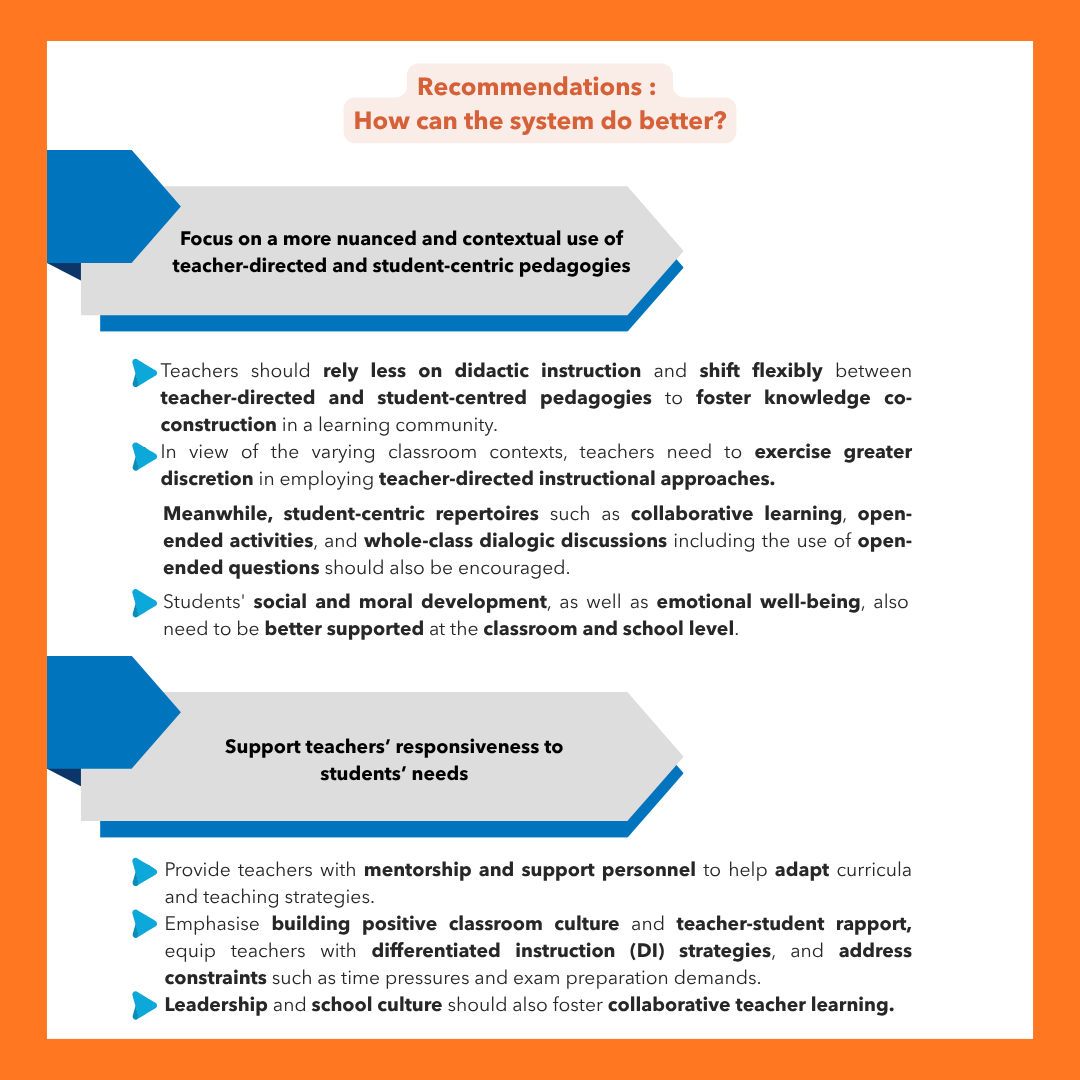
Recommendations

Infographic titled "Recommendations: How can the system do better?" presenting two recommendation areas using blue arrow-shaped banners. First: "Focus on a more nuanced and contextual use of teacher-directed and student-centric pedagogies" — advising teachers to rely less on didactic instruction, shift flexibly between pedagogies, exercise greater discretion in teacher-directed approaches, encourage collaborative learning and whole-class dialogic discussions, and better support students' social, moral, and emotional well-being. Second: "Support teachers' responsiveness to students' needs" — recommending provision of mentorship and support personnel to help adapt curricula, building positive classroom culture and teacher-student rapport, equipping teachers with differentiated instruction strategies, addressing constraints such as time and exam pressures, and fostering collaborative teacher learning through leadership and school culture.

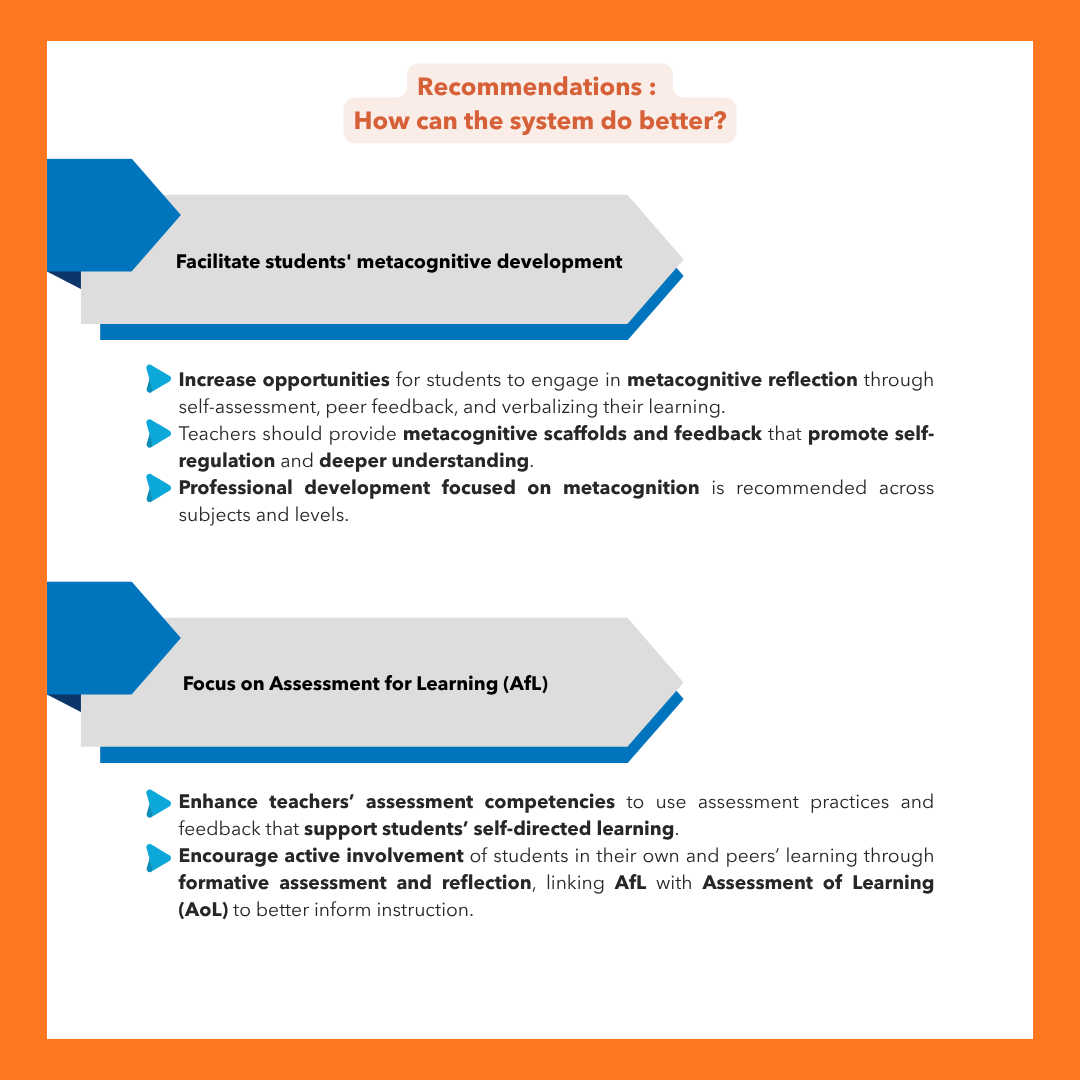
Infographic continuing the Recommendations section with two further recommendation areas using blue arrow-shaped banners. Third: "Facilitate students' metacognitive development" — advising increased opportunities for metacognitive reflection through self-assessment, peer feedback, and verbalising learning; provision of metacognitive scaffolds and feedback that promote self-regulation and deeper understanding; and professional development focused on metacognition across subjects and levels. Fourth: "Focus on Assessment for Learning (AfL)" — advising enhancement of teachers' assessment competencies to support students' self-directed learning, and encouraging active student involvement in formative assessment and reflection, linking AfL with Assessment of Learning (AoL) to better inform instruction.


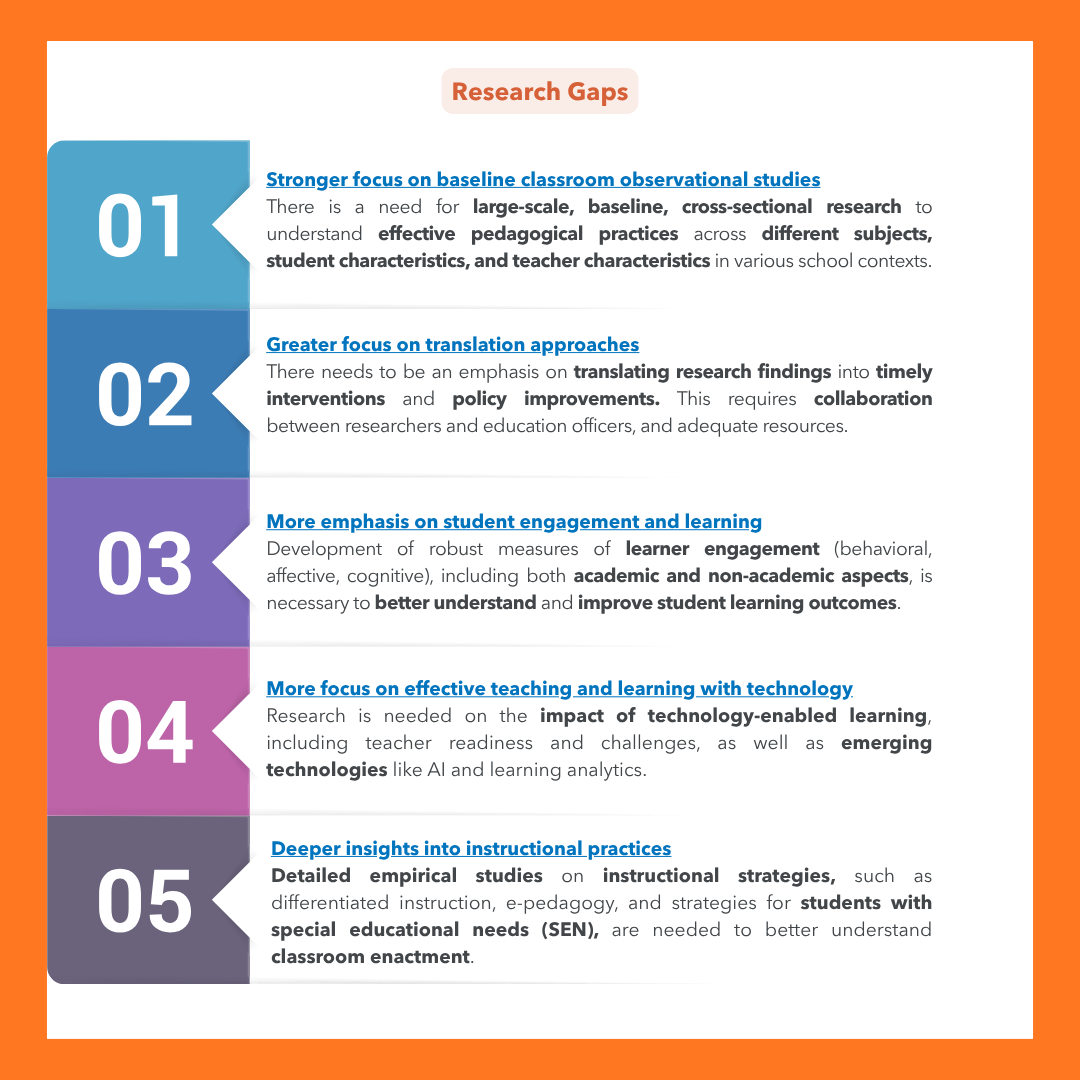
Research Gaps

Infographic titled "Research Gaps" listing five numbered gaps using a coloured block design transitioning from teal to purple to dark grey. Gap 1: Stronger focus on baseline classroom observational studies — need for large-scale, cross-sectional research on effective pedagogical practices across different subjects, student characteristics, and teacher characteristics. Gap 2: Greater focus on translation approaches — emphasis on translating research findings into timely interventions and policy improvements through researcher-education officer collaboration. Gap 3: More emphasis on student engagement and learning — development of robust measures of learner engagement across behavioural, affective, and cognitive dimensions for both academic and non-academic aspects. Gap 4: More focus on effective teaching and learning with technology — research needed on technology-enabled learning, teacher readiness and challenges, and emerging technologies such as AI and learning analytics. Gap 5: Deeper insights into instructional practices — detailed empirical studies on differentiated instruction, e-pedagogy, and strategies for students with special educational needs (SEN) to better understand classroom enactment.


Question-Icon Further resources

To access the full LES:

  1. Local evidence synthesis on instructional core


Question-Icon Research synthesis team

  • Dr Dennis Kwek Beng Kiat, Centre Director, Centre for Research in Pedagogy & Practice and Associate Dean, Strategic Engagement, and Principal Research Scientist, National Institute of Education – Centre for Research in Pedagogy & Practice


  • Dr Wong Hwei Ming, Assistant Centre Director, Education, Centre for Research in Pedagogy & Practice, and Senior Research Scientist, National Institute of Education – Centre for Research in Pedagogy & Practice
  • Dr Divya Bhardwaj, Research Fellow, National Institute of Education – Centre for Research in Pedagogy & Practice
  • Dr Fatema Anis Hussain, Former Research Fellow at Asian Languages & Cultures, National Institute of Education
  • Dr Goh Sao-Ee, Director, Corporate Research Office, Ministry of Education (Former Senior Teaching Fellow, Office of Education Research, and Former Academic Head of Strategic Education Research Planning, National Institute of Education)

Acknowledgements

The LES on Language Learning and Bilingualism involves 14 studies funded by the Education Research Funding Programme (ERFP). Any opinions, findings, and conclusions or recommendations expressed in this material are those of the author(s) and do not necessarily reflect the views of the Singapore MOE and NIE.

This knowledge resource was extracted and reconstructed from the LES, with approval from the authors, and presented by Ms Noorazleena Binte Shahri on 29 June 2026.
Never Miss A Story