
Sailing Uncharted Waters: How Shared Leadership Kept a Department Moving Forward
Contributed by Ms Fazila Banu D/O Mohamed Rabiullah and Ms Jasmine Sujatha from Yuan Ching Secondary School, for […]
Read More
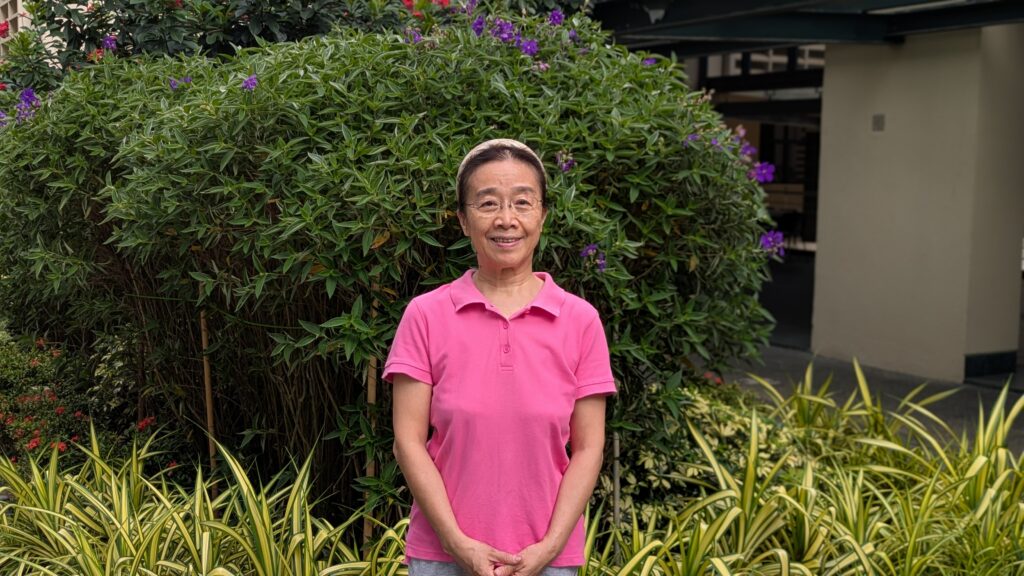
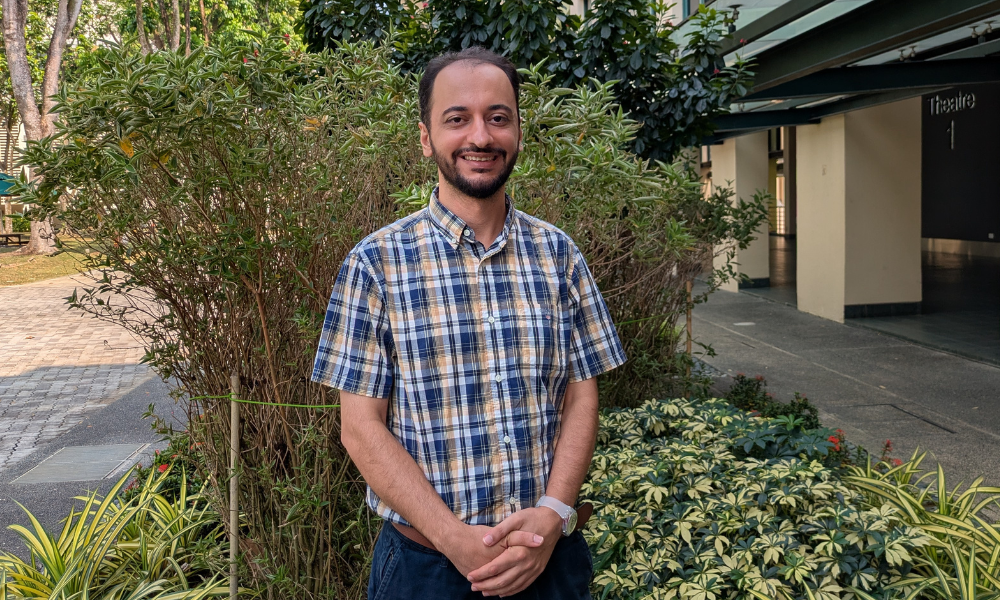
Research is changing how we understand teacher resilience. Maintaining passion and commitment in an ever-evolving profession requires far more than personal perseverance, it draws on reflection, support and the ability to adapt and grow through challenges. In this article, Associate Professor Fang Yanping, from the Policy, Curriculum and Leadership Department at the National Institute of Education, shares insights from her research study about resilience in teachers, how resilience develops and why it may operate in ways that school leaders – and even teachers themselves – might not expect.
Resilience is often described as the ability to “bounce back” after difficulty. However, there exists a more transformative concept: “bouncing forward”.
“Whether challenges or stressors serve as simply obstacles to overcome or opportunities for personal and professional growth depends on how a teacher appraises or reappraises the situation,” Associate Professor Fang Yanping shares. She defines teacher resilience as a holistic and dynamic social practice realized through two key coping processes:
Through these often-emotional processes, challenges can become opportunities for growth rather than barriers. She further explains that the stressors teachers encounter can be broadly understood as either “critical events” or “daily hassles” in their personal and professional lives.
“Critical events refer to serious, unexpected and often traumatic experiences that challenge a teacher’s core beliefs and well–being. These events could serve as potentially transformative ‘defining moments’ for professional growth and identity re-evaluation under caring and supportive conditions,” she explains.
In contrast, daily hassles are the routine stresses of everyday teaching—such as administrative tasks and student management. While these stressors appear minor, they accumulate over time and lead to professional strain if not effectively managed. Yanping’s research finds that daily hassles are the most frequent stressors Singapore’s teachers face, suggesting that everyday demands, rather than rare traumatic events, are likely the greater challenge.
Yet resilience itself also has limits. “More resilience is not always better,” Yanping cautions, noting that excessive resilience can sometimes become maladaptive.
“Research shows that when strengths are overexerted, they can become weaknesses. For instance, energy may be wasted by persevering towards unattainable goals; health may break down by persisting through impossible workloads; and teacher morale can suffer when a usually resilient leader becomes rigid,” she adds.
Building on this understanding of resilience, Yanping’s research – drawing on survey data and narratives from nearly 200 educators—finds that our teachers also cope with challenges in three broad ways.
The first is approach coping, a more active, task-oriented level where teachers directly engage with the problem.
“In this approach, teachers seek resources or support to resolve the challenge. Rather than viewing the situation as a psychological threat, they reappraise it as a challenge to be addressed,” she shares.
For example, a teacher might enrol in a graduate module to explore new theoretical perspectives or seek support from peers to better manage work–life challenges. In managing their many roles, research finds that teachers report colleagues as their top source of support, followed by students, school leaders and mentors.
The second is avoidant coping in which teachers distance themselves from a problem or appraise a situation as a threat. It is often associated with negative emotional responses, which may lead to behaviours such as complaining, self-blame or rumination. Although it is commonly viewed negatively, Yanping notes that it is not always harmful.
“In some situations, it may provide the necessary ‘breathing space’ for teachers before addressing the issue,” she explains. Avoidant coping strategies allow teachers to momentarily disengage, create physical and psychological distance, and approach the problem from a fresher and more objective perspective. They also create a vital space for critical reflection.
The third is meaning-making coping which is a more abstract and reflective method of coping that involves reframing a situation so that it aligns with one’s values and professional identity. For example, a beginning teacher may complain about home visits, seeing it as an unnecessary chore to avoid. However, he may later reframe it as a meaningful part of a teacher’s responsibilities and a reason to join or stay in the profession. Through this, change happens from within and alters a teacher’s perspective, practice, and identity.
While individual coping strategies play an important role in building resilience, Yanping cautions against viewing resilience solely as a personal responsibility. Resilience occurs as teachers respond to demands from personal circumstances, school contexts and professional expectations. When resilience is framed purely as an individual trait, teachers may feel pressured to simply “toughen up” in the face of challenges. Instead, she emphasizes the importance of systemic and organizational support in sustaining teacher resilience.
“For example, performance rankings can sometimes be experienced as emotionally difficult events, potentially triggering self-doubt,” she says. “When a teacher’s performance declines, it is not necessarily a reflection of character but may signal that additional support is needed.”
With appropriate leadership support and a supportive work environment, these teachers may be able to rebuild their confidence and restore their professional well-being, rather than leaving the profession.
She also points out that resilience is not limited to “star teachers” or those who perform well in formal performance reviews. In fact, teachers who receive lower performance rankings may also demonstrate resilience simply by remaining committed to the profession.
“In Singapore, initiatives such as the ‘Three Career Tracks’ provide teachers with opportunities to explore different professional pathways,” she shares. “These structures can help teachers align their roles with their strengths, interests and life stages, supporting long-term professional sustainability.”
“Resilience is often strengthened in supportive environments where teachers feel safe to share their struggles and seek guidance.”
– Yanping, on how resilience can be strengthened
Yanping reminds us that resilience is not a fixed trait that people are born with. Rather, it is “a dynamic process that evolves over time.” Teachers may experience different challenges at different stages of their careers – from beginning teachers finding their footing to mid-career educators navigating professional transitions.
Her research also supports the idea that school contexts, such as management support, school culture and workload, are the strongest predictors of positive adaptation.
“Resilience is often strengthened in supportive environments where teachers feel safe to share their struggles and seek guidance,” she emphasizes.
In addition, she encourages mentors and school leaders to “move beyond performance metrics” and paying closer attention to the experiences and narratives of their colleagues.
She also reminds us that resilience emerges through navigating challenges, reflecting on experiences and drawing on both personal and collective support. When teachers can reframe difficulties as opportunities for growth – and when schools and national policies cultivate environments that support this process – the goal is not simply to “bounce back”, but to continue “bouncing forward” in their professional journeys.