Sailing Uncharted Waters: How Shared Leadership Kept a Department Moving Forward
Contributed by Ms Fazila Banu D/O Mohamed Rabiullah and Ms Jasmine Sujatha from Yuan Ching Secondary School, for […]
Read More
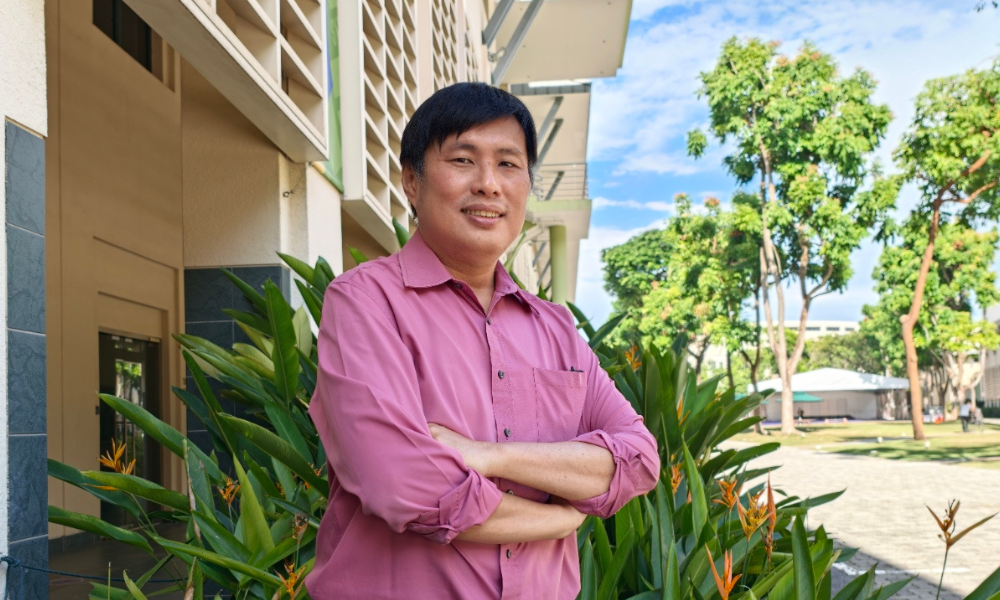
Contributed by Soh Chee Keong Jay from Northbrooks Secondary School, for SingTeach Virtual Staff Lounge
I grew up in a small village in Singapore and struggled with English at school. Coming from a non-English-speaking family, I often found the subject difficult. I began teaching myself by looking up unfamiliar words in a Longman Dictionary, recording their meanings in a jotter book and using them in sentences. Passing my O-Level English examination and A-level General Paper had taught me that a learning difficulty need not define a learner; with patience, practice and support, progress is possible.
My working life later took me from modelling and singing to the insurance industry, where I worked as an Agency Insurance Trainer and developed a successful career in sales. A decade later, I decided to pursue a career in education because I wanted to make a difference in young people’s lives. I trained at the National Institute of Education (NIE), taught in primary schools and later continued my studies, including a Bachelor of Arts at the University of Adelaide.
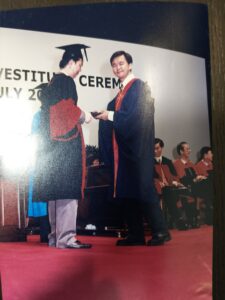
My professional journey and connection with NIE
After more than 25 years in education, I returned to NIE and completed a Master of Education (Special Education) in 2025. Studying while working full-time requires discipline, perseverance and careful management of my time. There were moments when I wondered whether I had taken on too much, but the experience renewed my commitment to learning and reflection.
The master’s programme deepened my understanding of special education and encouraged me to examine learners’ needs more critically. For me, postgraduate study is not just about gaining a qualification, but about applying new knowledge to everyday teaching decisions. It also reminded me that even experienced teachers are still learners: while experience matters, we must continue to question our assumptions and explore new approaches.
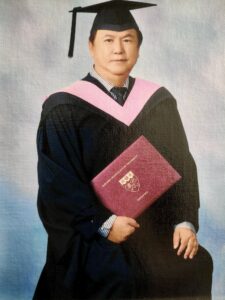
Postgraduate achievement at NIE
My master’s studies is part of a broader commitment to understanding and supporting students with diverse learning needs. I also hold an Advanced Diploma in Special Learning and Behavioural Needs and Graduate Certificates in Special Education and Understanding Diverse Learners.
These experiences have helped me appreciate that students do not all learn in the same way. When a student struggles, it does not necessarily indicate a lack of ability or effort. A learner may need clearer instructions, more time, a different way to access information or encouragement to try again. My own experience of struggling with English helps me remember how vulnerable learners can feel when faced with difficulties – and how much patient support can help.
I have also learnt to reflect on the questions I ask. Instead of focusing only on “Why isn’t this student trying harder?”, I try to consider, “What can I change to help this student engage and succeed?” This shift does not mean lowering expectations. It means identifying barriers and giving students a fair opportunity to achieve progress.
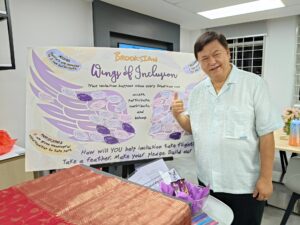
Promoting inclusion at Northbrooks Secondary School: the “Brooksian Wings of Inclusion” display encourages every member of the school community to participate, contribute and belong.
Teachers can make learning more accessible through small, deliberate adjustments:
These strategies can benefit a wide range of learners, not just those identified as having special educational needs. The key is to observe how students respond, adjust support where needed while preserving their dignity and fostering a sense of belonging.
Connecting professional learning with classroom practice has been one of the most valuable aspects of my journey. For teachers considering a master’s degree at NIE, I offer three suggestions. First, be clear about what you hope to learn and how it might strengthen your work with students. Second, plan realistically: balancing study, work and personal responsibilities takes time and support. Third, connect theory with practice. Reflect on what you learn, consider how it applies to your classroom and evaluate whether it helps your students.
My journey – from a village boy who struggled with English to a teacher returning to NIE as a postgraduate student – has taught me that learning has no expiry date. Qualifications matter, but their greatest value is in how we use our learning to understand others and help them grow. We may not control every challenge we encounter, but we can keep learning, adapt and take the next step.