
Assessment for Learning, Progress and Well-Being
Assessment is an integral part of education, yet conversations about it often centre on grades, examinations and achievement. […]
Read More
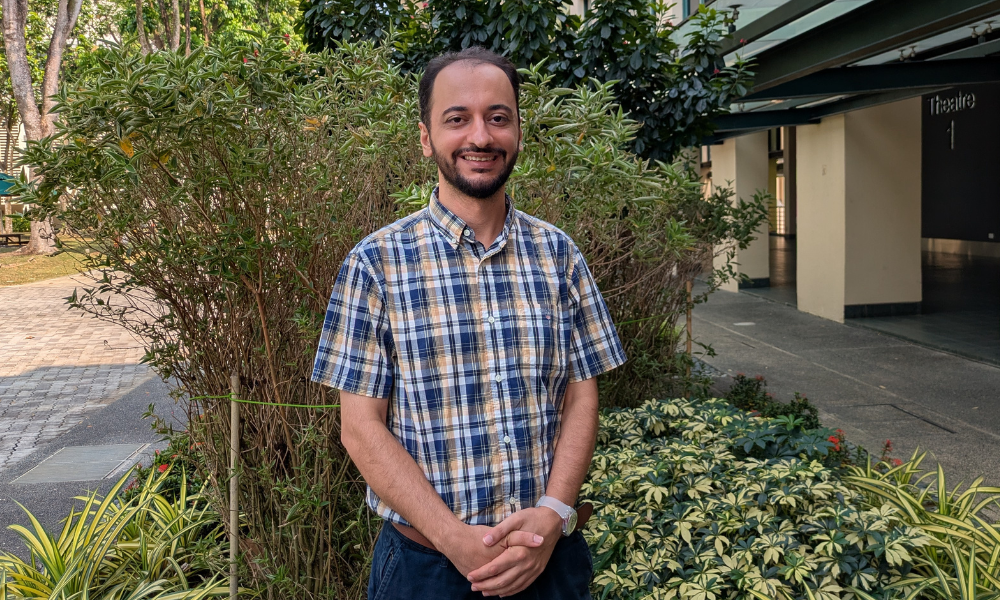
Assessment is often reduced to scores and grades, but its impact runs deeper. Dr Chue Kah Loong, Deputy Head of the Psychology and Child & Human Development Department and Co-Head of the Centre of Assessment and Evaluation at the National Institute of Education, Nanyang Technological University, Singapore explores how assessment shapes not only what students achieve, but also how they feel about learning and about themselves as learners. Drawing on the distinctions between assessment of, for and as learning, he unpacks why emotions and meaning matter just as much as outcomes, and how thoughtfully designed assessment can build students’ sense of agency and ownership.

What does an effective assessment system look like? While assessment has traditionally been associated with measuring what students have learned, our understanding of its role has broadened considerably.
Dr Chue Kah Loong, also Senior Lecturer with the Psychology and Child & Human Development Department at the National Institute of Education, identifies three related purposes of assessment: assessment of learning, assessment for learning and assessment as learning.
Assessment of learning focuses on determining what students have achieved, typically through familiar forms such as end-of-year examinations and written tests.
Assessment for learning, on the other hand, uses evidence of students’ current understanding to inform what teachers and learners should do next.
Assessment as learning takes this a step further by making the assessment process itself an opportunity for learning. Through practices such as self-assessment and reflection, students learn to monitor and evaluate their own learning and take greater ownership of it.
Importantly, these purposes are not necessarily determined by the assessment task itself.
“The same assessment can serve different purposes depending on how the information is used,” Kah Loong explains. “A test can provide a snapshot of a student’s achievement at a particular point in time, or it can help teachers and students identify gaps and decide on appropriate next steps.”
An effective assessment system, therefore, is not about choosing one purpose over another. Rather, it requires a balance between these different purposes and the thoughtful use of assessment to support both achievement and learning.
“Increasingly, assessment is seen not simply as an endpoint, but as a continuous process that provides information to help teachers and students make better decisions about teaching and learning,” he says. Feedback, for example, can help students understand their performance and how to improve, while peer and self-assessment can strengthen self-regulation and student agency.
Assessment does more than support learning; how students experience assessment can also shape how they feel about learning, and about themselves as learners.
For Kah Loong, understanding the relationship between assessment and student well-being begins with two important aspects of well-being: emotions and meaning.
“Assessment is not emotionally neutral,” he explains. “It can evoke a wide range of positive and negative emotions, and these emotions matter because they influence students’ motivation and confidence.”
When examinations are consistently framed as high-stakes events over which students have little control, for example, students may experience heightened anxiety, which may eventually lead some to disengage from learning.
This does not mean, however, that educators should seek to remove examinations or eliminate negative emotions.
Positive and negative emotions are both a natural part of learning. The aim, Kah Loong clarifies, is to create assessment experiences that help students understand and regulate their emotions.
“Assessments should be designed so that students see them as meaningful and worthwhile,” he says. “When assessment enables students to envisage their progress, identify areas for improvement and see how their learning moves them towards valued goals, it can strengthen their sense of purpose and agency, even when the assessment itself is demanding.”
“When assessment enables students to envisage their progress, identify areas for improvement and see how their learning moves them towards valued goals, it can strengthen their sense of purpose and agency, even when the assessment itself is demanding.”
–Kah Loong, on strengthening students’ purpose
One way assessment can support both learning and well-being is by making students’ progress visible.
Receiving a score alone, even a good one, may tell students relatively little about their learning. A distinction, for instance, does not necessarily tell a student what they did well, why they were successful or how they might reproduce that success in future.
Good assessment should therefore help students develop a clearer picture of where they currently are, where they need to go and what they can do to get there.
“Clear criteria, meaningful feedback and evidence of progress over time enable students to develop a clear picture of their own learning,” Kah Loong says.
This can also change how students experience assessment. Instead of seeing it simply as a judgement of their ability, they can begin to see assessment as information they can act upon.
“When students can see the connection between their actions and their progress, they may develop a greater sense of autonomy and ownership over their learning,” he adds.
This, in turn, can strengthen motivation and confidence.
Assessment can therefore contribute to well-being not by removing challenge, but by helping students see progress, purpose and possibility. Rather than positioning students only as recipients of grades and feedback, assessment can help them develop the capacity to monitor and evaluate their own learning, identify gaps and decide what to do next.
These capabilities are becoming even more important with the rapid development of artificial intelligence (AI).
AI can now generate questions, rubrics and feedback almost instantly. Yet Kah Loong emphasizes that teachers’ professional judgement remains essential in determining whether AI-generated assessment materials are appropriate and of sufficient quality.
This makes assessment literacy increasingly important.
“Teachers need the knowledge and skills to make sound decisions about assessment, design appropriate assessments and communicate assessment information effectively,” he remarks. “They also need to be mindful of the consequences that different assessment practices can have for students and their learning.”
At the same time, students now have access to many of the same AI technologies. This raises a more fundamental question for educators: What is worth assessing in an AI-enabled world?
“If AI can produce a competent essay or solve a routine problem within seconds, assessments that focus primarily on the final product may no longer provide sufficient evidence of what students know and can do,” he notes.
Looking five to 10 years ahead, he believes assessment may need to place greater emphasis on capabilities such as reasoning, adaptability and evaluative judgement.
Assessment may also have an increasingly important role in helping students learn how to manage their own learning. “As learning becomes more accessible, personalized and driven by students’ interests, we need to tap on assessment to develop student’s self-capabilities such as self-regulation, self-awareness and self-assessment. Assessment would need to help students to identify goals, diagnose gaps, and select strategies,” he says.
“Assessment would need to help students to identify goals, diagnose gaps, and select strategies.”
– Kah Loong, on using assessment to help students guide their own learning
Ultimately, rethinking the relationship between assessment and well-being is not about making assessment easier or eliminating the discomfort that can accompany challenge. It is about considering what students take away from an assessment experience beyond a grade.
Perhaps the questions educators should ask are: Does the assessment help students understand themselves better as learners? Can they see evidence that they are progressing? Do they know what they can do next?
When assessment helps students answer these questions, it becomes more than a means of measuring learning: it becomes part of the learning process itself, one that helps develop confident, reflective and increasingly independent learners who are better equipped to take ownership of their learning.
“Developing these capabilities cannot begin when students enter university or the workplace,” Kah Loong reminds us. “It is essential that assessment be thoughtfully designed from an early age.”