
Assessment for Learning, Progress and Well-Being
Assessment is an integral part of education, yet conversations about it often centre on grades, examinations and achievement. […]
Read More
Contributed by Dr Sundari Prama (Head/Science), with Ms Deborah Roshni and Mr Amos Goh, from Raffles Girls’ School (Secondary), for SingTeach Virtual Staff Lounge
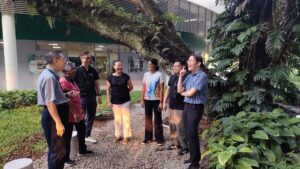
(Left to Right) Mr Yang Kian Hong, Dr Sundari Prama, Mr Amos Goh, Ms Lina Li, Ms Deborah Roshni, Mr Tan Wei Lun , Mr Tan Hup Yew
Vector diagrams are essential tools for helping students find the resultant force from multiple components. Yet teaching this topic remains a challenge for Secondary 4 Physics teachers. While students can typically master the procedure of creating scale drawings, they often struggle with the abstract nature of vector addition and have limited opportunities to explore the concepts. Many are unable to explain what the resultant vector means physically, treating the task as a geometry exercise rather than a study of physical forces.
Students also lack clarity on why the procedural steps work. This makes it difficult to apply their drawing skills to unfamiliar scenarios, including those involving displacement and velocity.
To address this gap, a team of Physics teachers at Raffles Girls’ School (Secondary) undertook an action research project using the Lesson Study (LS) framework. Through collaborative planning and classroom observation, they refine their lessons to help Secondary 4 students connect vector drawings with the Physics concepts behind them.
LS allows us to collaborate directly in the classroom. Guided by feedback from Mr Lee Siew Lin, Master Teacher at the Academy of Singapore Teachers (AST), our team co-designed an initial lesson plan, observed a colleague teaching it, and refined the lesson. The steps are shown in Figure 1.
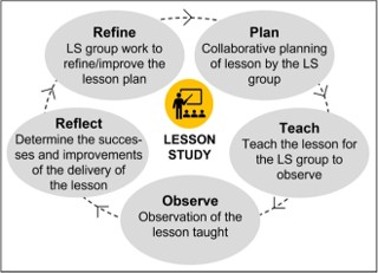
Figure 1. The Lesson Study cycle (Borg et al., 2024).
When one teacher taught the lesson, the rest of the team gathered observation data on student engagement and misconceptions that remained. We then refined the lesson materials before the next teacher taught another class. This shared approach helped us see classroom difficulties as teaching challenges to work through together.
During our initial planning, we recognised that students responded differently to inquiry-based learning. Some thrived in exploration, while others were less involved, hesitated to attempt solutions, or preferred explicit, step-by-step guidance.
The team structured a three-phase instructional sequence to balance open-ended inquiry with explicit consolidation:
Lessons opened with a physical demonstration featuring a toy duck acted on by two forces at different angles. Students completed a Predict–Observe–Explain worksheet to check their ideas about motion, draw initial force arrows, and begin working with vector representations (see Figure 2).
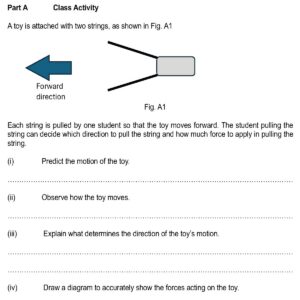
Figure 2. Predict–Observe–Explain worksheet for the toy duck demonstration.
To bridge the gap between physical intuition and formal scale drawing, worksheets were designed with explicit reference lines and graph paper grids.
Displacement to force progression: Students first constructed displacement vectors before applying the concept to force vectors. This helped prepare them for scale drawings of forces (see Figure 3).
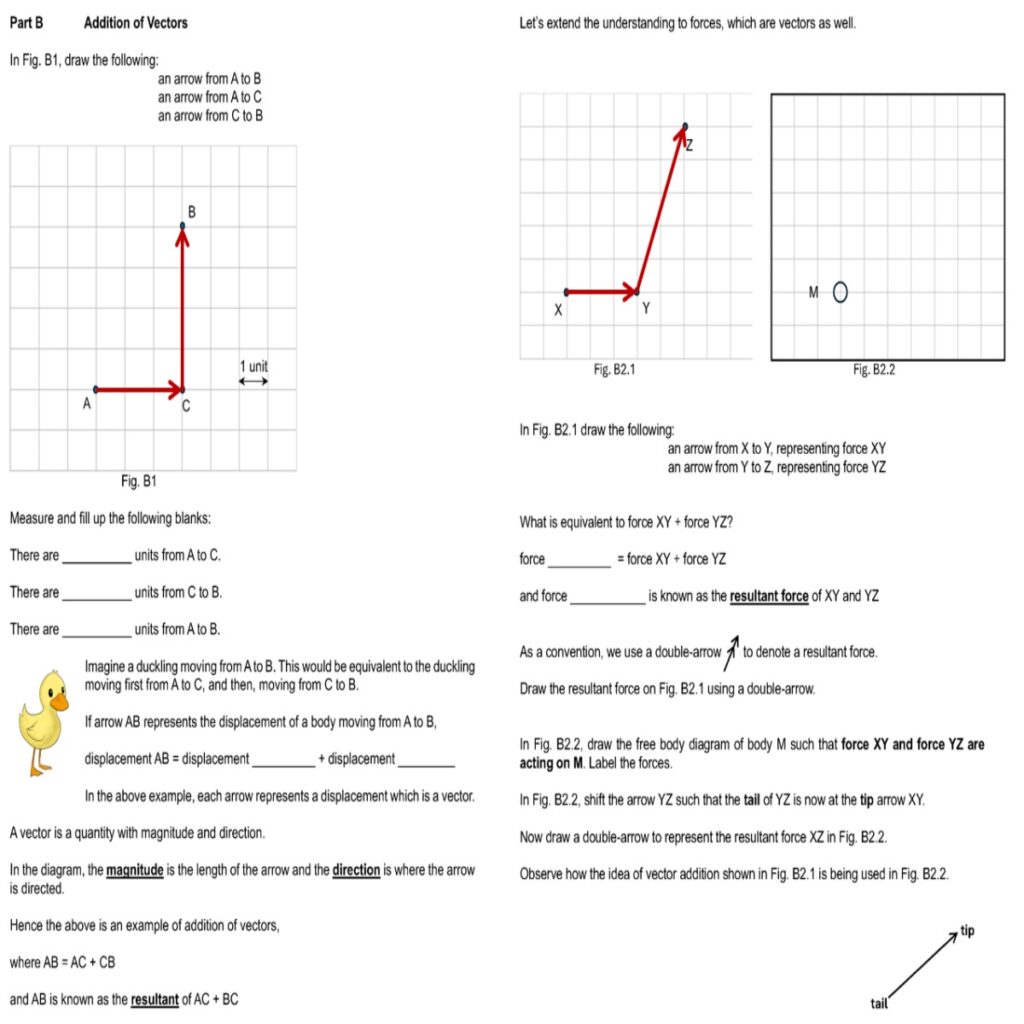
Figure 3. Worksheet examples showing the progression from displacement to force vectors.
Digital checkpoints (Padlet): Student groups uploaded photographs of their work at designated checkpoints, allowing teachers to monitor progress in real time (see Figure 4).
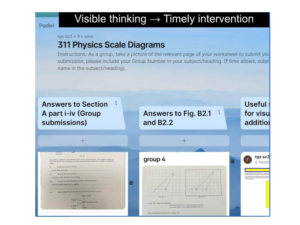
Figure 4. Student group submissions on Padlet.
Progressive scaffolding: Worksheets gradually reduced structural prompts, moving from simple grids to scale vector construction without these aids (see Figure 5).
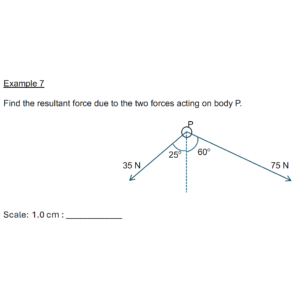
Figure 5. Vector construction.
Recognizing that unguided inquiry could leave some learners unsupported, teachers introduced explicit consolidation points to connect students’ observations directly to vector principles.
The team identified several key insights for classroom practice:
The value of refining lessons: Adjusting the scaffolding between lesson cycles improved the precision of students’ diagrams, rising from 30% to 70%. The examples in Figure 6 show students’ progression from rough sketches to more accurate vector diagrams.
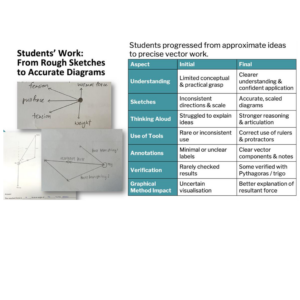
Figure 6. Students’ vector diagrams and a summary of changes in their work.
Peer learning works: Confident students who explained concepts during group inquiry reinforced their own understanding. Structured scaffolding helped less involved students participate without feeling overwhelmed.
Inquiry needs scaffolding: Inquiry alone can leave students focused on completing the procedure. Structured checkpoints and teacher consolidation are important for helping them understand the concepts behind it.
References
Borg, Elin & Finne, Joakim. (2024). A scoping review of school leadership practices in Lesson Study. Cogent Education, 11(1). https://doi.org/10.1080/2331186X.2024.2353470.