Read More
- Background and Key Insights
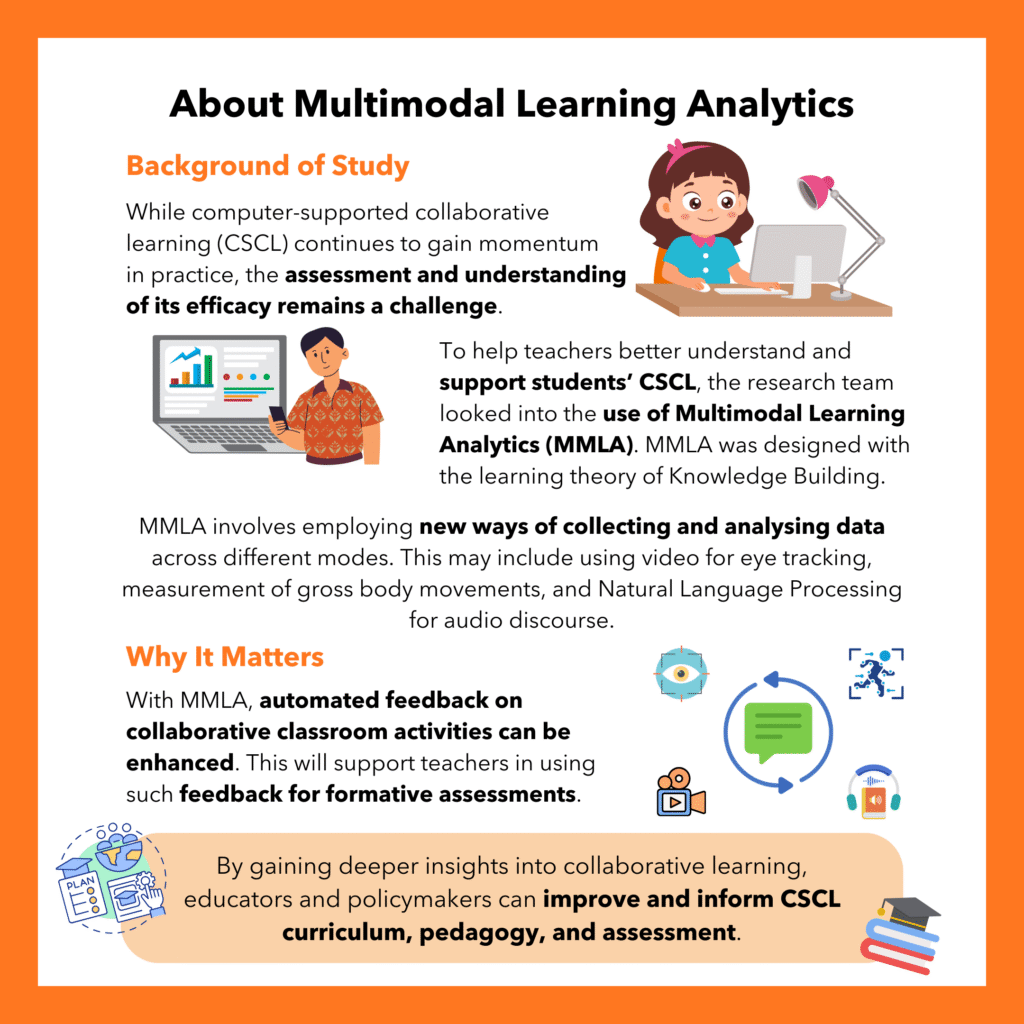
- Introduction to CSCL and MMLA
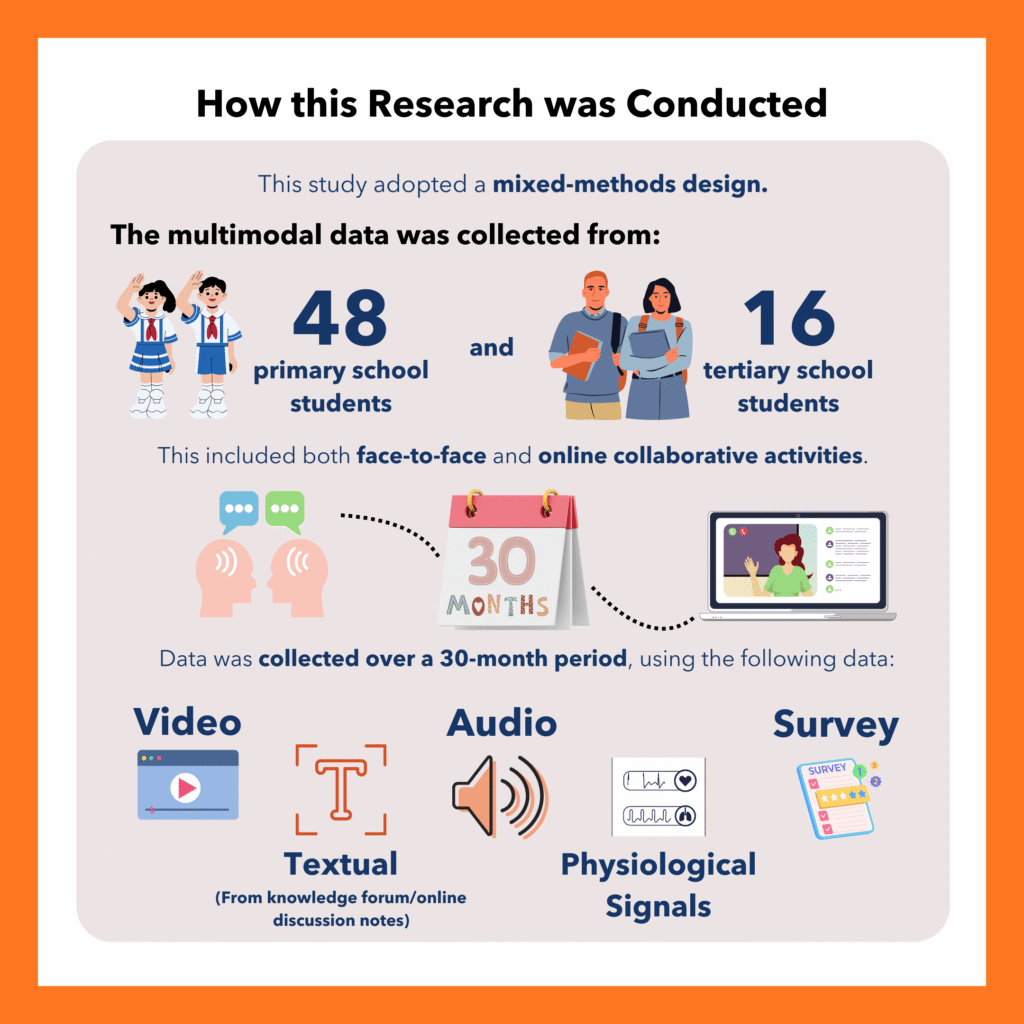
- Research Methodology
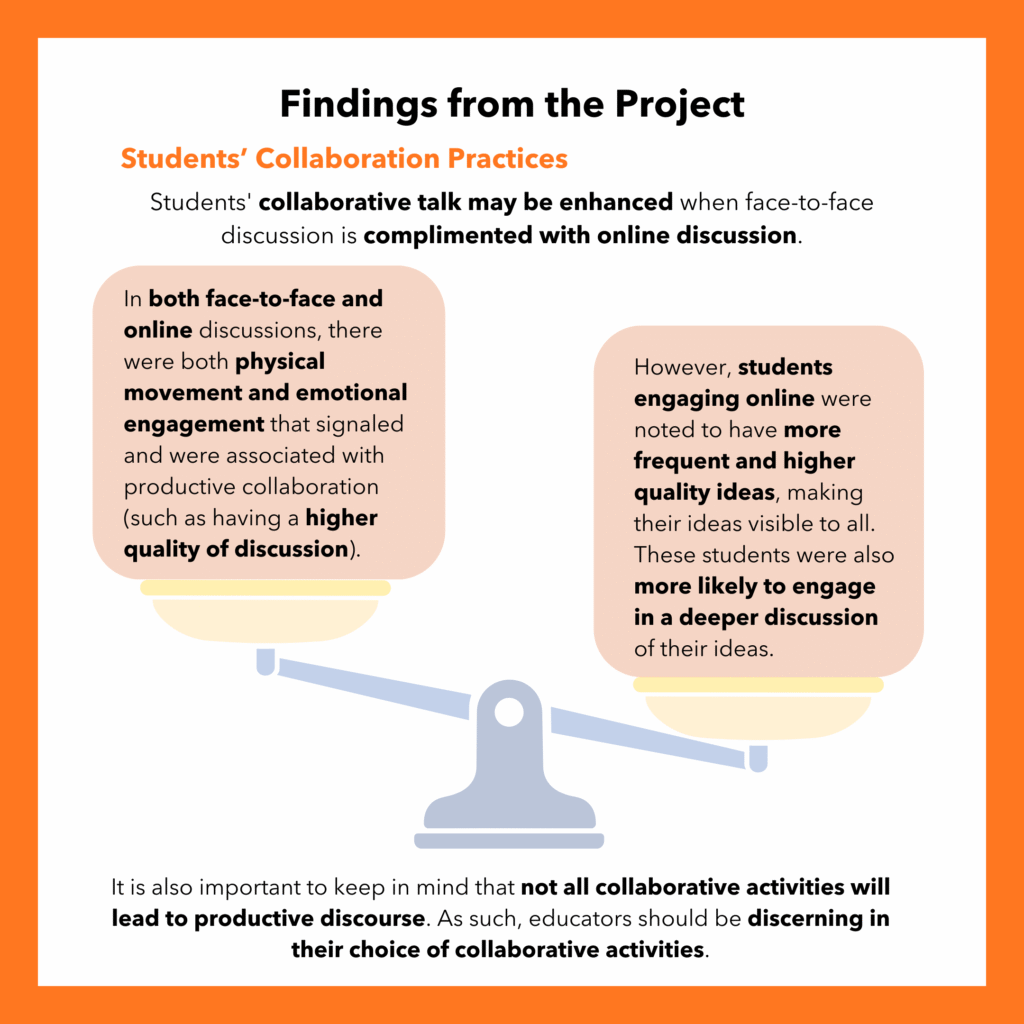
- Research Findings
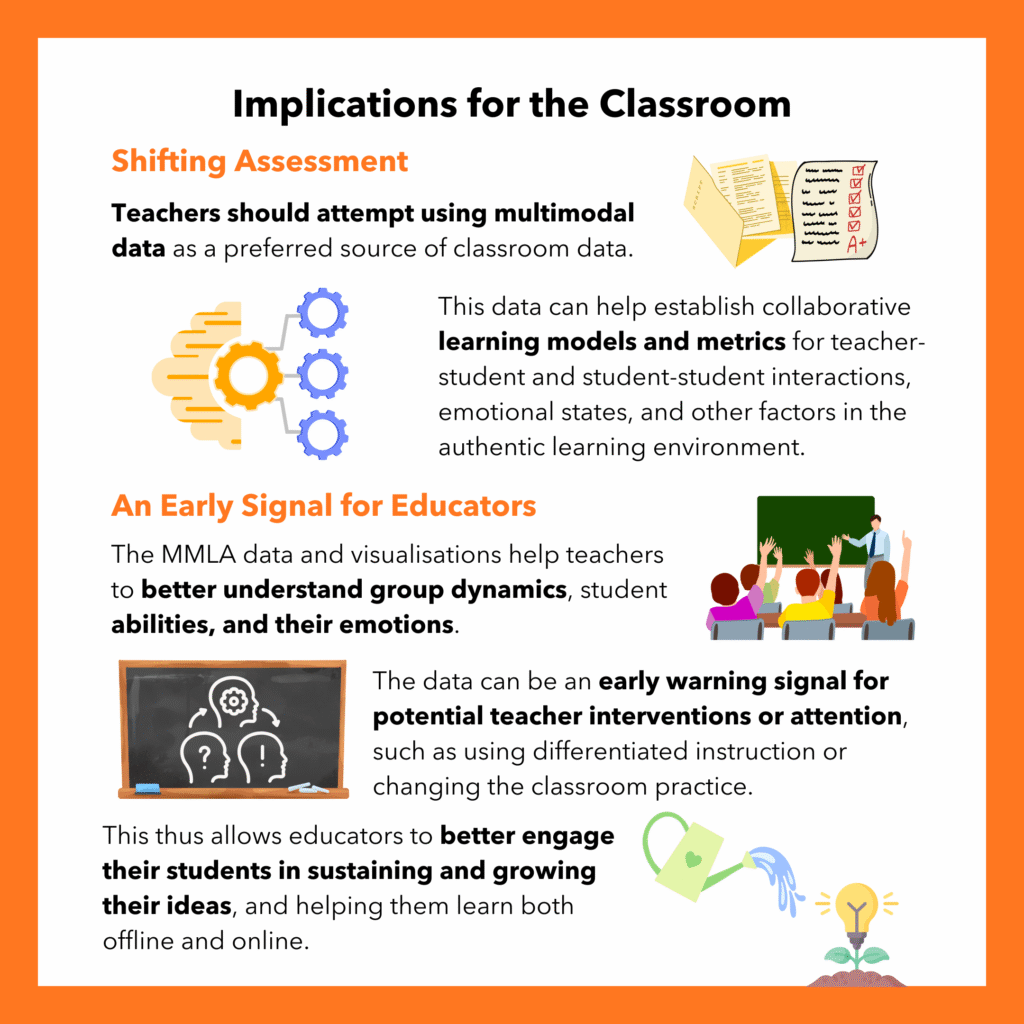
- What Does This Mean for Teaching and Learning?
- Related Links
- Further Readings
- Research Team
- 48 Primary School Students16 Tertiary School Students
- Primary and Tertiary Schools
Primary school
Tertiary school
ICT in Education

Principal Investigator

Co-Principal Investigator

Co-Principal Investigator
Knowledge Resource Bank
Enhancing Computer-Supported-Collaborative Learning (CSCL) with Multimodal Learning Analytics
 How findings from Multimodal Learning Analytics can help your students
Key Insights
- Using Multimodal Learning Analytics (MMLA) provides better understanding of the efficacy of Computer-Supported Collaborative Learning (CCSCL).
- MMLA can help by:
- Providing feedback indicative of the complex collaboration process in classrooms.
- Improving and informing CSCL practices.
- MMLA can help by:
- Students’ collaborative talk may be enhanced when face-to-face discussion is complimented with online discussion.
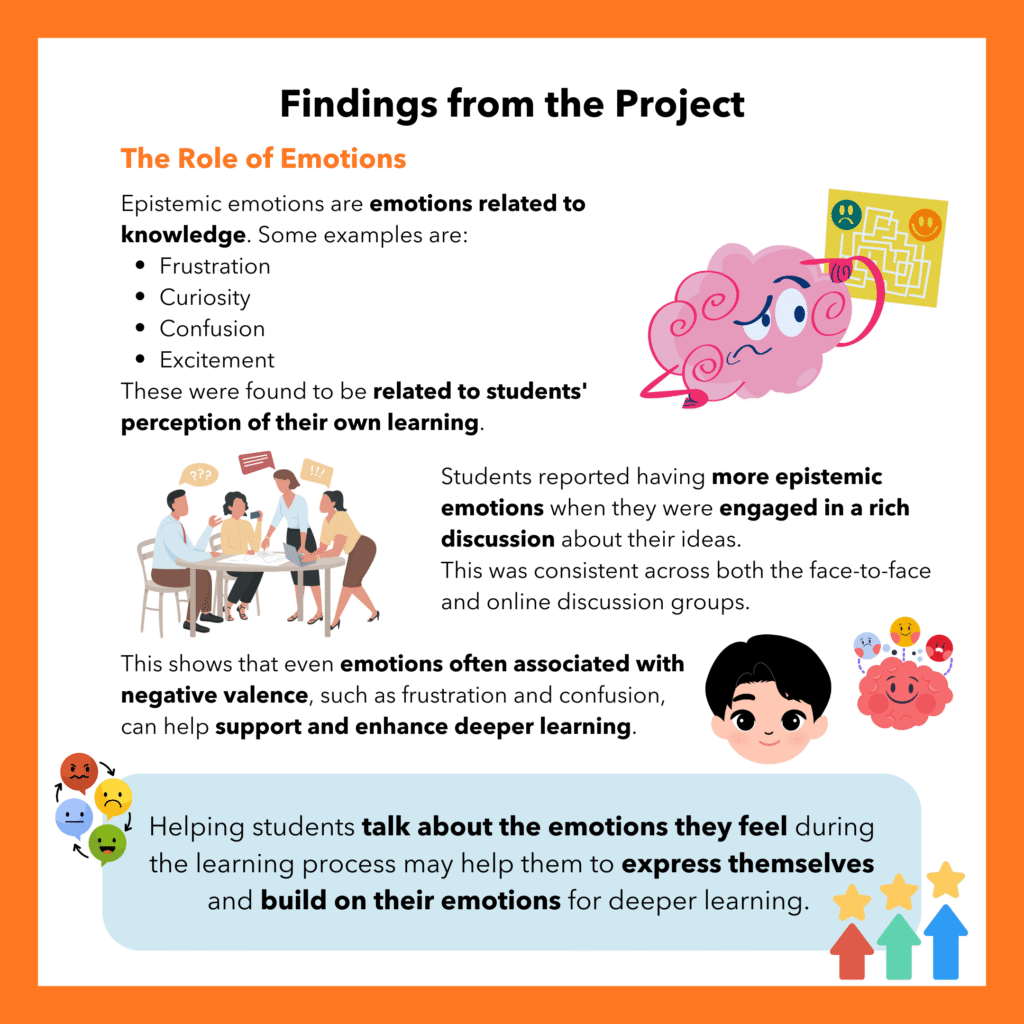
- Emotions related to learning are associated with students’ learning experience.
- Even ‘negative’ emotions can be used to support and enhance learning.
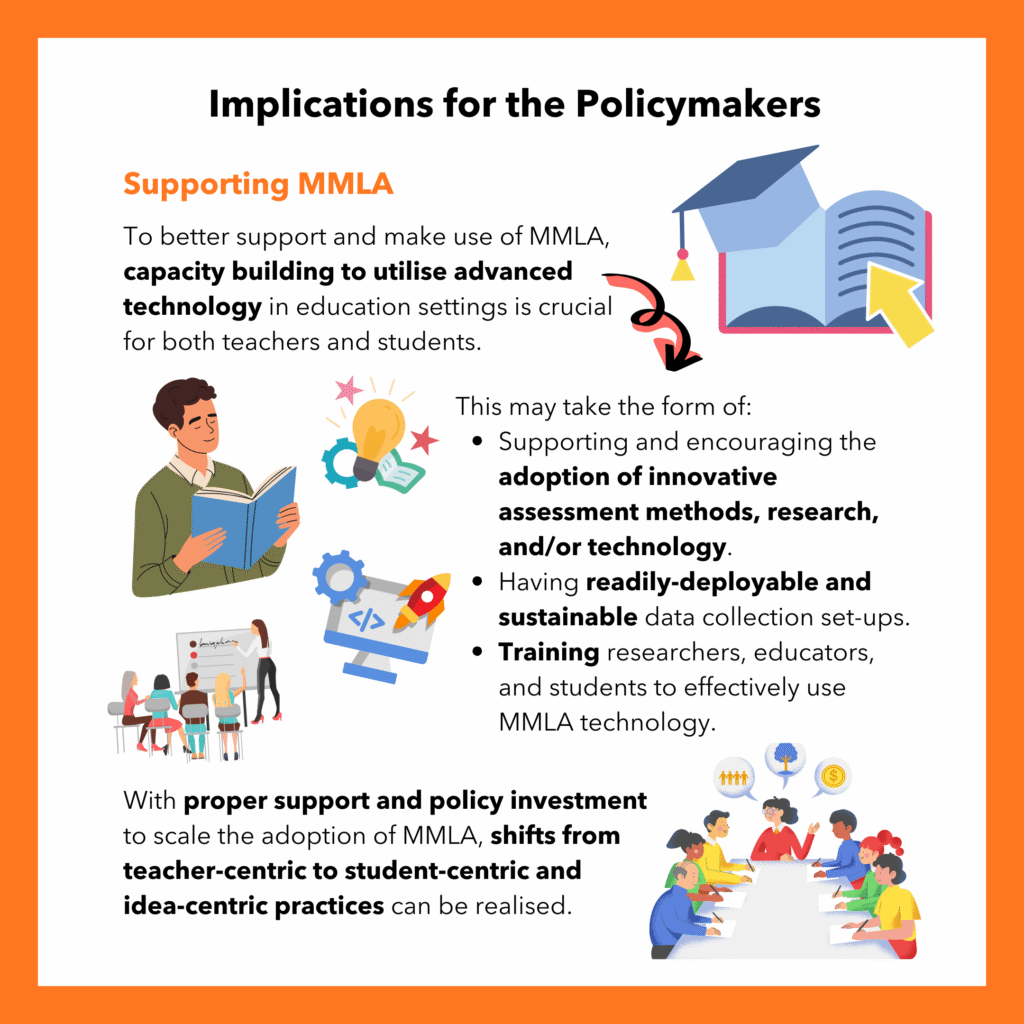
- MMLA is built on strong theoretical foundations, such as Knowledge Building.
- This promotes the shift from teacher centric to student centric and idea centric practices, where improving ideas together becomes the heart of classroom discussion.
 Introduction to Multimodal Learning Analytics (MMLA)
 Research Methodology
Research Findings
 What Does This Mean for Teaching and Learning?
 Related Links
- Enhancing Chemistry and Social Studies through Knowledge Building
- From Participation to Insight: Lessons from a Knowledge Building Project
- The Journey of Becoming a Knowledge-Building School
- AppleTree-Supported Collaborative Argumentation
- Technology Integration During Collaborative Argumentation
Further Readings
For educators interested in the research methodology behind MTSP, you may refer to:
- Exploring students’ epistemic emotions in knowledge building using multimodal data
- Implementing learning analytics interventions to support student agency in knowledge building
Research Project
- Engagement in Action – Multimodal Learning in Collaborative Classrooms
- Multimodal learning analytics for knowledge building
Research Team
To learn more about this research, please contact Dr Teo Chew Lee at chewlee.teo@nie.edu.sg.
Principal Investigator
- Dr Teo Chew Lee, Deputy Centre Director, Centre for Research in Pedagogy & Practice
Senior Research Scientist, National Institute of Education – Office for Research.
Co-Principal Investigators
- Dr Wong Lung Hsiang,
Senior Education Research Scientist, Centre for Research in Pedagogy & Practice Senior Research Scientist, National Institute of Education – Office for Research
- Dr Koh Ruilin, Elizabeth,
Senior Education Research Scientist, Centre for Research in Pedagogy & Practice Senior Research Scientist, National Institute of Education – Office for Research - Prof Looi Chee Kit, Emeritus Professor, National Institute of Education – Learning Sciences & Assessment
NIE Collaborator
- Assoc Prof Tan Seng Chee,
Associate Dean, Professional & Leadership Development, Office of Graduate Studies and Professional Learning Provost’s Chair in EducationAssociate Professor, National Institute of Education – Learning Sciences & Assessment
 Acknowledgement
This study was funded by the Education Research Funding Programme, National Institute of Education, Nanyang Technological University, Singapore (project no. OER 19/19 TCL). Any opinions, findings, and conclusions or recommendations expressed in this material are those of the author(s) and do not necessarily reflect the views of the Singapore MOE and NIE.
This knowledge resource was extracted and reconstructed from the published materials from the research team by Ms Shee Yi Xuan, Katherine with input from Dr Teo Chew Lee and Ms Lorraine Ow and presented on 8 December 2025.