Knowledge Resource Bank

Local Evidence Synthesis on Digital and Media Literacy

This LES explores how the integration of functional skills, critical media literacy, and responsible digital behavior influences classroom practice and student learning in Singapore.

 Summary

  • This Local Evidence Synthesis (LES) on Digital and Media Literacy (DML) presents synthesised research findings on DML within Singapore’s educational context.
  • DML skills allow individuals to discern fact from fiction, navigate the digital landscape safely, and participate meaningfully in online spheres.


Key Insights

  • Cultivating students’ DML is essential. It enables them to navigate, evaluate, and contribute responsibly in a rapidly changing digital world.
    • This supports academic success, creativity, social participation, and future employability.
  • Digital literacy should be comprehensive, integrating functional skills with critical thinking and ethical behaviour across all subjects.
  • While students generally demonstrate adequate technical proficiency, many struggle to apply critical judgement when evaluating online information.
  • Key challenges in cultivating DML include rapid technological change, which affects curriculum relevance, and teacher time constraints, which limit effective implementation.


Recommendations

  • Curriculum: Embed digital literacy within subject-specific national curricula and support flexible school-based approaches.
  • Pedagogy: Emphasise hands-on creation of digital artefacts and provide inclusive access for lower-income students.
  • Teacher development: Support ongoing training in emerging technologies and foster collaborative communities of practice.

Local evidence synthesis (LES) on Digital and Media Literacy (DML)

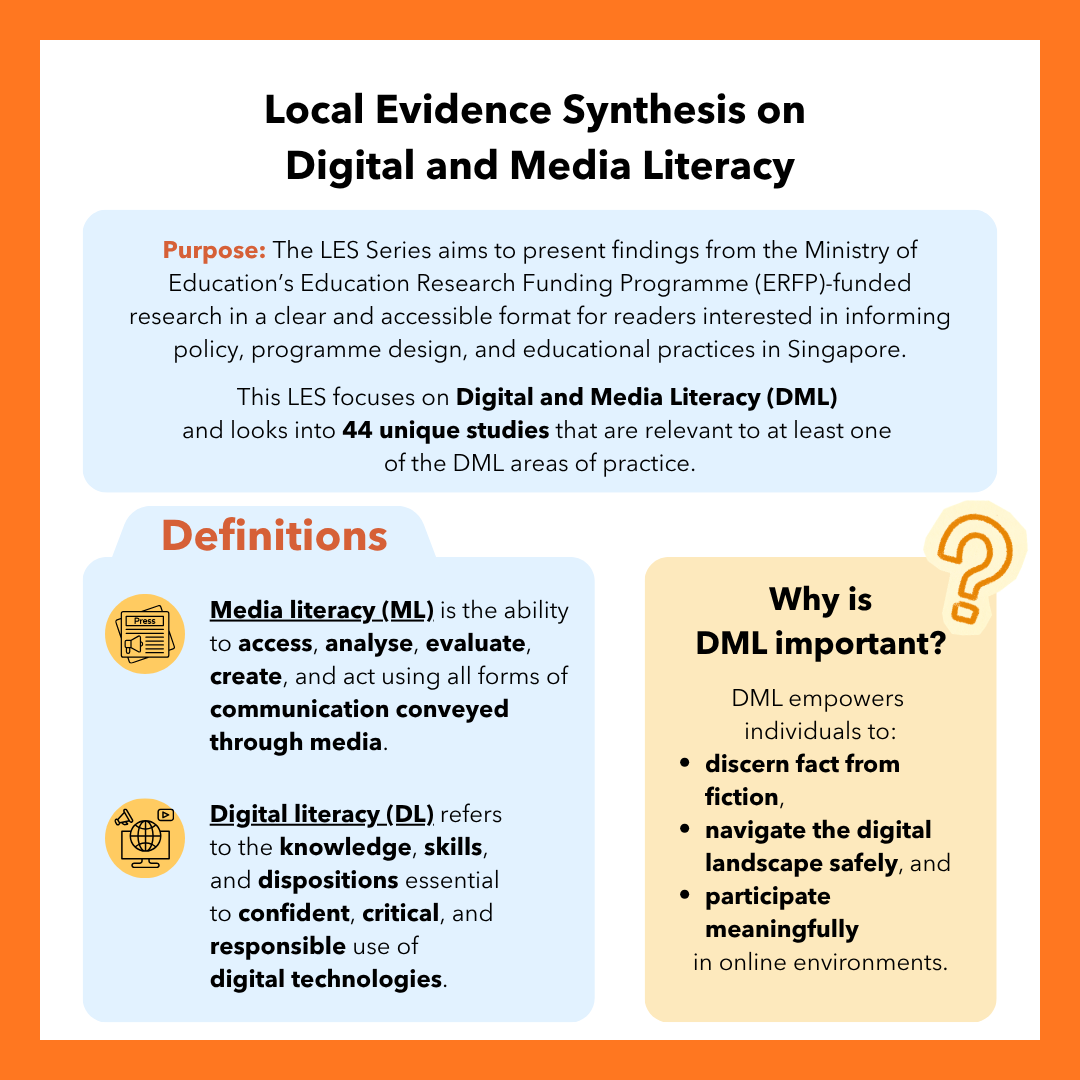
Infographic titled "Local Evidence Synthesis on Digital and Media Literacy." Text explains the LES series presents sysnthesised findings from the National Institute of Education’s research funded by the Ministry of Education's Education Research Funding Programme (ERFP) research in an accessible format for readers interested in policy, programme design, and educational practices in Singapore. This LES focuses on Digital and Media Literacy (DML) and covers 44 unique studies relevant to DML areas of practice. A "Definitions" section defines Media literacy (ML) as the ability to access, analyse, evaluate, create, and act using all forms of communication conveyed through media, and Digital literacy (DL) as the knowledge, skills, and dispositions essential to confident, critical, and responsible use of digital technologies. A "Why is DML important?" section states DML empowers individuals to discern fact from fiction, navigate the digital landscape safely, and participate meaningfully in online environments.

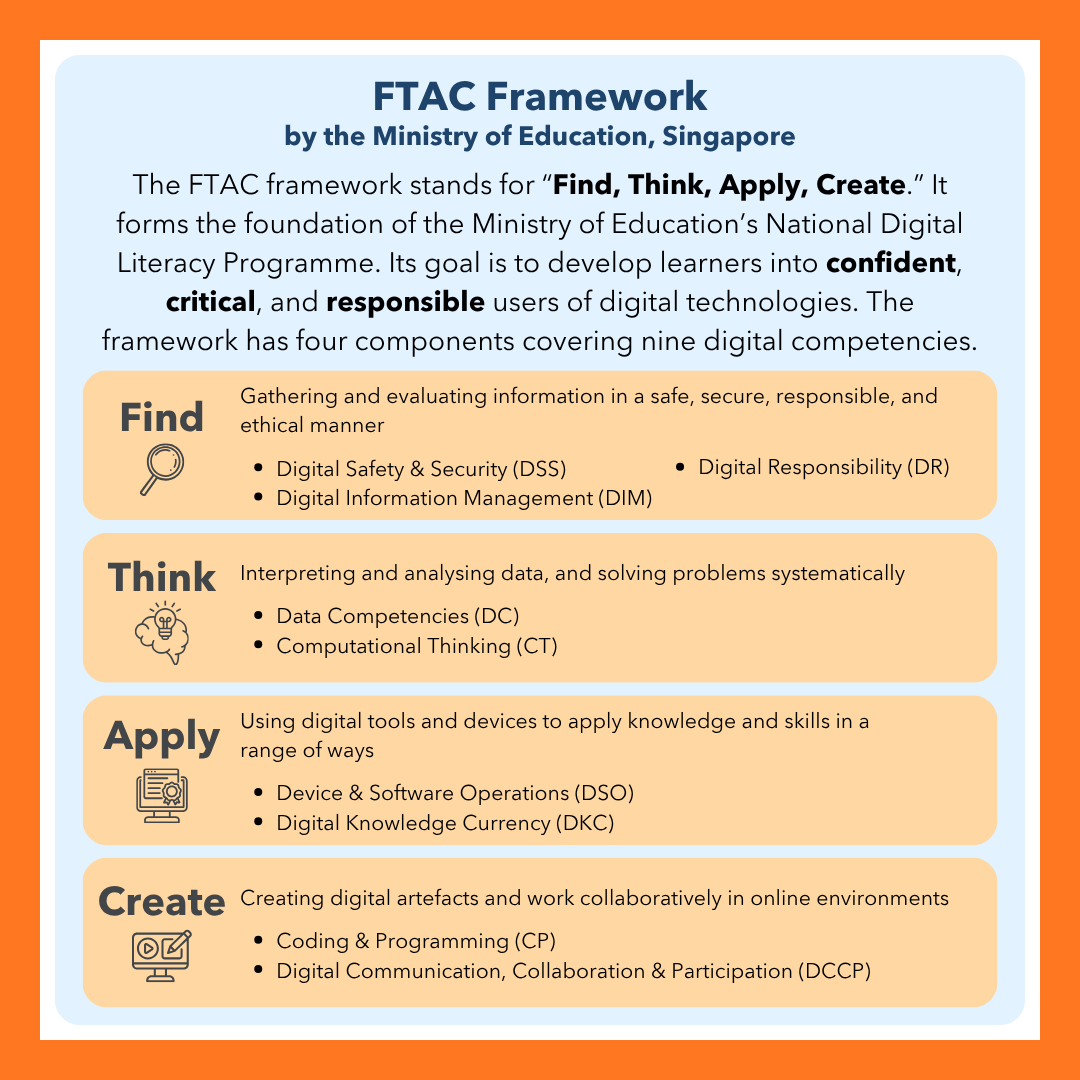
Infographic titled "FTAC Framework by the Ministry of Education, Singapore." Text explains FTAC stands for "Find, Think, Apply, Create" and forms the foundation of the Ministry of Education's National Digital Literacy Programme, aiming to develop learners into confident, critical, and responsible users of digital technologies, with four components covering nine digital competencies. Four labeled sections detail each component: Find (gathering and evaluating information safely, securely, responsibly, and ethically) covering the competencies of Digital Safety & Security (DSS), Digital Information Management (DIM), and Digital Responsibility (DR); Think (interpreting and analysing data, solving problems systematically) covering Data Competencies (DC) and Computational Thinking (CT); Apply (using digital tools and devices to apply knowledge and skills) covering Device & Software Operations (DSO) and Digital Knowledge Currency (DKC); and Create (creating digital artefacts and working collaboratively online) covering Coding & Programming (CP) and Digital Communication, Collaboration & Participation (DCCP).


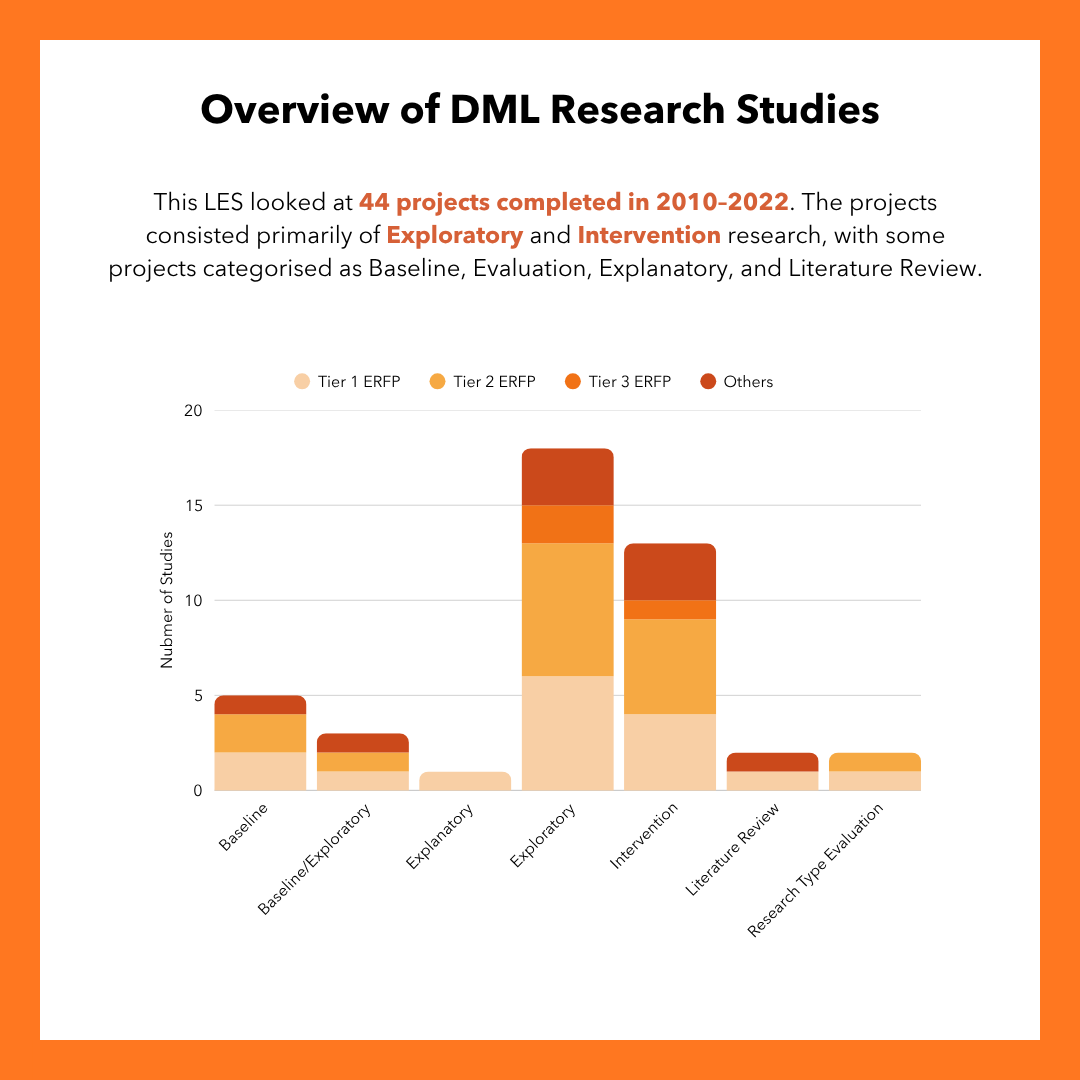
Overview of Digital and Media Literacy Research Studies

Infographic titled "Overview of DML Research Studies." Text states this LES looked at 44 projects completed in 2010–2022, consisting primarily of Exploratory and Intervention research, with some categorised as Baseline, Evaluation, Explanatory, and Literature Review. A stacked bar chart below shows the number of studies by research type (Baseline, Baseline/Exploratory, Explanatory, Exploratory, Intervention, Literature Review, Research Type Evaluation) on the x-axis and number of studies (0–20) on the y-axis, with bars segmented by funding tier: Tier 1 ERFP, Tier 2 ERFP, Tier 3 ERFP, and Others. Exploratory and Intervention have the tallest bars, each reaching roughly 17 and 13 studies respectively.


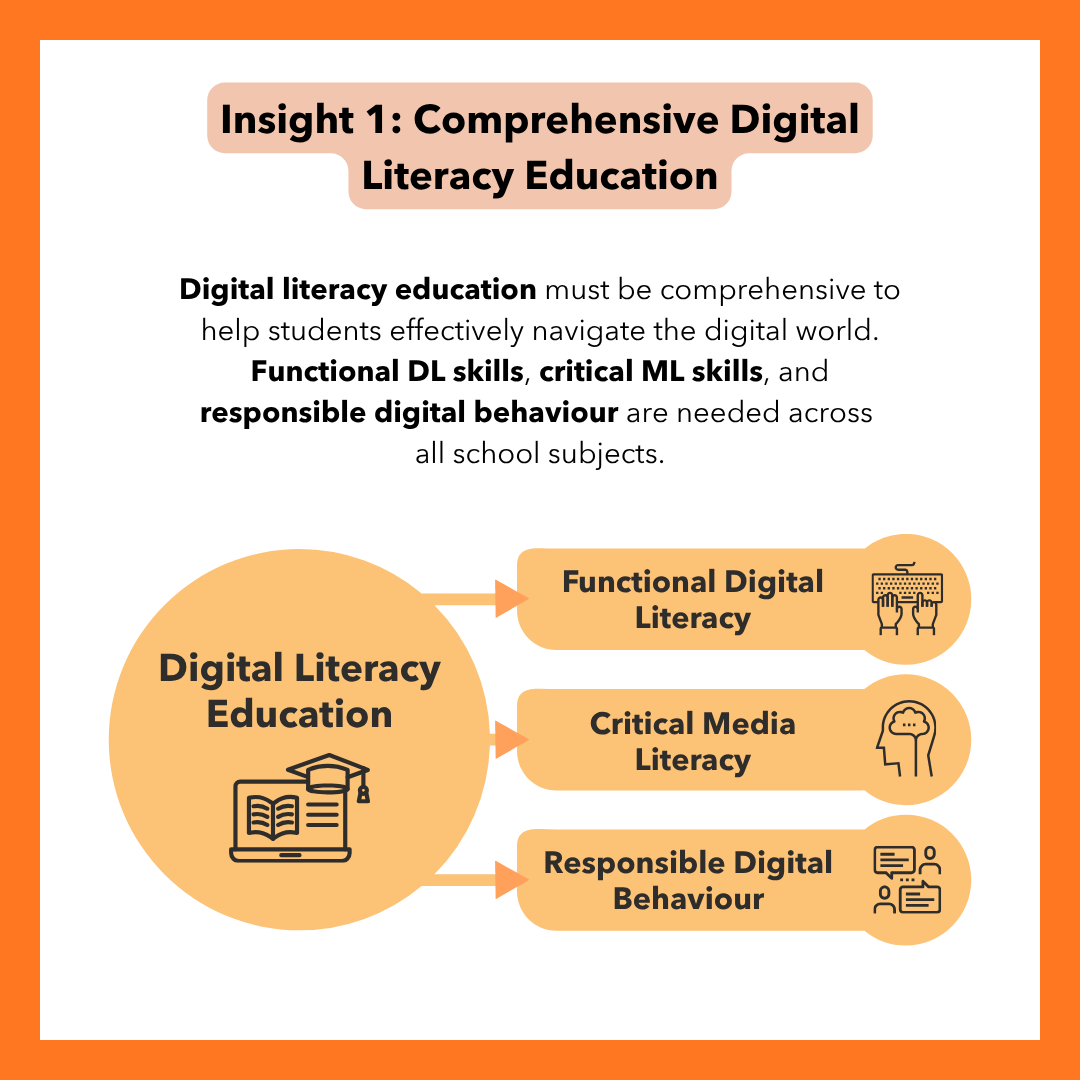
Insight 1: Comprehensive Digital Literacy Education

Infographic titled "Insight 1: Comprehensive Digital Literacy Education." Text explains digital literacy education must be comprehensive to help students effectively navigate the digital world, with functional DL skills, critical ML skills, and responsible digital behaviour needed across all school subjects. A diagram shows a central circle labeled "Digital Literacy Education" with an icon of a laptop and graduation cap, with three arrows pointing to three labeled boxes: "Functional Digital Literacy" (with a typing hands icon), "Critical Media Literacy" (with a head/thought-bubble icon), and "Responsible Digital Behaviour" (with a

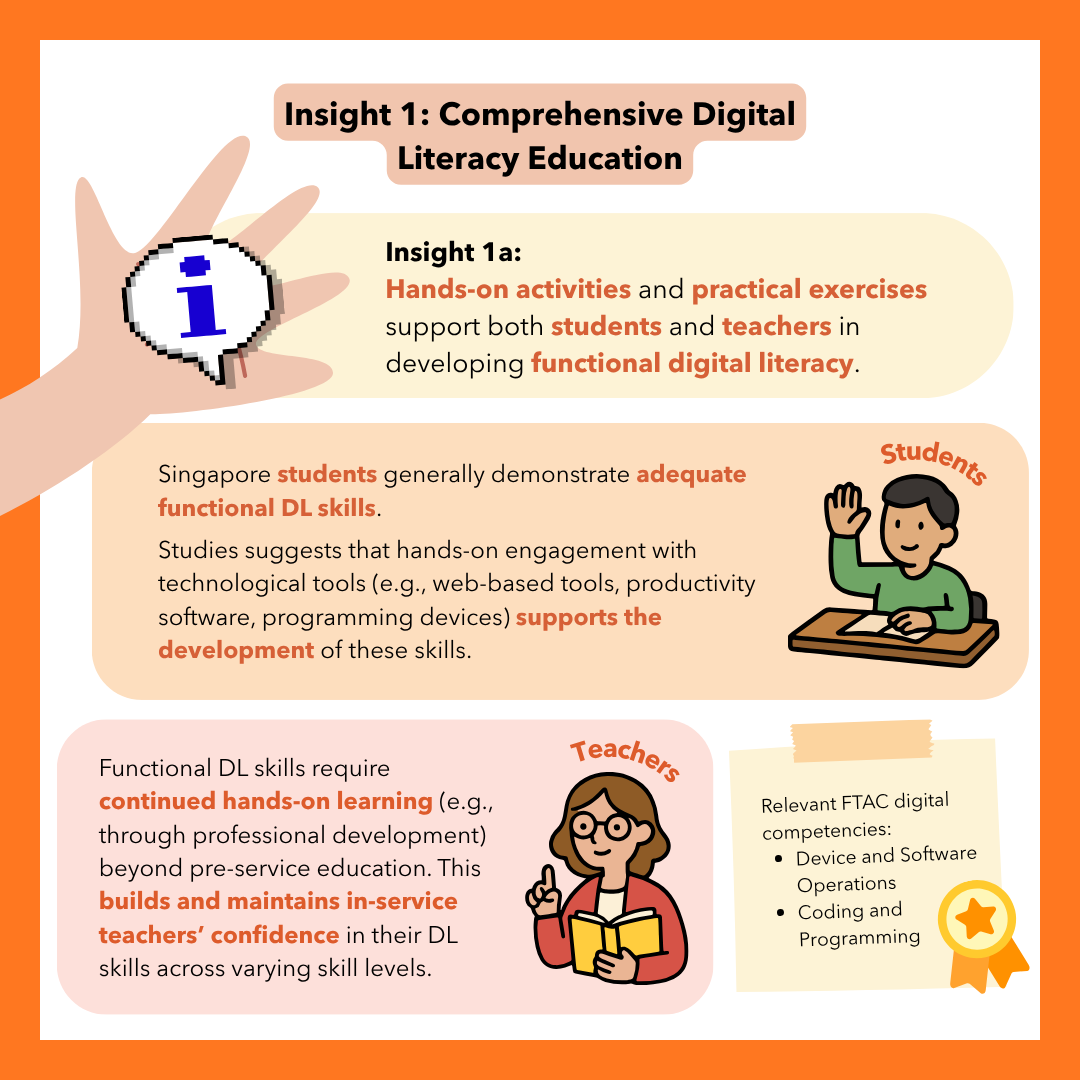
Infographic titled "Insight 1: Comprehensive Digital Literacy Education," subtitled "Insight 1a." Text states hands-on activities and practical exercises support both students and teachers in developing functional digital literacy. It notes Singapore students generally demonstrate adequate functional DL skills, and studies suggest hands-on engagement with technological tools (e.g., web-based tools, productivity software, programming devices) supports the development of these skills. It also states functional DL skills require continued hands-on learning (e.g., through professional development) beyond pre-service education, which builds and maintains in-service teachers' confidence in their DL skills across varying skill levels. Illustrations show a student raising their hand at a desk and a teacher holding a book, with a note box listing relevant FTAC digital competencies: Device and Software Operations, and Coding and Programming.

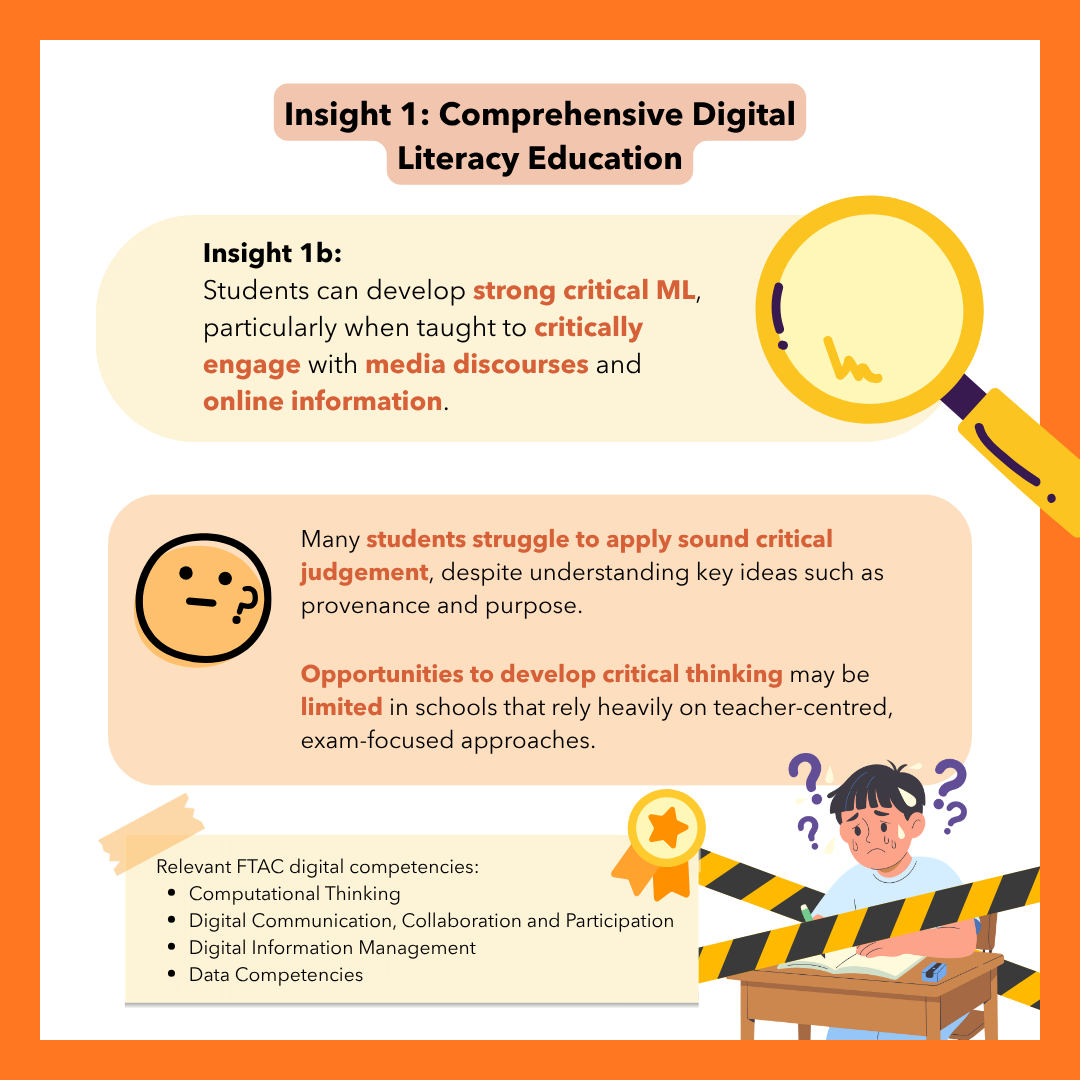
Infographic titled "Insight 1: Comprehensive Digital Literacy Education," subtitled "Insight 1b." Text states students can develop strong critical ML, particularly when taught to critically engage with media discourses and online information. It notes many students struggle to apply sound critical judgement despite understanding key ideas such as provenance and purpose (S10), and that opportunities to develop critical thinking may be limited in schools that rely heavily on teacher-centred, exam-focused approaches. An illustration shows a confused child at a desk surrounded by caution tape. A note box lists relevant FTAC digital competencies: Computational Thinking, Digital Communication Collaboration and Participation, Digital Information Management, and Data Competencies.

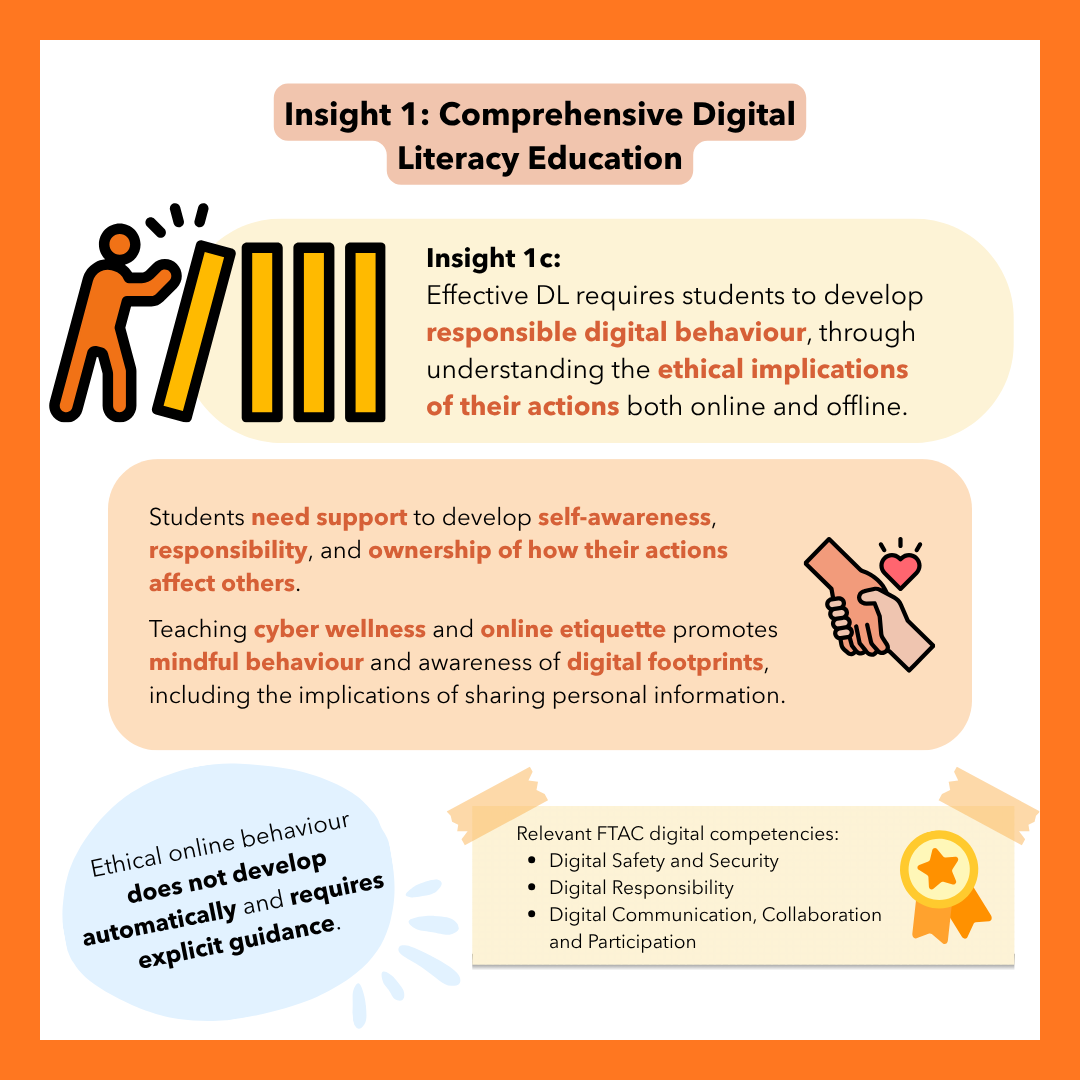
Infographic titled "Insight 1: Comprehensive Digital Literacy Education," subtitled "Insight 1c." Text states effective DL requires students to develop responsible digital behaviour through understanding the ethical implications of their actions both online and offline. It notes students need support developing self-awareness, responsibility, and ownership of how their actions affect others, and that teaching cyber wellness and online etiquette promotes mindful behaviour and awareness of digital footprints, including implications of sharing personal information. A quote bubble states ethical online behaviour does not develop automatically and requires explicit guidance. A note box lists relevant FTAC digital competencies: Digital Safety and Security, Digital Responsibility, and Digital Communication, Collaboration and Participation.

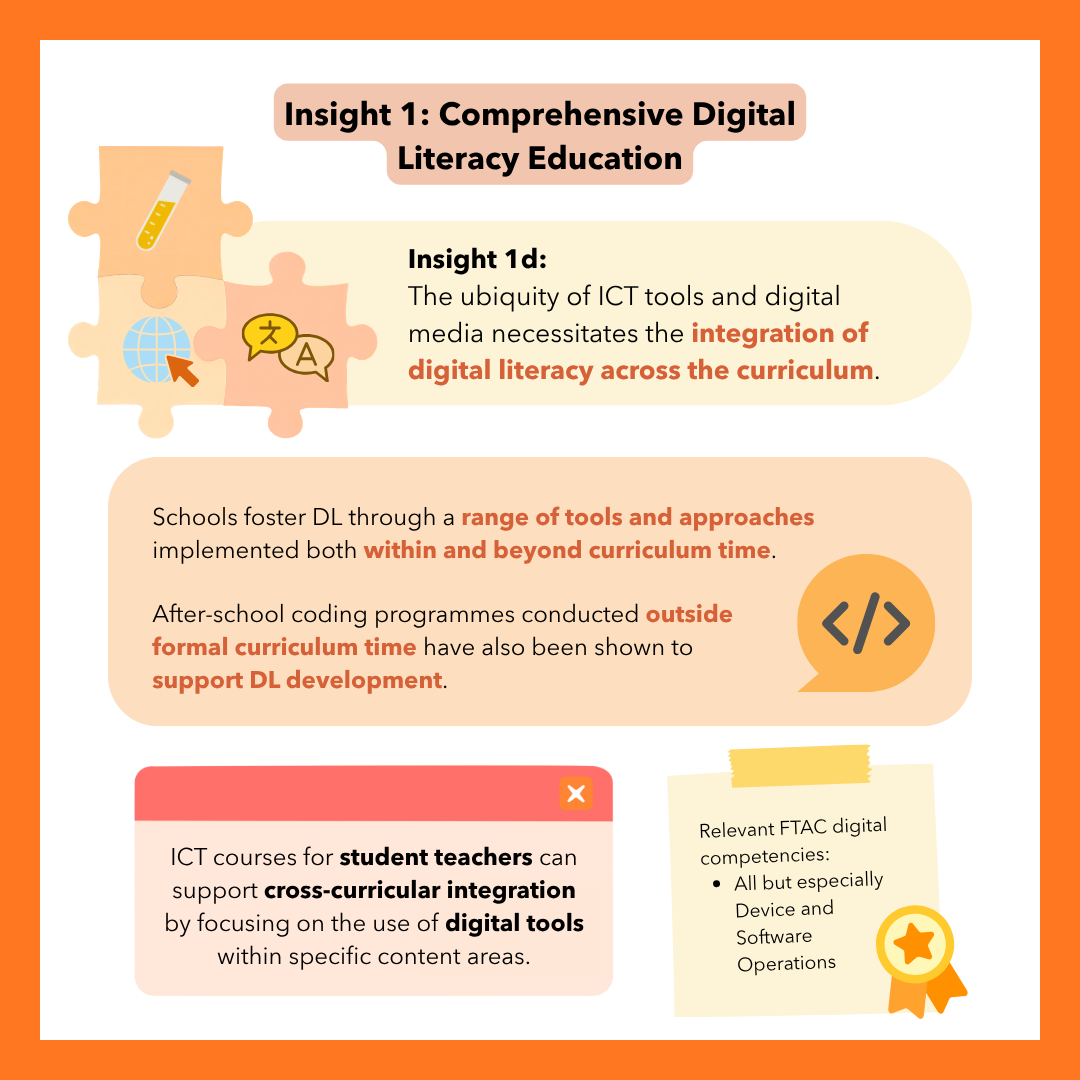
Infographic titled "Insight 1: Comprehensive Digital Literacy Education," subtitled "Insight 1d." Text states the ubiquity of ICT tools and digital media necessitates the integration of digital literacy across the curriculum. It notes schools foster DL through a range of tools and approaches implemented within and beyond curriculum time, and that after-school coding programmes conducted outside formal curriculum time have also been shown to support DL development. A red banner box states ICT courses for student teachers can support cross-curricular integration by focusing on the use of digital tools within specific content areas. A note box lists relevant FTAC digital competencies: All, but especially Device and Software Operations.

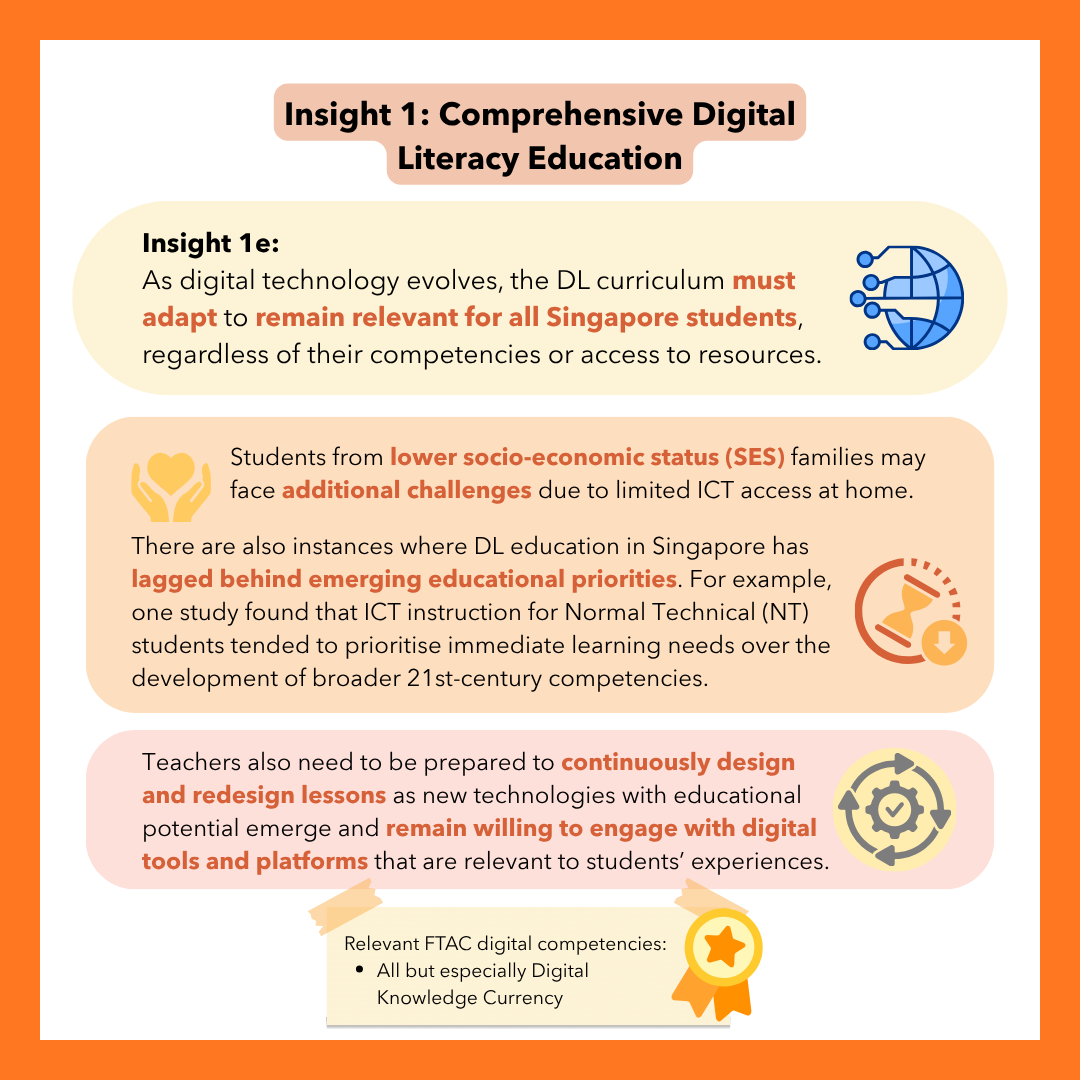
Infographic titled "Insight 1: Comprehensive Digital Literacy Education," subtitled "Insight 1e." Text states as digital technology evolves, the DL curriculum must adapt to remain relevant for all Singapore students, regardless of their competencies or access to resources. It notes students from lower socio-economic status (SES) families may face additional challenges due to limited ICT access at home, and that DL education in Singapore has sometimes lagged behind emerging educational priorities—for example, one study found ICT instruction for Normal Technical (NT) students prioritised immediate learning needs over broader 21st-century competencies. It also states teachers need to continuously design and redesign lessons as new technologies emerge and remain willing to engage with relevant digital tools and platforms. A note box lists relevant FTAC digital competencies: All, but especially Digital Knowledge Currency.


Insight 2 : Implementation Challenges

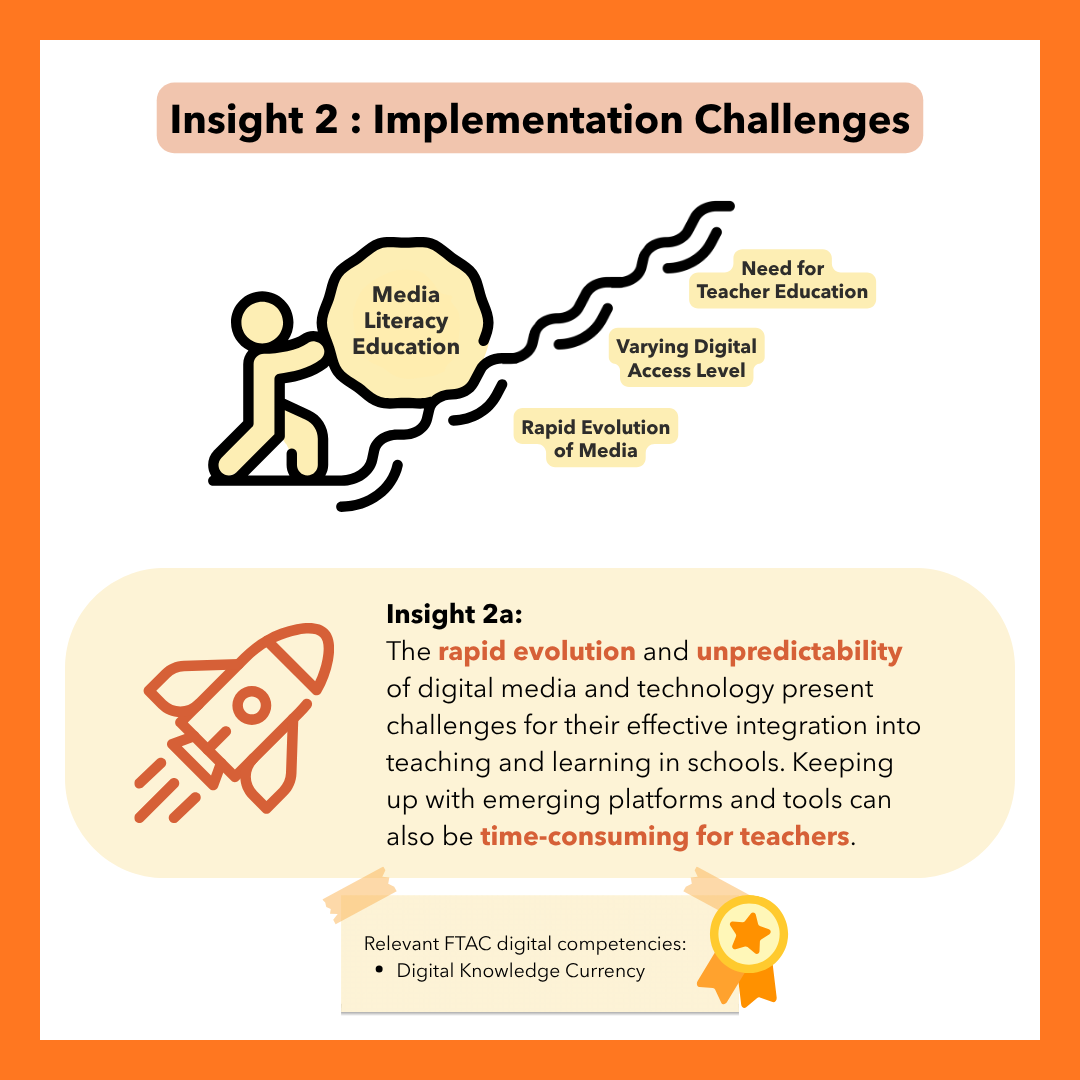
Infographic titled "Insight 2: Implementation Challenges." An illustration shows a figure pushing a large boulder labeled "Media Literacy Education" up a wavy path, with three labels along the path: "Need for Teacher Education," "Varying Digital Access Level," and "Rapid Evolution of Media." Below, subtitled "Insight 2a," text states the rapid evolution and unpredictability of digital media and technology present challenges for their effective integration into teaching and learning in schools, and that keeping up with emerging platforms and tools can be time-consuming for teachers. A note box lists the relevant FTAC digital competency: Digital Knowledge Currency.

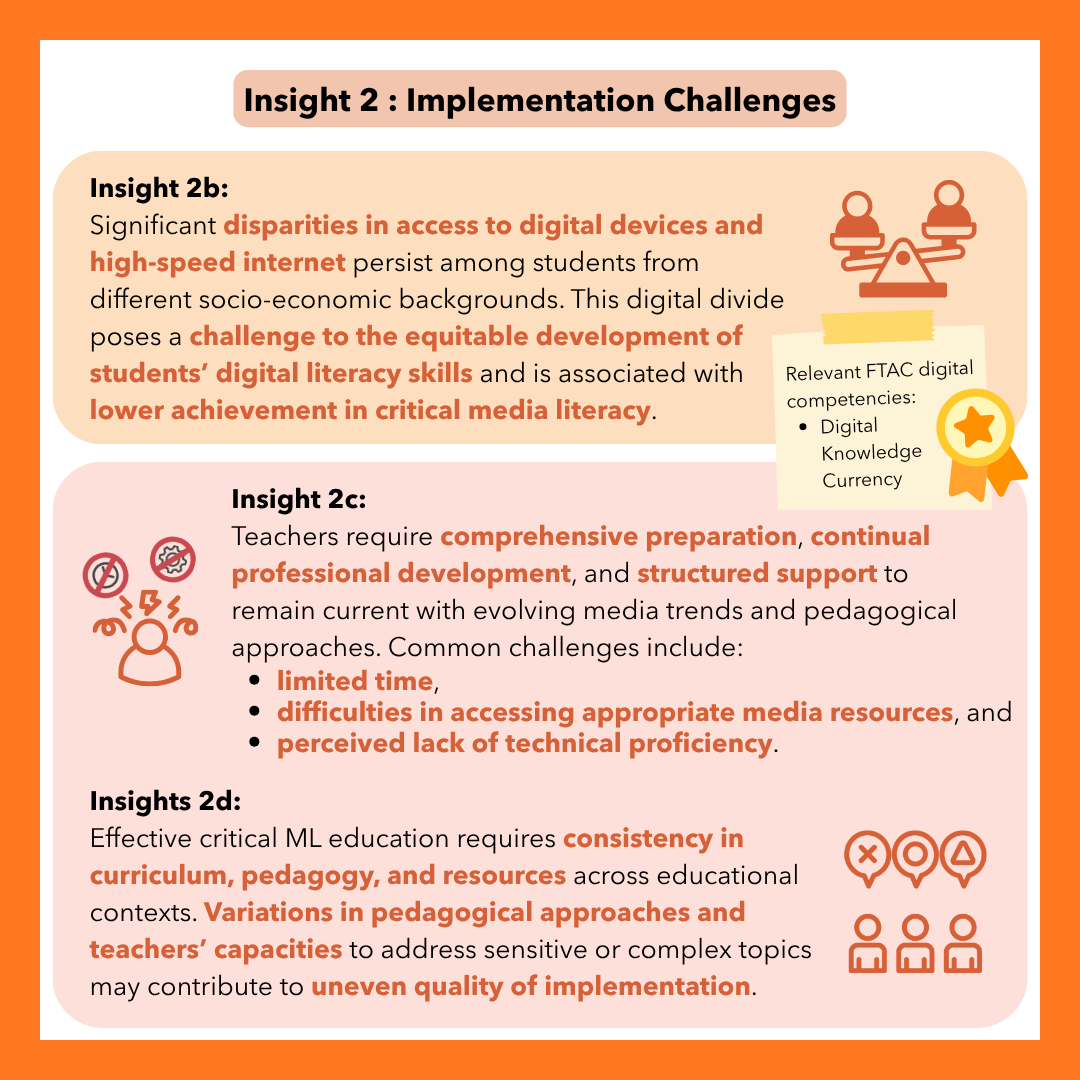
Infographic titled "Insight 2: Implementation Challenges," covering Insights 2b, 2c, and 2d. Insight 2b states significant disparities in access to digital devices and high-speed internet persist among students from different socio-economic backgrounds, posing a challenge to equitable development of digital literacy skills and associated with lower achievement in critical media literacy (relevant FTAC competency to Insights 2b, 2c, and 2d: Digital Knowledge Currency). Insight 2c states teachers require comprehensive preparation, continual professional development, and structured support to remain current with evolving media trends and pedagogical approaches, with common challenges including limited time, difficulties accessing appropriate media resources, and perceived lack of technical proficiency. Insight 2d states effective critical ML education requires consistency in curriculum, pedagogy, and resources across educational contexts, and that variations in pedagogical approaches and teachers' capacities to address sensitive or complex topics may contribute to uneven quality of implementation.


Insight 3 : Importance of Parental Involvement

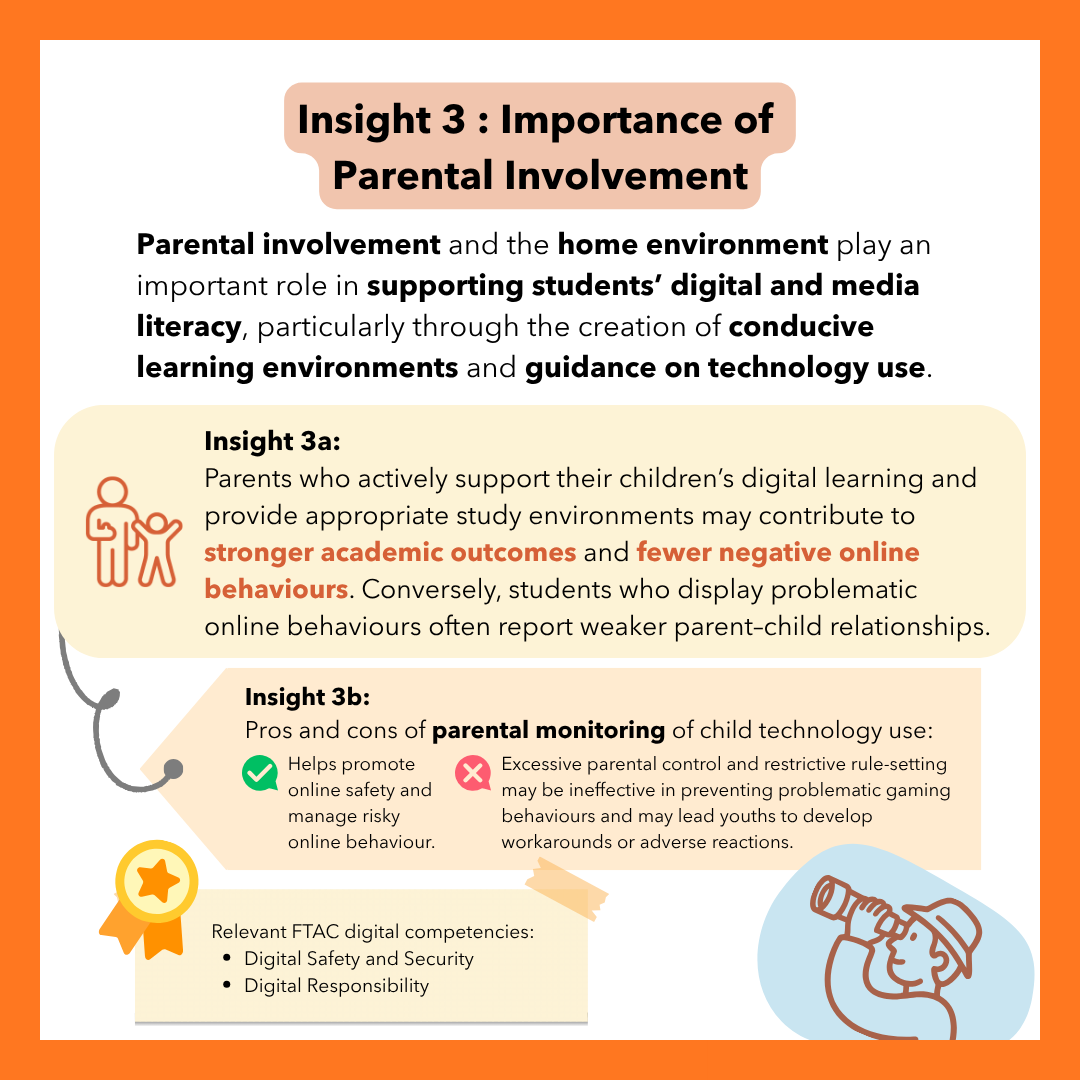
Infographic titled "Insight 3: Importance of Parental Involvement." Text states parental involvement and the home environment play an important role in supporting students' digital and media literacy, particularly through creating conducive learning environments and providing guidance on technology use. Insight 3a states parents who actively support their children's digital learning and provide appropriate study environments may contribute to stronger academic outcomes and fewer negative online behaviours, while students displaying problematic online behaviours often report weaker parent-child relationships. Insight 3b presents pros and cons of parental monitoring of child technology use: a checkmark notes it helps promote online safety and manage risky online behaviour, while an X notes excessive parental control and restrictive rule-setting may be ineffective in preventing problematic gaming behaviours and may lead youths to develop workarounds or adverse reactions. A note box lists relevant FTAC digital competencies: Digital Safety and Security, and Digital Responsibility.


Insight 4 : Cyber Wellness and Safety Education

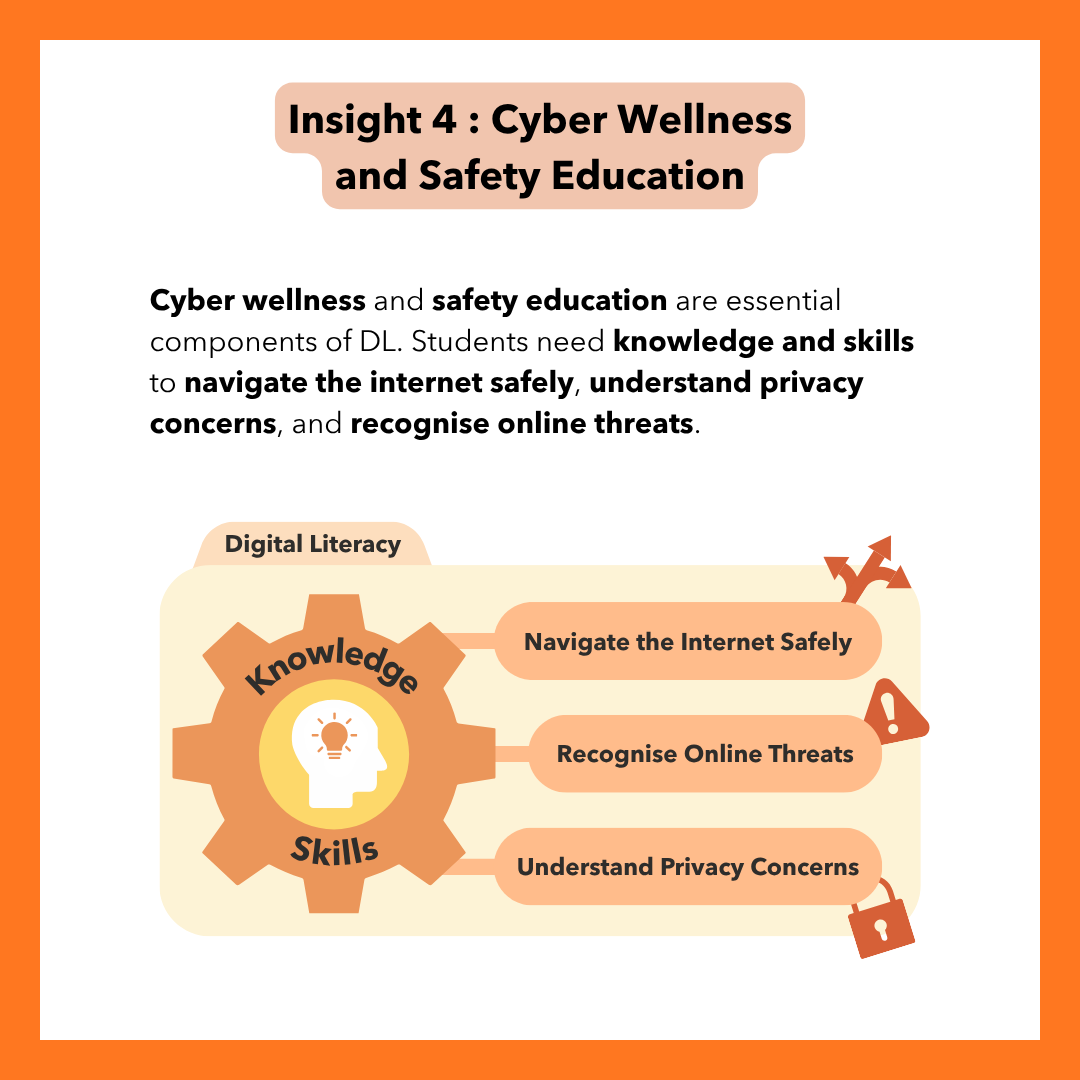
Infographic titled "Insight 4: Cyber Wellness and Safety Education." Text states cyber wellness and safety education are essential components of DL, and students need knowledge and skills to navigate the internet safely, understand privacy concerns, and recognise online threats. A diagram shows a gear labeled "Knowledge/Skills" under "Digital Literacy," with three connected boxes: "Navigate the Internet Safely," "Recognise Online Threats," and "Understand Privacy Concerns," each paired with a small icon (a directional arrow sign, a warning triangle, and a padlock, respectively).

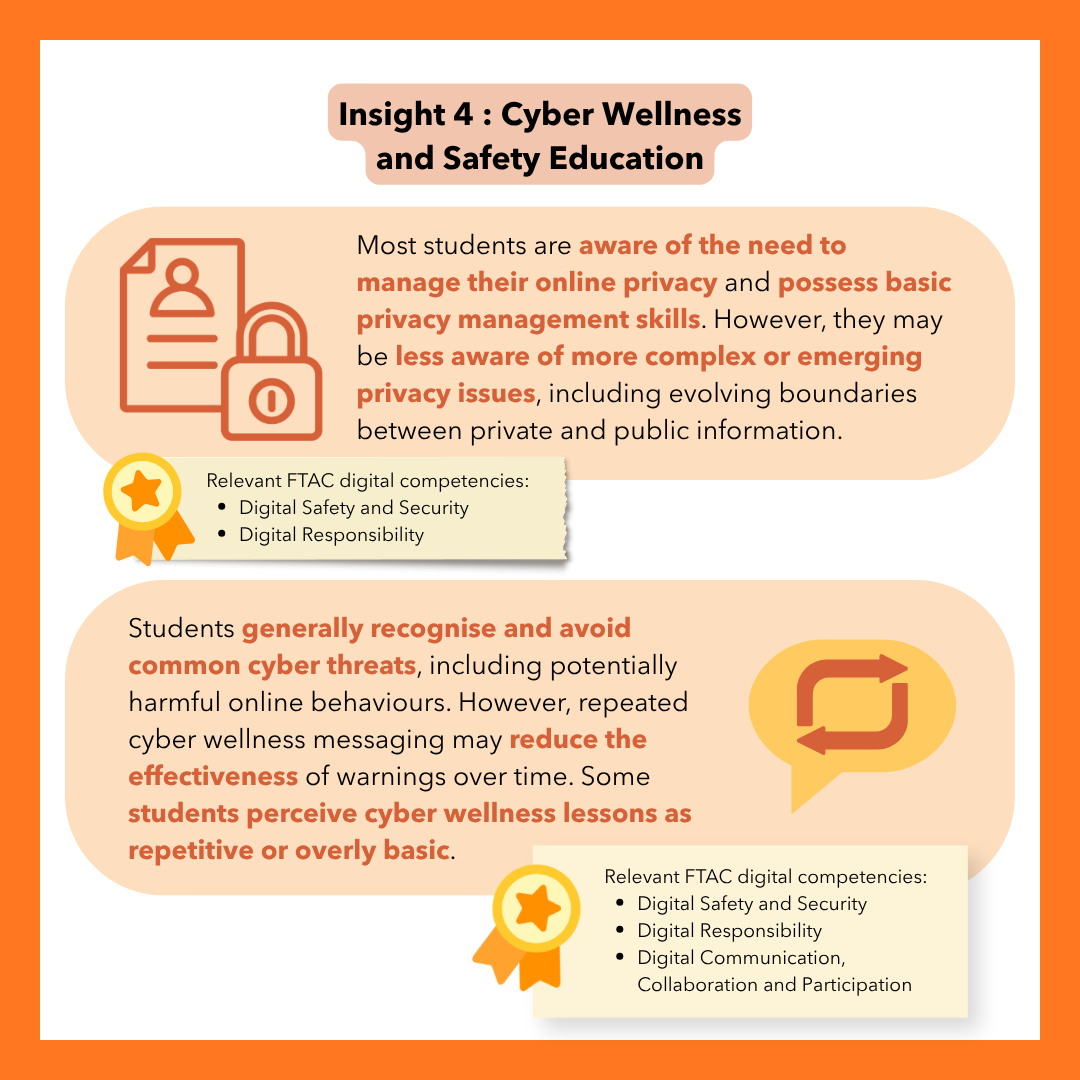
Infographic titled "Insight 4: Cyber Wellness and Safety Education." First section states most students are aware of the need to manage their online privacy and possess basic privacy management skills, but may be less aware of more complex or emerging privacy issues, including evolving boundaries between private and public information (relevant FTAC competencies: Digital Safety and Security, Digital Responsibility). Second section states students generally recognise and avoid common cyber threats, including potentially harmful online behaviours, but repeated cyber wellness messaging may reduce the effectiveness of warnings over time, with some students perceiving cyber wellness lessons as repetitive or overly basic (relevant FTAC competencies: Digital Safety and Security, Digital Responsibility, Digital Communication, Collaboration and Participation).

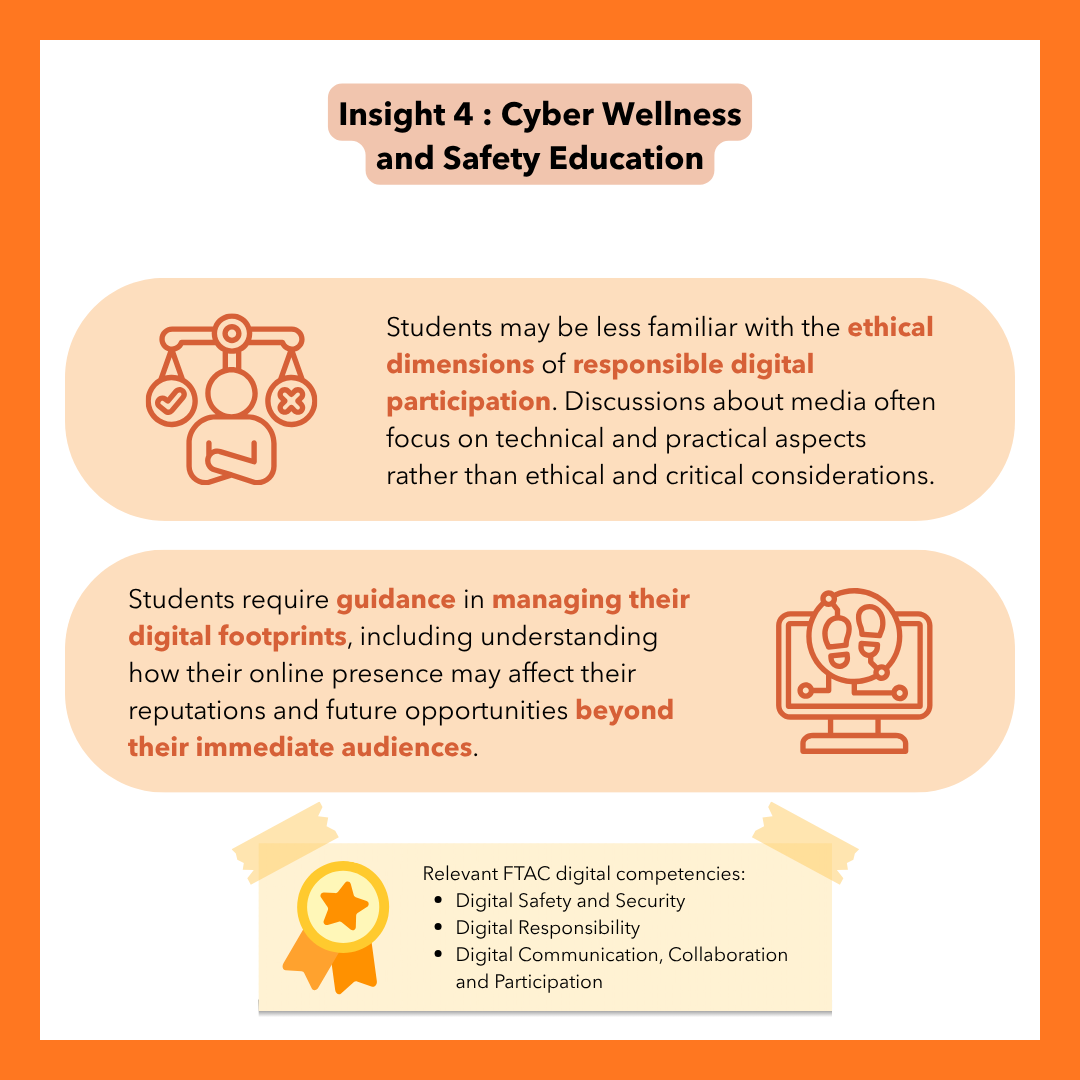
Infographic titled "Insight 4: Cyber Wellness and Safety Education." First section states students may be less familiar with the ethical dimensions of responsible digital participation, as discussions about media often focus on technical and practical aspects rather than ethical and critical considerations. Second section states students require guidance in managing their digital footprints, including understanding how their online presence may affect their reputations and future opportunities beyond their immediate audiences. A note box lists relevant FTAC digital competencies: Digital Safety and Security, Digital Responsibility, and Digital Communication, Collaboration and Participation.


Recommendations

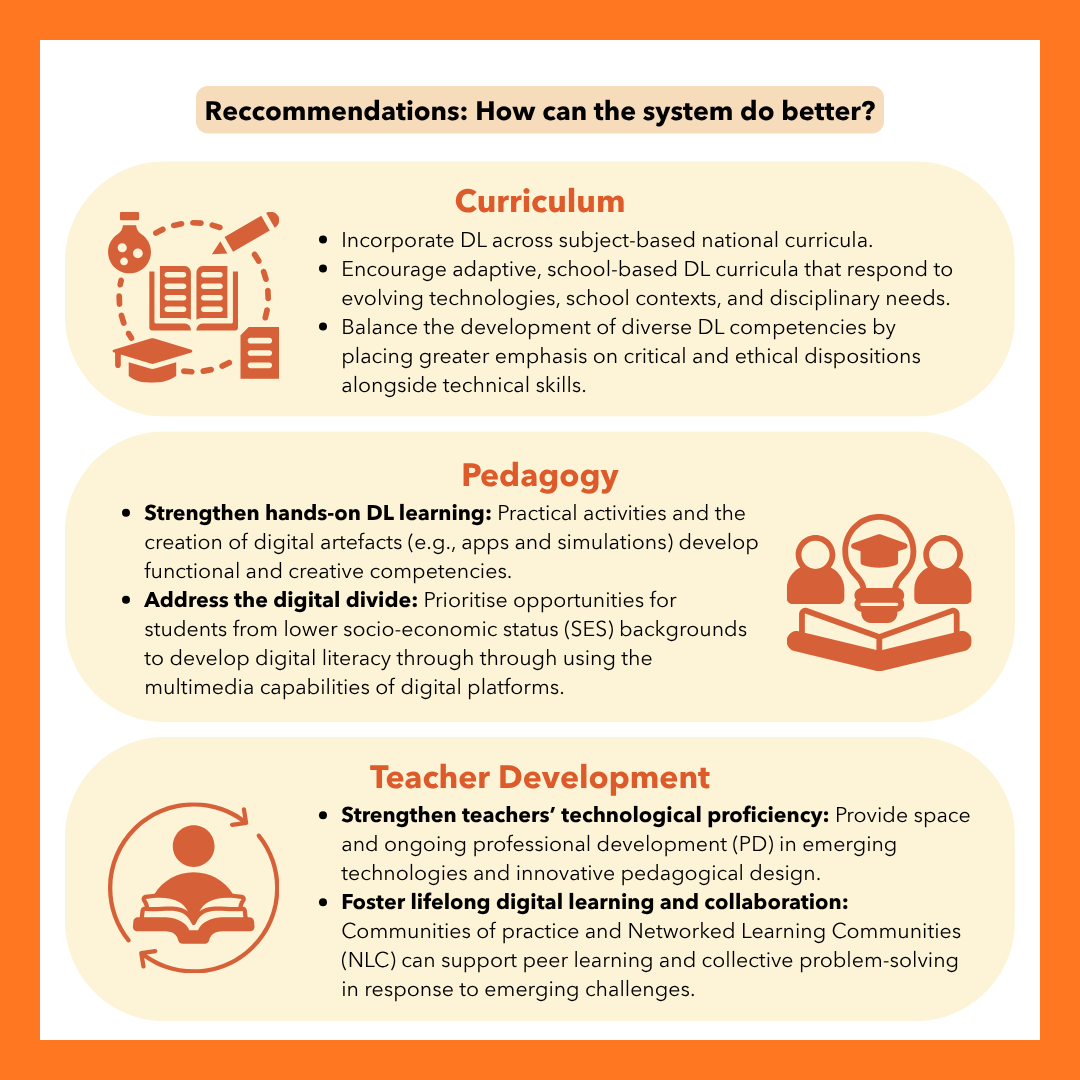
Infographic titled "Recommendations: How can the system do better?" with three sections. "Curriculum" recommends incorporating DL across subject-based national curricula, encouraging adaptive school-based DL curricula that respond to evolving technologies and contexts, and balancing diverse DL competencies by emphasising critical and ethical dispositions alongside technical skills. "Pedagogy" recommends strengthening hands-on DL learning through practical activities and creating digital artefacts (e.g., apps, simulations), and addressing the digital divide by prioritising opportunities for students from lower socio-economic status (SES) backgrounds to develop digital literacy using multimedia capabilities of digital platforms. "Teacher Development" recommends strengthening teachers' technological proficiency through space and ongoing professional development in emerging technologies and pedagogical design, and fostering lifelong digital learning and collaboration through communities of practice and Networked Learning Communities (NLC) to support peer learning and collective problem-solving.


Research Gaps

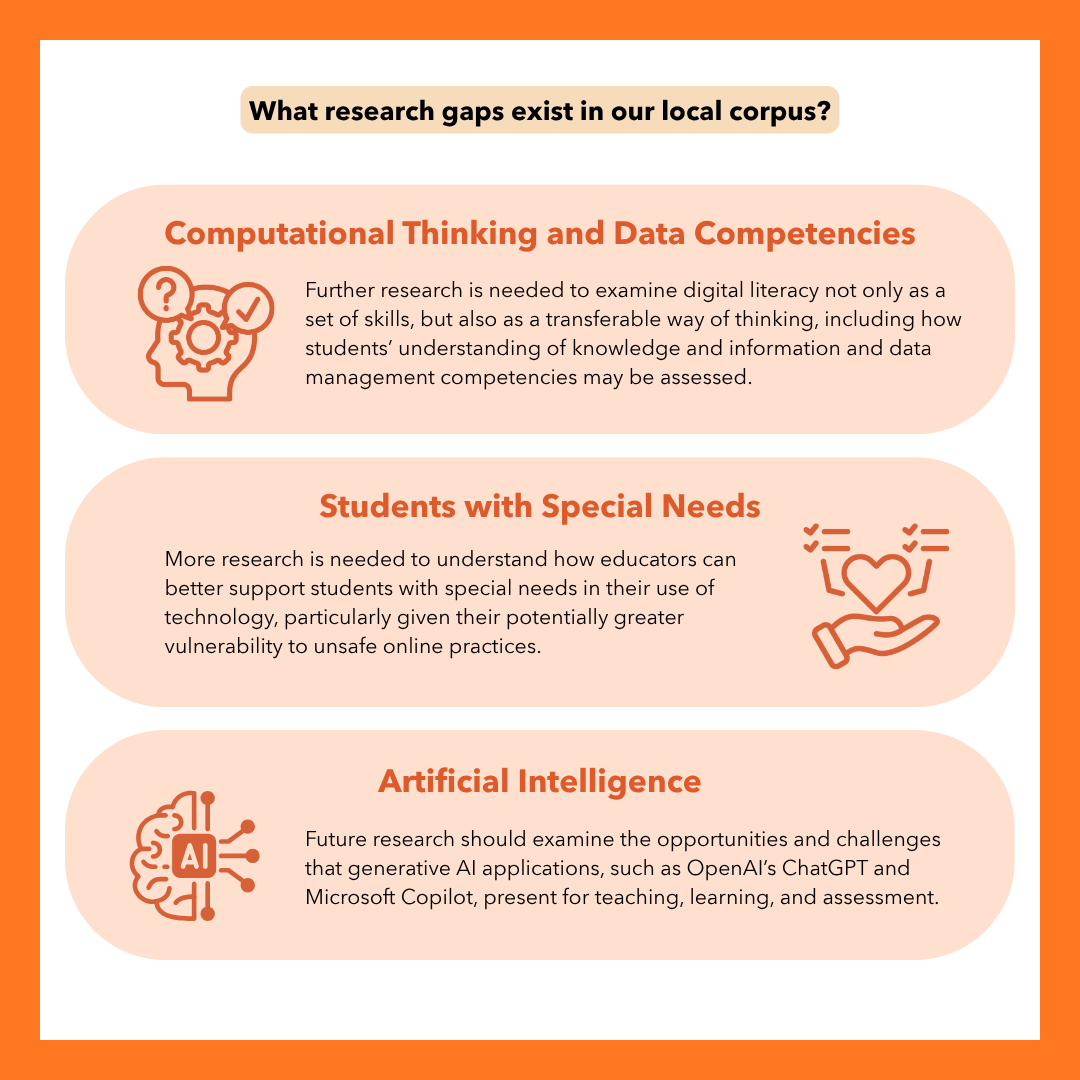
Infographic titled "What research gaps exist in our local corpus?" with three sections. "Computational Thinking and Data Competencies" states further research is needed to examine digital literacy not only as a set of skills but also as a transferable way of thinking, including how students' understanding of knowledge, information, and data management competencies may be assessed. "Students with Special Needs" states more research is needed to understand how educators can better support students with special needs in their use of technology, given their potentially greater vulnerability to unsafe online practices. "Artificial Intelligence" states future research should examine the opportunities and challenges that generative AI applications, such as OpenAI's ChatGPT and Microsoft Copilot, present for teaching, learning, and assessment.


Question-Icon Further resources

To access the full LES:

  1. Local Evidence Synthesis on Digital and Media Literacy


Question-Icon Research synthesis team

  • Assoc Prof Csilla Weninger, Head, English Language & Literature and Associate Professor, National Institute of Education – English Language & Literature
  • Assoc Prof Victor Lim Fei, Deputy Head (Research), English Language & Literature and Associate Professor, National Institute of Education – English Language & Literature
  • Dr Katherine Guangji Yuan, Education Research Scientist, Centre for Research in Pedagogy & Practice and Research Scientist, National Institute of Education – Centre for Research in Pedagogy & Practice
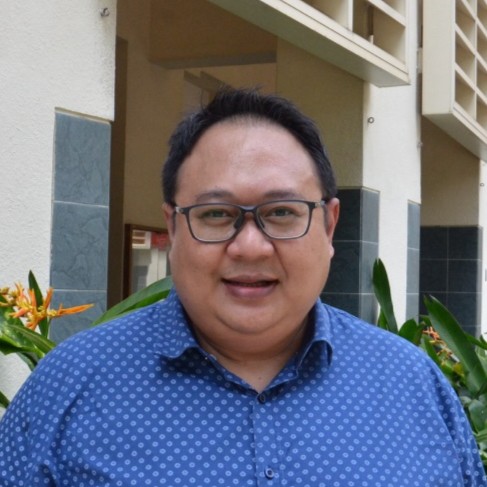
  • Dr Johannis Auri Bin Abdul Aziz, Research Fellow, Academic Writer & Research Data Management Research Staff, Office for Research, National Institute of Education

Acknowledgements

The LES on Digital and Media Literacy involves 44 studies funded by the Education Research Funding Programme (ERFP). Any opinions, findings, and conclusions or recommendations expressed in this material are those of the author(s) and do not necessarily reflect the views of the Singapore MOE and NIE.

This knowledge resource was extracted and reconstructed from the LES, with approval from the authors, and presented by Ms Tan Jing Ting on 07 September 2026.

Never Miss A Story