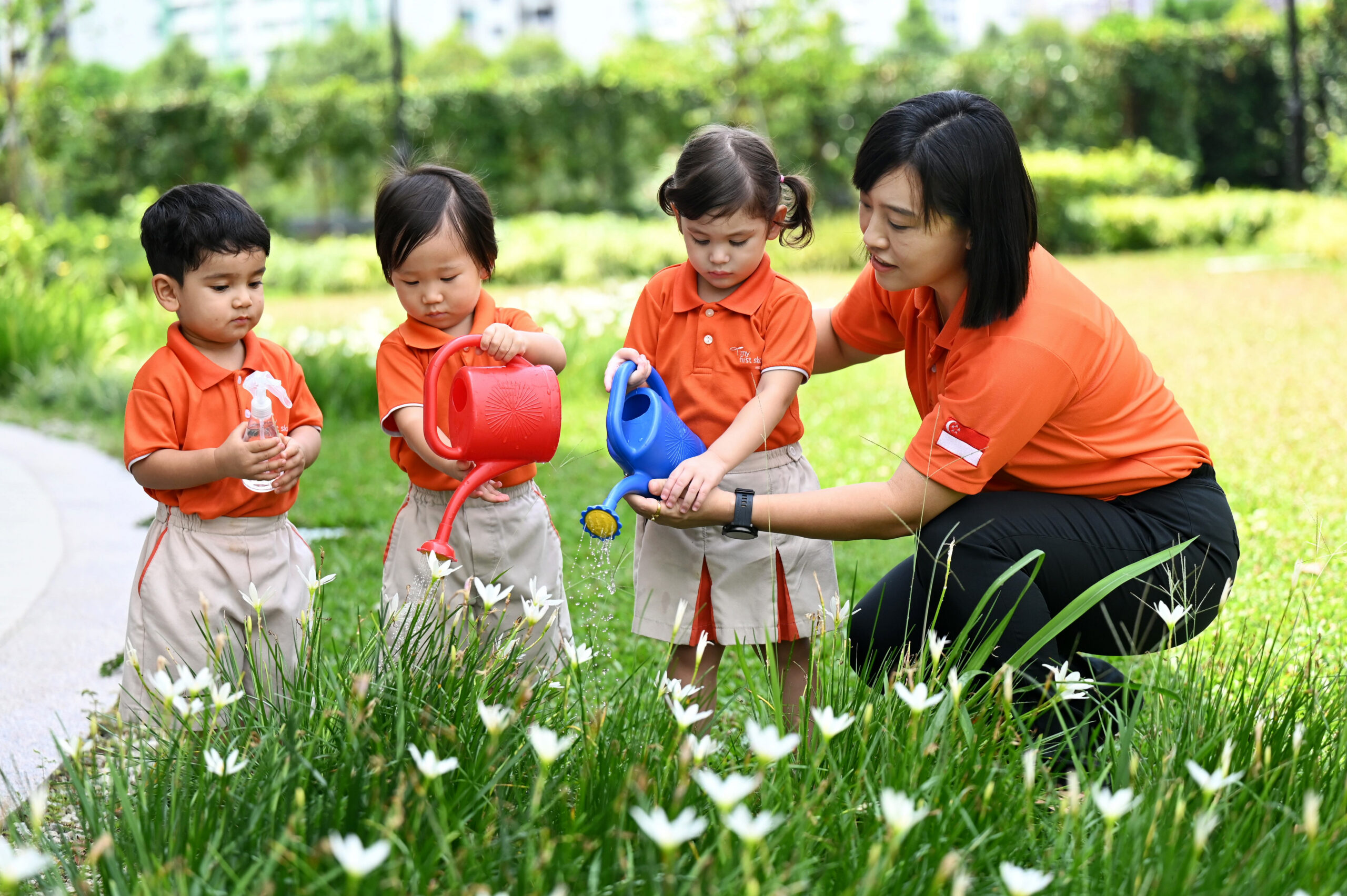
Young Children’s Voices in Mathematical Problem Solving
Contributed by Dr Ho Siew Yin and Sng Wei Qin Abbie, from NTUC First Campus, for SingTeach Virtual […]
Read More
Number: 62
Fund source: ERFP
Completed: 2017-2022
Nature (type): baseline, development, exploratory, explanatory, evaluation, experimental, intervention, and scaling and translation.
Primary school, secondary school, junior college
For more details, refer to Annex A of the full LES document.



 Summary
 Local evidence synthesis (LES) on Teacher Learning
 Overview of Teacher Learning
 Insight 1: Engaging in collaborative research
Insight 2: Change in mindset and focus on formative instructional practices

Insight 3: Teacher agency, emotional well-being,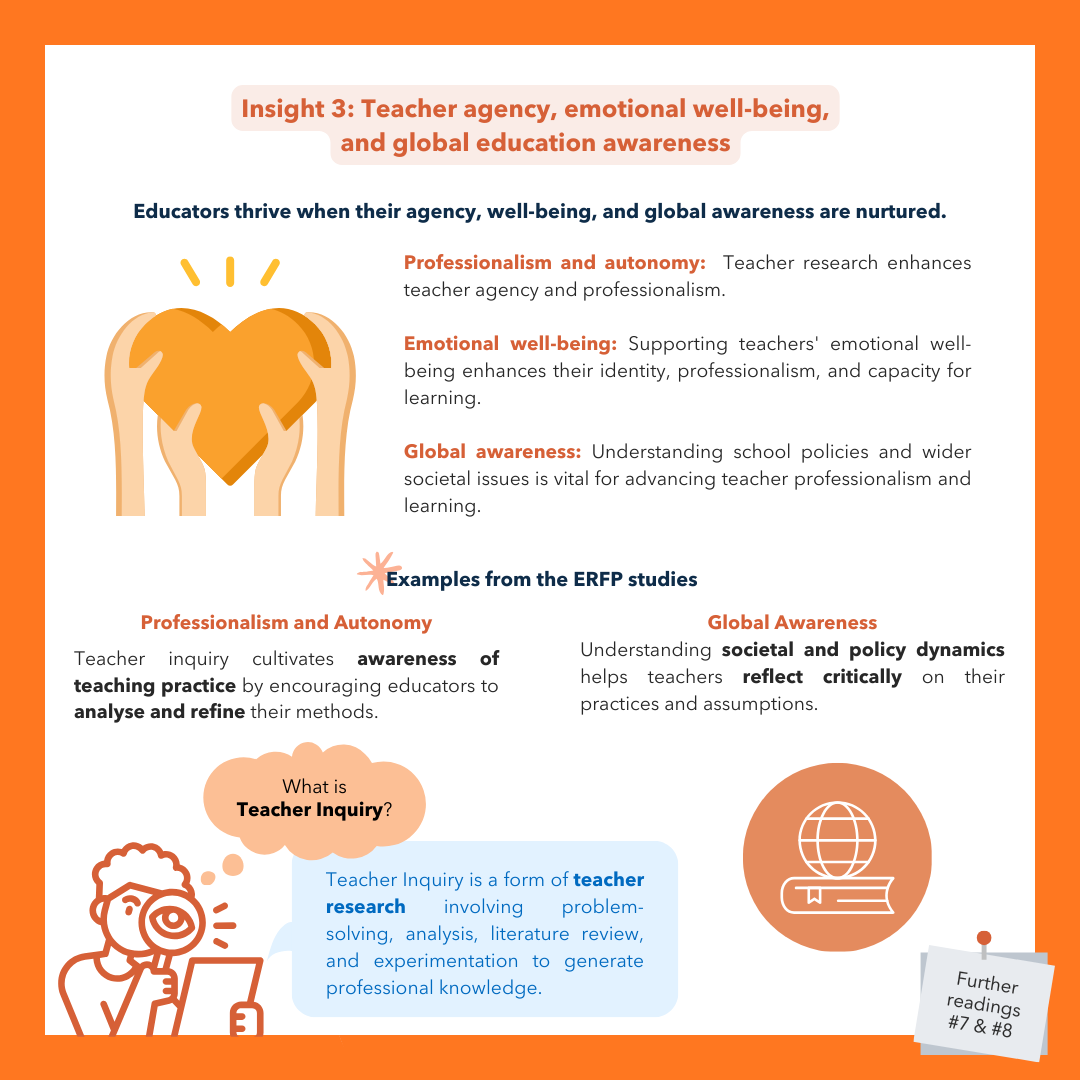 Recommendations for system improvement

 Research gaps in our local corpus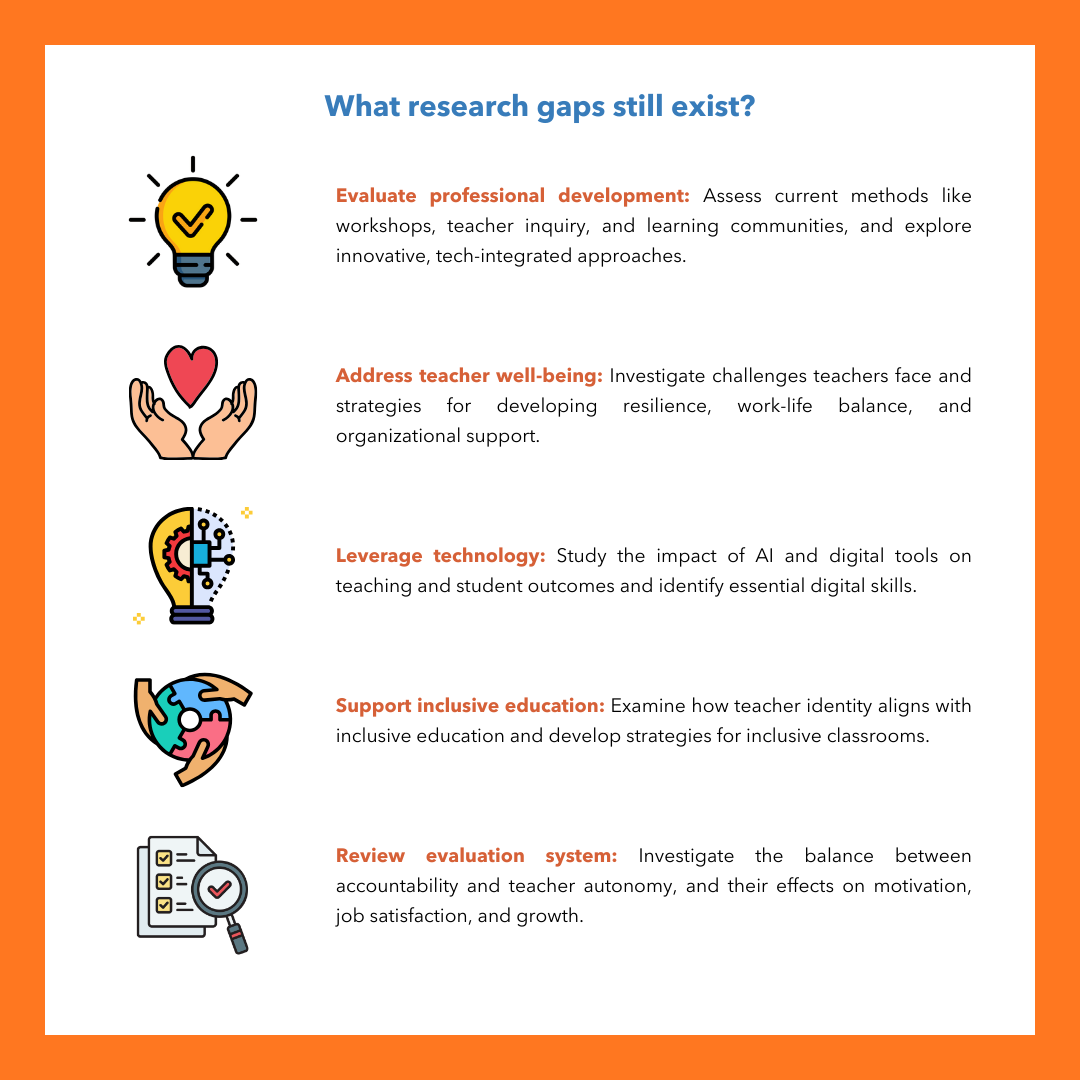
 Further resources
To access the full LES:
 Research synthesis team
AcknowledgementsThe LES on Teacher Learning involves 62 studies funded by the Education Research Funding Programme (ERFP) and administered by the Office for Research (OfR), formerly Office of Education Research (OER). Any opinions, findings, and conclusions or recommendations expressed in this material are those of the author(s) and do not necessarily reflect the views of the Singapore MOE and NIE.
This knowledge resource was extracted and reconstructed from the LES, with approval from the authors, and presented by Ms Tan Jing Ting on 26 December 2024.