Read More
- Local evidence synthesis (LES) on Language Learning and Bilingualism
- Overview of Language Learning and Bilingualism
- Insight 1: Technology Supports Language Learning
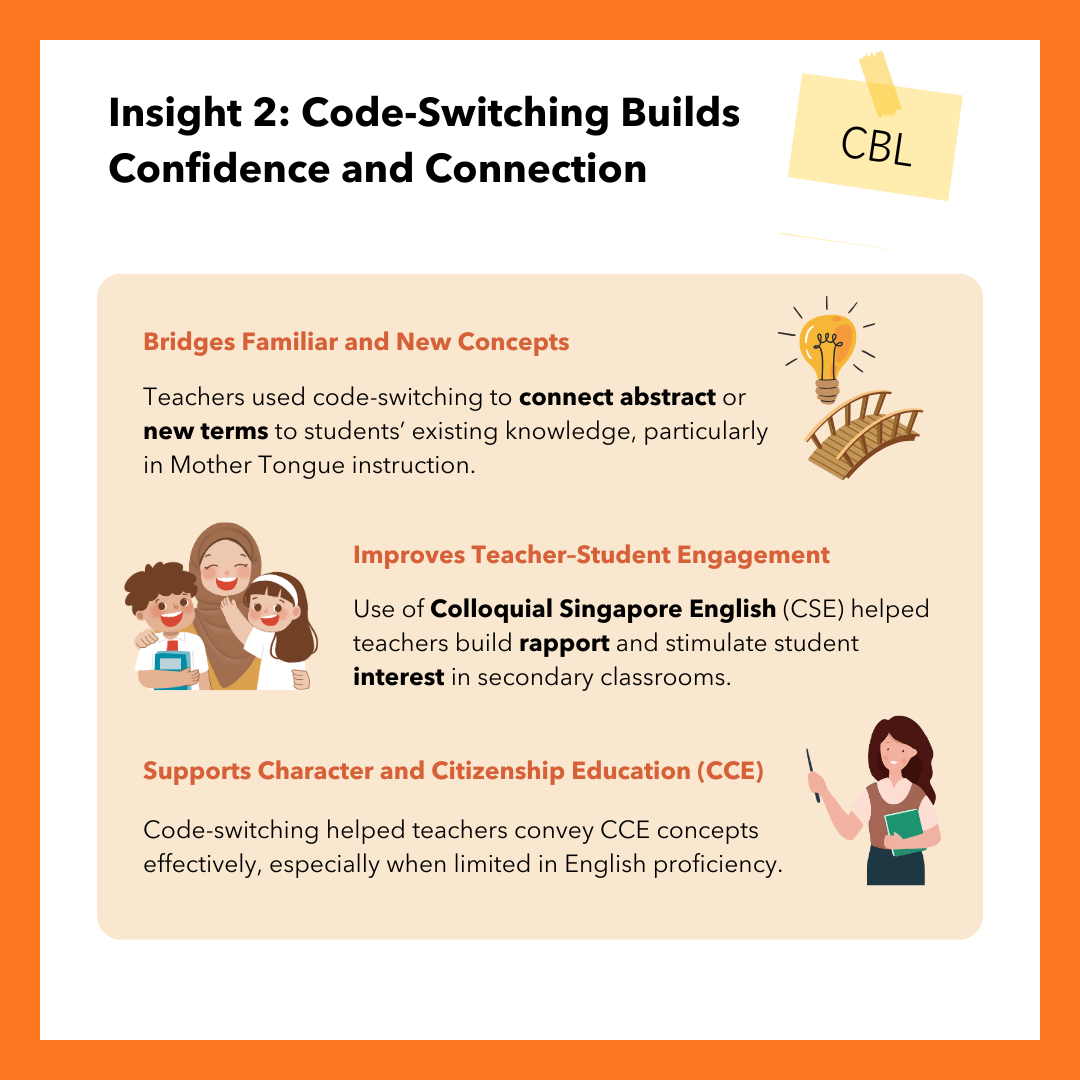
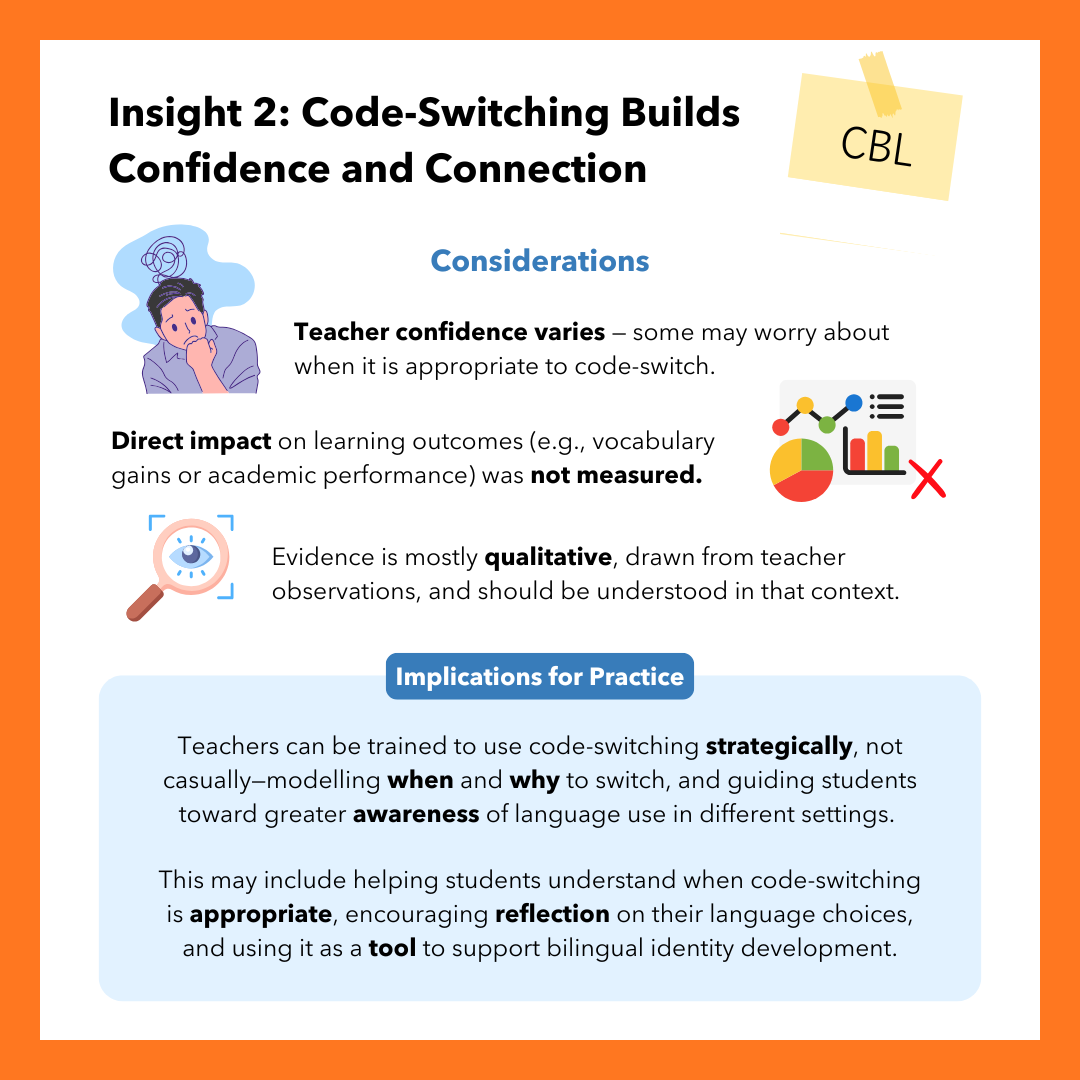
- Insight 2: Code-Switching Builds Confidence and Connection
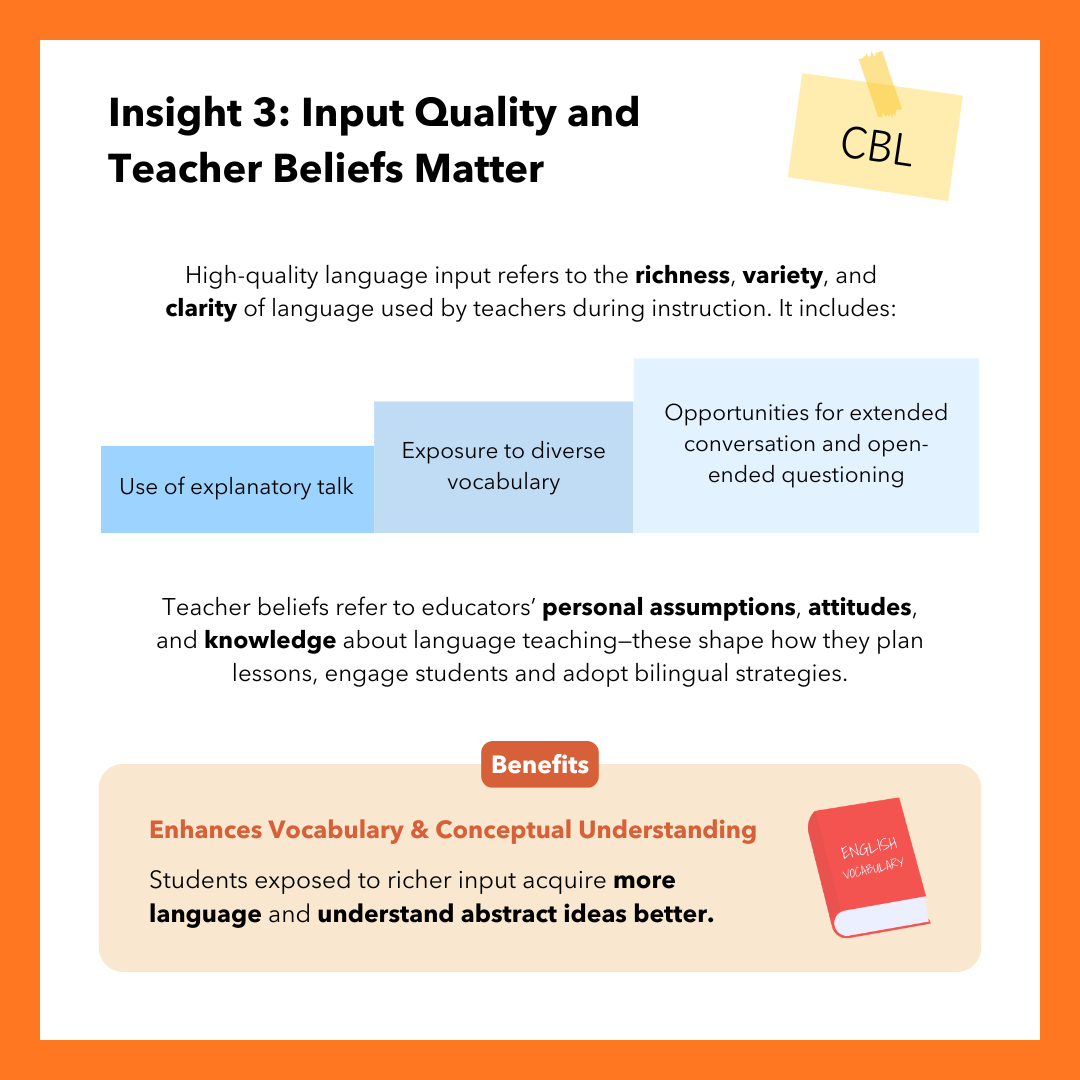
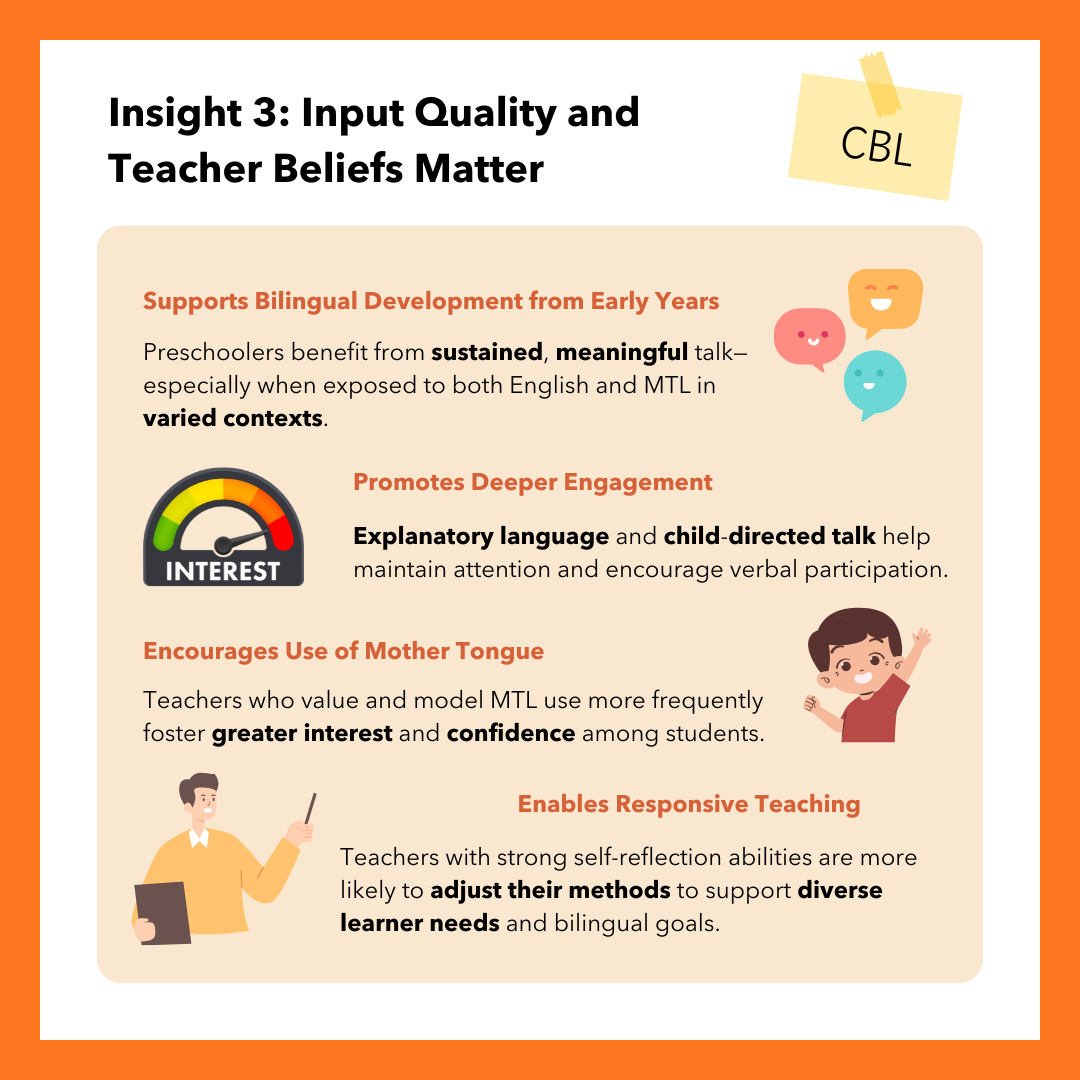
- Insight 3: Input Quality and Teacher Beliefs Matter
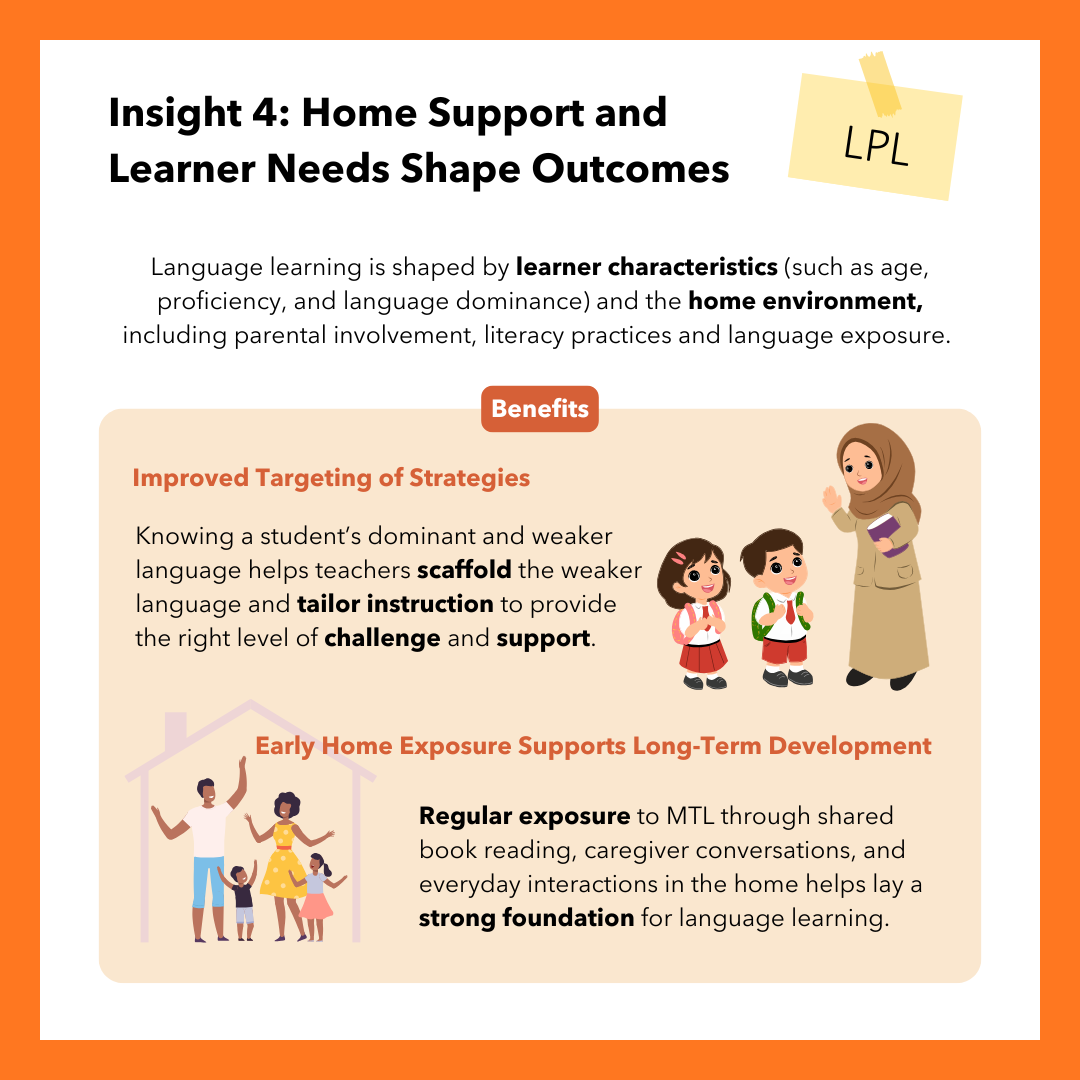
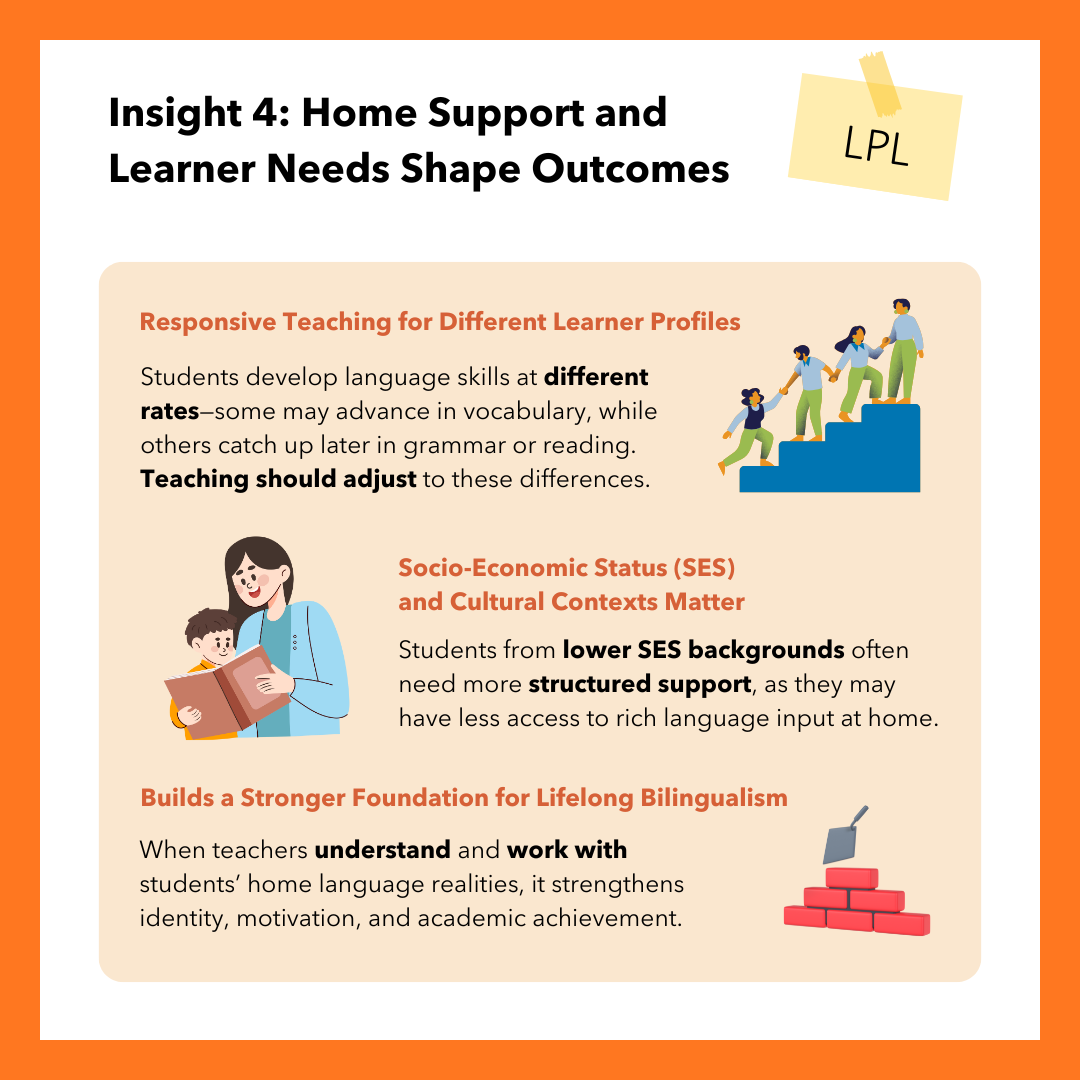
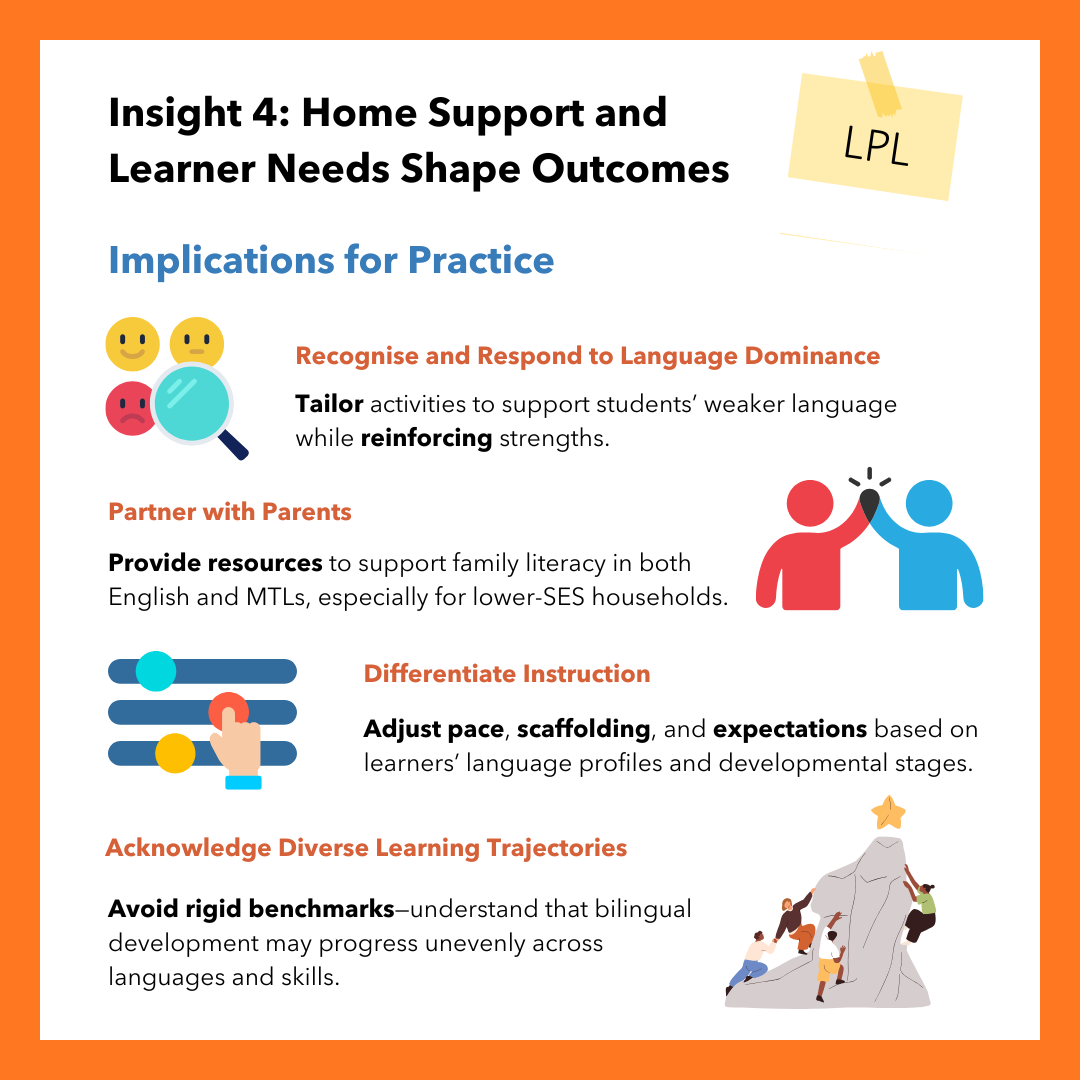
- Insight 4: Home Support and Learner Needs Shape Outcomes
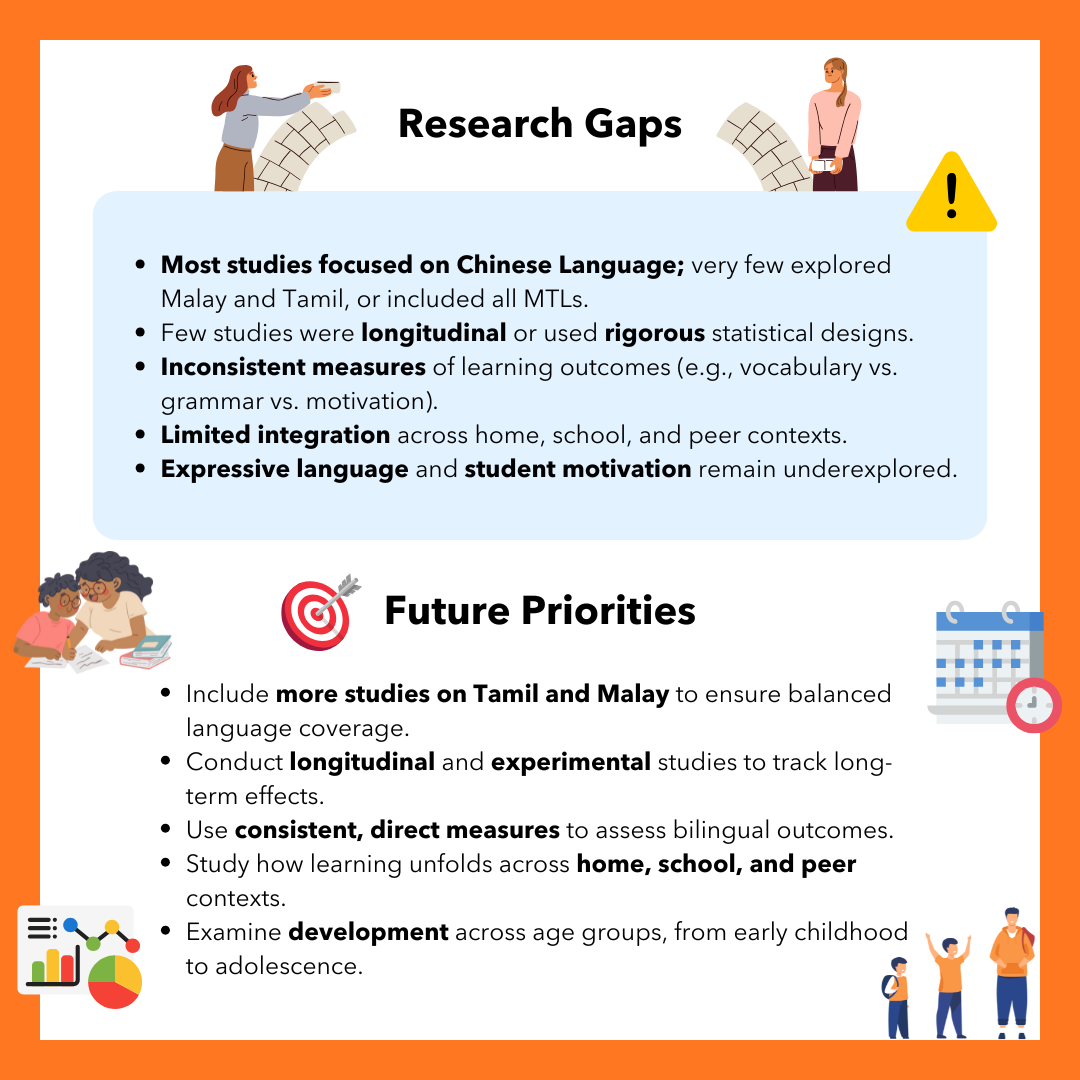
- Research Gaps
- Further resources
- Research synthesis team
- Acknowledgements
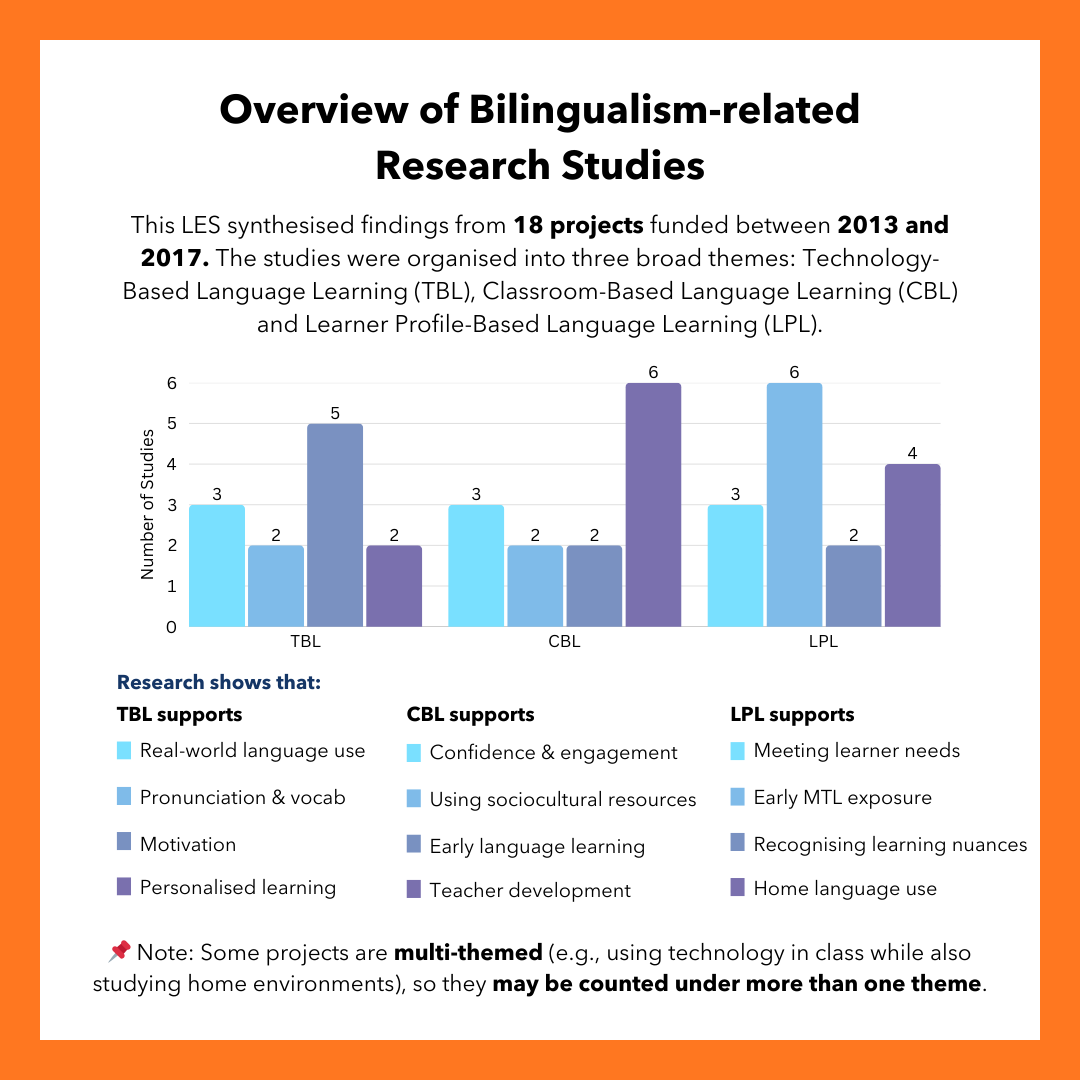
Number: 18
Fund source: ERFP, MAF, Others
Completed: 2013-2017
Themes: Technology-Based Language Learning (TBL), Classroom-Based Language Learning (CBL), and Learner Profile-Based Language Learning (LPL).

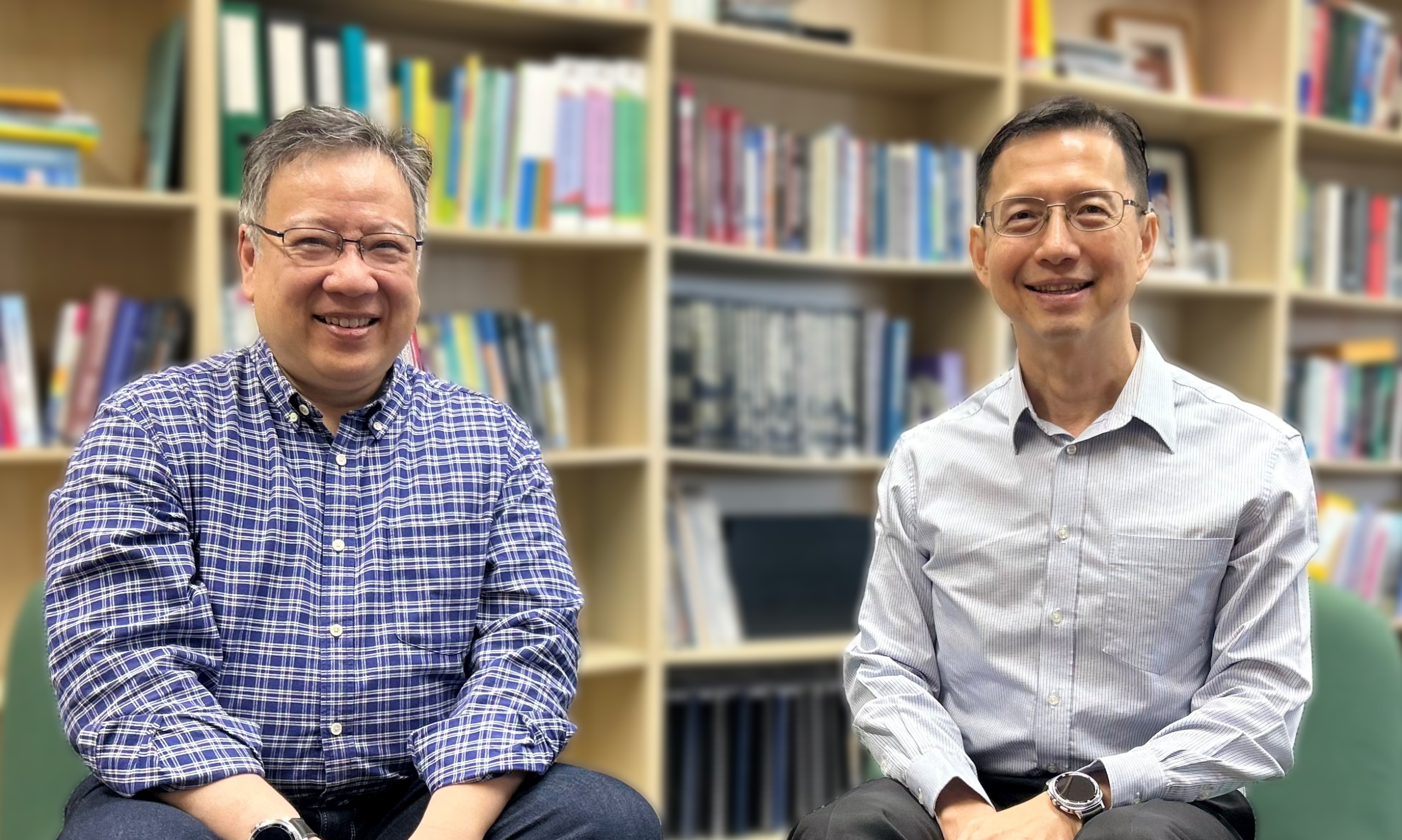
Deputy Centre Director, Centre for Research in Child Development
Principal Research Scientist, Office for Research
Principal Research Scientist, Office for Research

Research Fellow, Office for Research

Assistant Centre Director, Infancy & Early Childhood Research, Centre for Research in Child Development
Associate Professor, Asian Languages & Cultures
Associate Professor, Asian Languages & Cultures

Deputy Director (Academic), Research Management, Education Research Funding Programme Office, Centre for Research in Child Development
Senior Research Scientist, Office for Research
Senior Research Scientist, Office for Research

Unit Head, Research-Practice-Policy Group
Knowledge Resource Bank
Local Evidence Synthesis on Language Learning and Bilingualism
 Summary
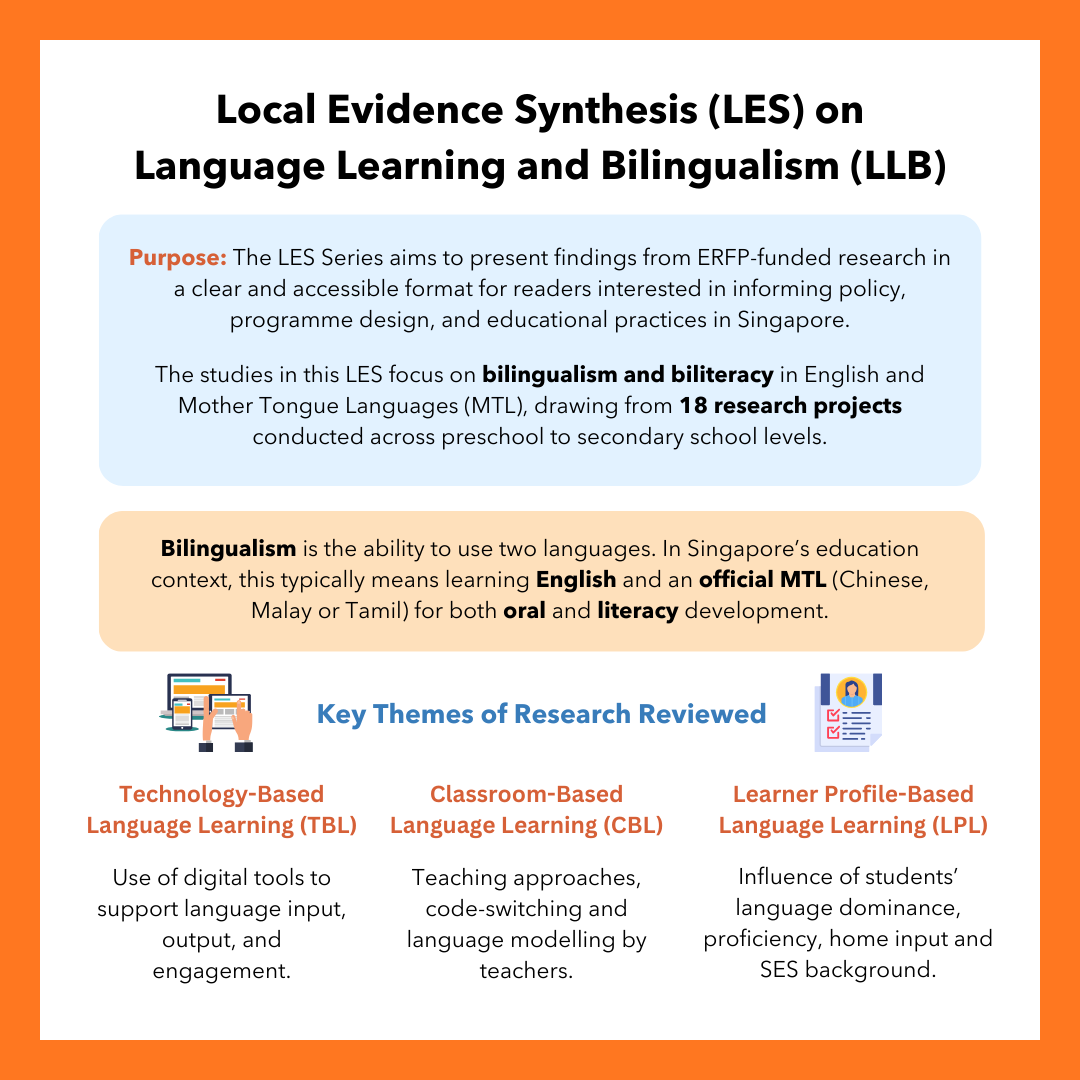
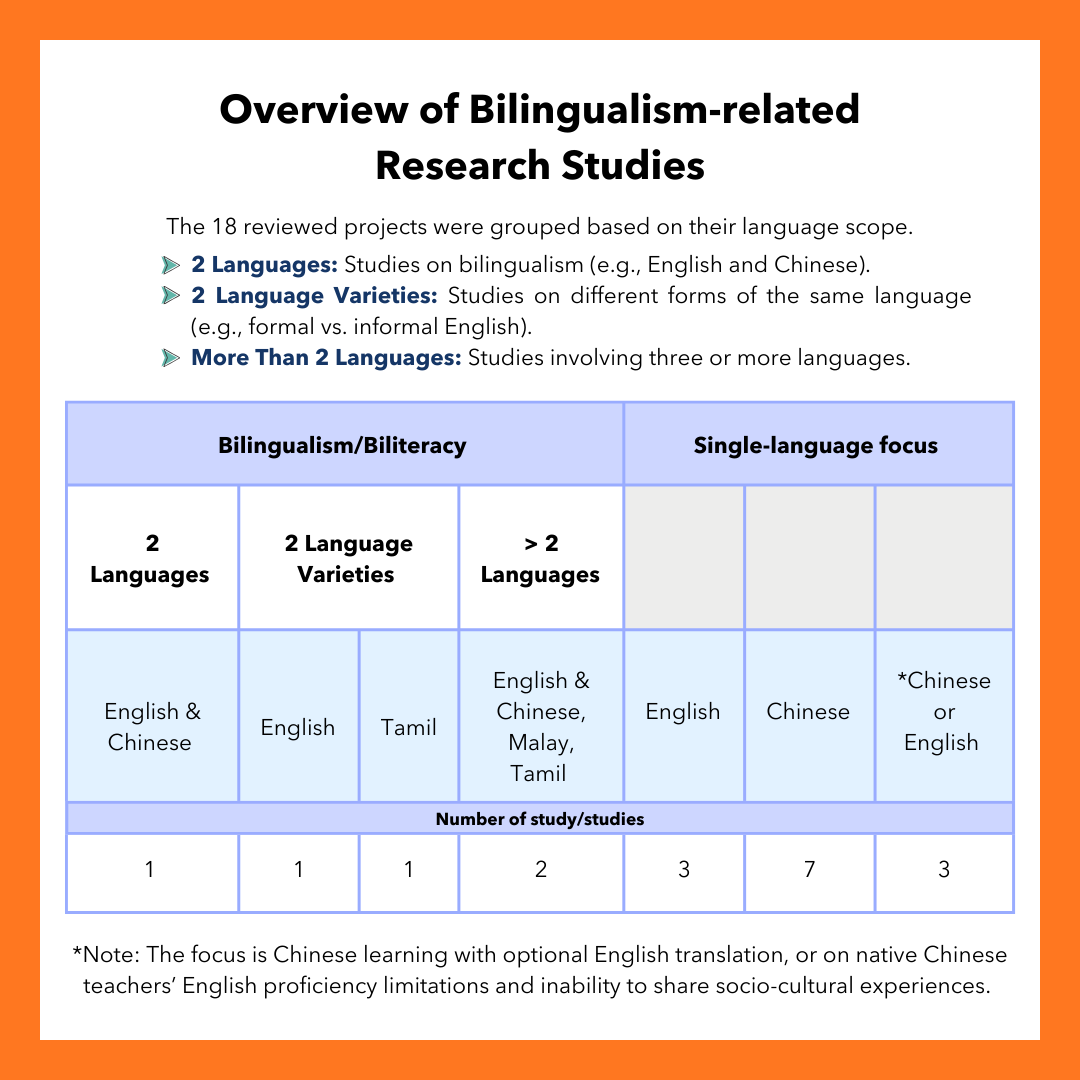
- The Local Evidence Synthesis (LES) on Language Learning and Bilingualism (LLB) reviews 18 research projects across preschool to secondary school.
- It focuses on how students acquire English and their mother tongue languages (MTL) through school, home and social contexts.
- Key Insights
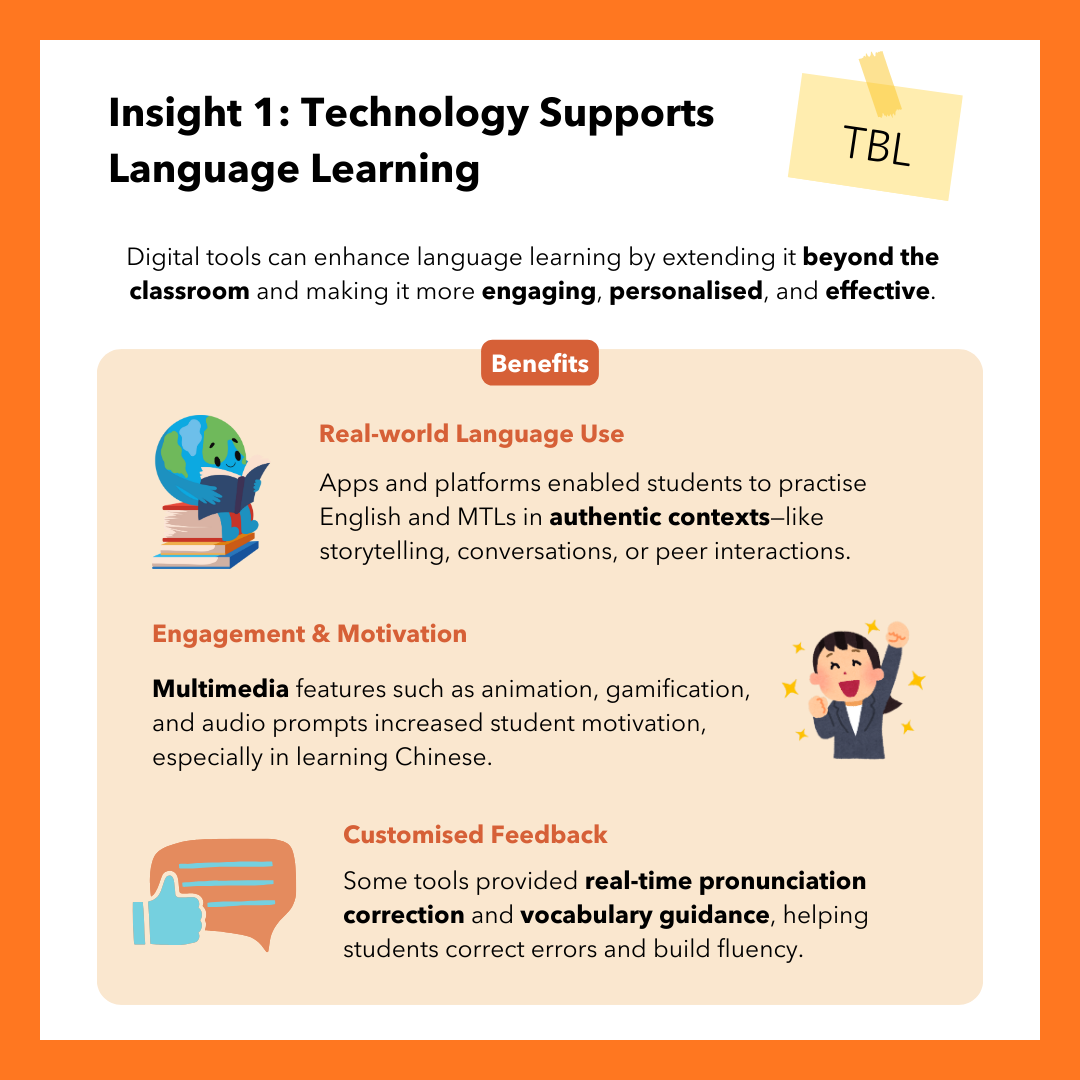
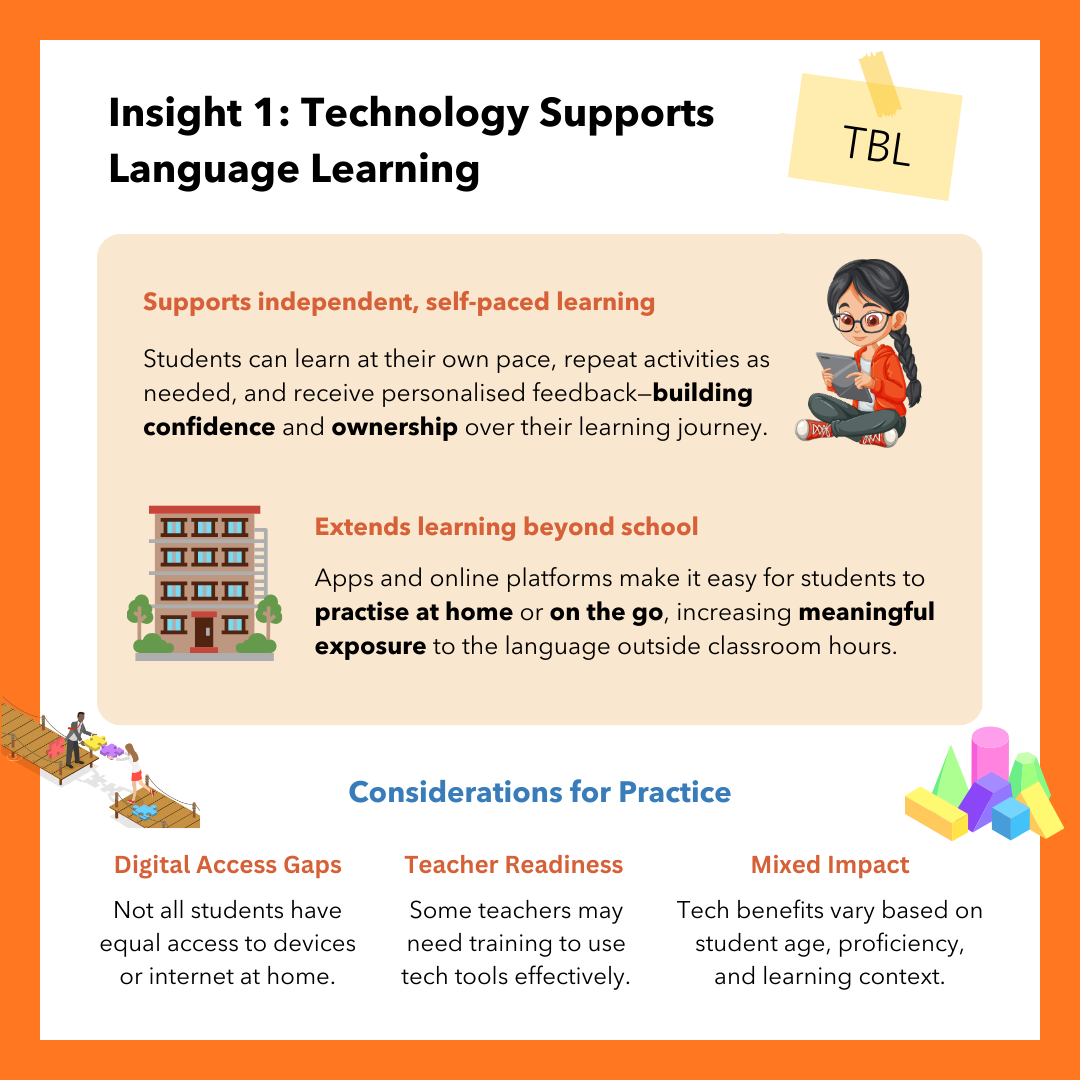
- Technology can extend and enhance language learning beyond classrooms.
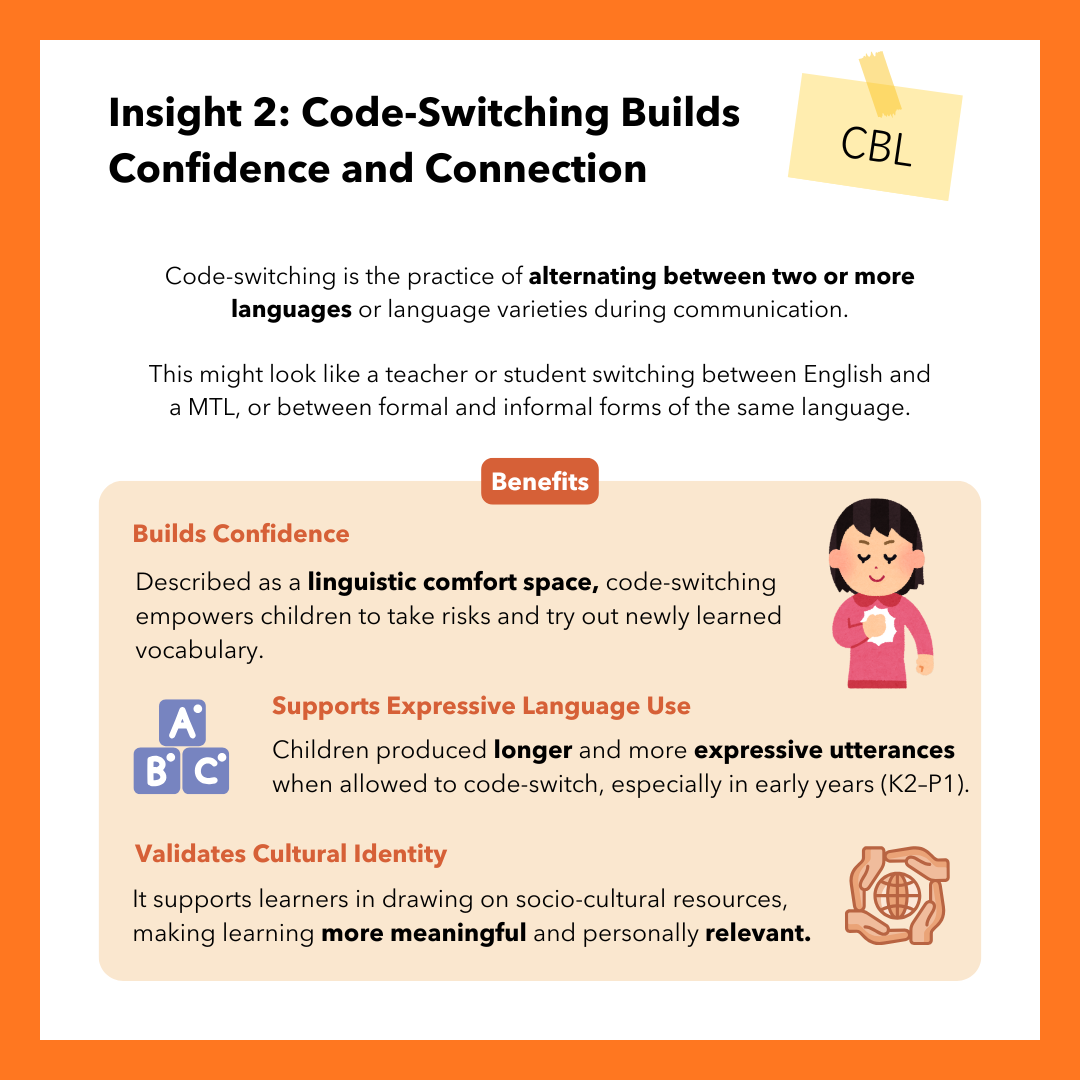
- Code-switching builds confidence and cultural connection.
- Rich language input (e.g., storytelling, explanatory talk, diverse vocabulary) and teacher beliefs affect learning quality.
- Recommendations
- Expand use of technology for seamless language learning.
- Partner with parents and community to support home language use.
- Provide differentiated, ongoing professional development to teachers.
 Local evidence synthesis (LES) on Language Learning and Bilingualism
Overview of Language Learning and Bilingualism
 Insight 1: Technology Supports Language Learning
Insight 2: Code-Switching Builds Confidence and Connection
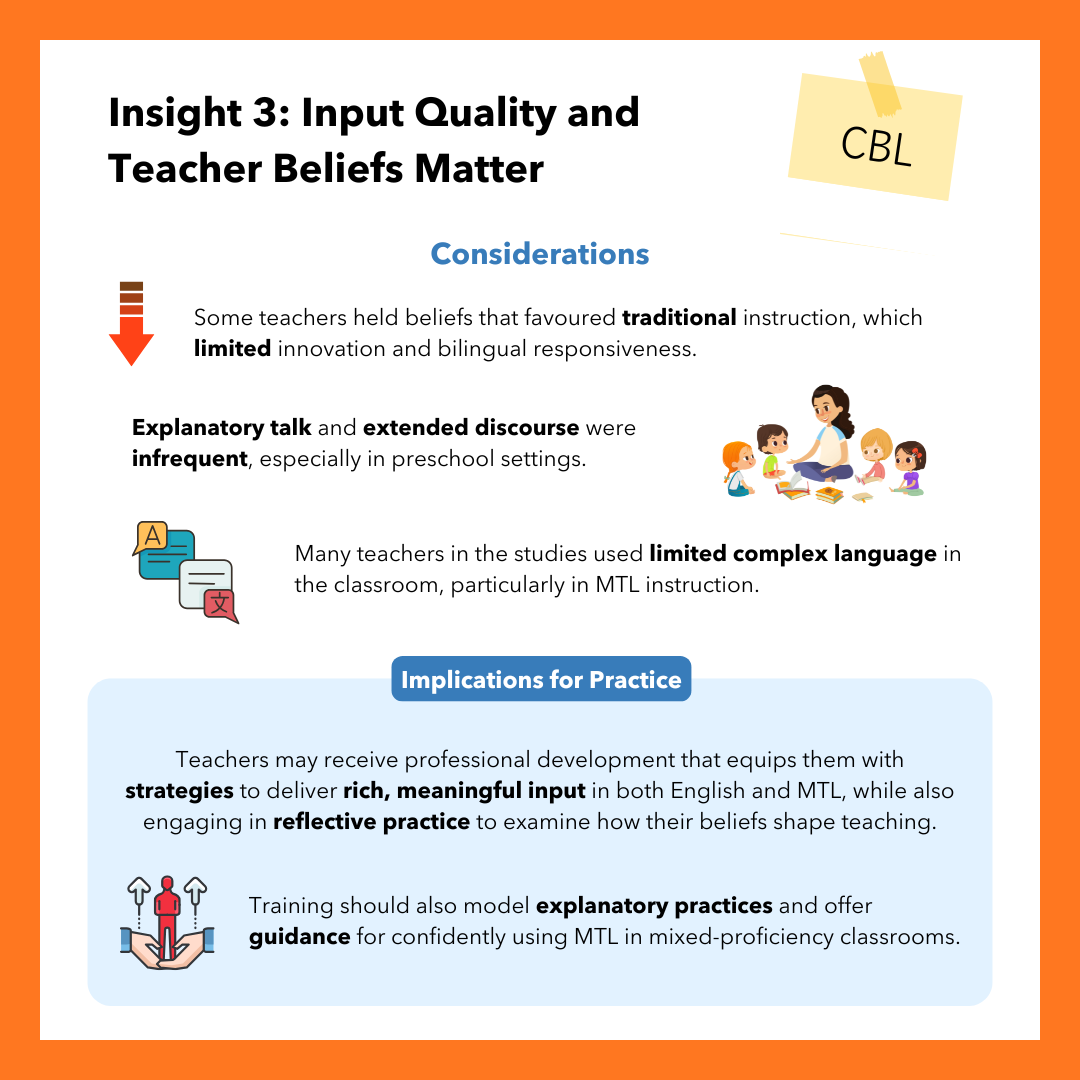
Insight 3: Input Quality and Teacher Beliefs Matter
Insight 4: Home Support and Learner Needs Shape Outcomes
 Research Gaps
 Further resources
To access the full LES:
 Research synthesis team
- Dr O’Brien Beth Ann, Deputy Centre Director, Centre for Research in Child Development,
Principal Research Scientist, National Institute of Education – Office for Research. - Dr Chua Fengyi, Deborah, Research Fellow, National Institute of Education – Office for Research.
- Assoc Prof Sun He, Assistant Centre Director, Infancy & Early Childhood Research, Centre for Research in Child Development,
Associate Professor, National Institute of Education – Asian Languages & Cultures. - Dr Sun Baoqi, Deputy Director (Academic), Research Management, Education Research Funding Programme Office, Centre for Research in Child Development,
Senior Research Scientist, National Institute of Education – Office for Research. - Miss Ow Ren Feng Lorraine, Unit Head, Research-Practice-Policy Group, National Institute of Education – Office for Research.
Acknowledgements
The LES on Language Learning and Bilingualism involves 18 studies funded by the Education Research Funding Programme (ERFP), MOE Academic Fund (MAF) and other funds, and administered by the Office of Education Research (OER). Any opinions, findings, and conclusions or recommendations expressed in this material are those of the author(s) and do not necessarily reflect the views of the Singapore MOE and NIE.
This knowledge resource was extracted and reconstructed from the LES, with approval from the authors, and presented by Ms Shee Yi Xuan, Katherine on 26 September 2025.