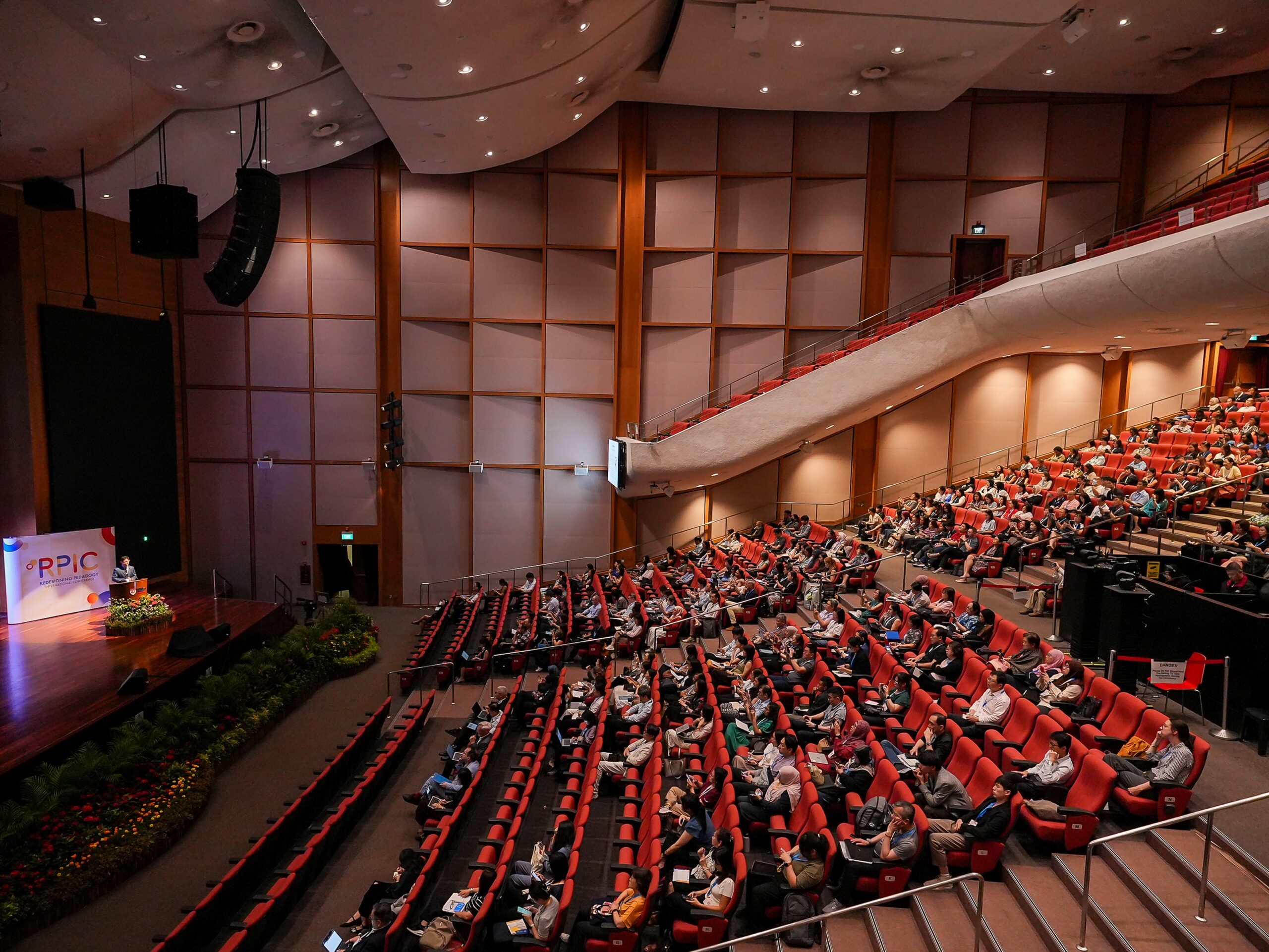
The Conversations Continue: From Research to Impact
What does it mean for education research to make a real difference in schools? That question sat […]
Read More
Now in its fourth year, the longitudinal GiBBer project – short for Growth in Bilingual & Biliteracy Proficiency: Environmental, Individual & Experiential Factor – offers fresh insights into how Singaporean kindergarten to primary school children learn English and their Mother Tongue, and what this means for bilingual education in our classrooms. This article is an extension of SingTeach’s first coverage of the GiBBer project led by NIE Principal Research Scientist Dr Beth O’Brien that was published in 2023.

When it comes to bilingual education in Singapore, one question has long lingered in the minds of educators and parents alike: how do children really develop proficiency in two languages over time? To answer this, the GiBBer project has been closely tracking the language development of children from Kindergarten 1 to Primary 4 across three different Mother Tongue Language (MTL) groups.
Spearheaded by Dr Beth O’Brien who is also Deputy Director at NIE’s Centre for Research in Child Development, the study is now yielding key findings that shed light on the real-world challenges of bilingual learning, and what educators can do to support it more effectively.
Preliminary results from the GiBBer study show that children do make steady progress in both English and their MTL over time. However, across all age groups studied (K1–K2, P1–P2 and P3–P4), a consistent pattern has emerged: children tend to perform better in English than in their MTL.
“Some children show similar growth rates in both languages, but others are progressing faster in English,” Beth shares. “This reflects what we already suspect – that English is becoming increasingly dominant in children’s environments, both at school and at home.”
Interestingly, while oral language skills such as vocabulary grow at a steady rate across age groups, the development of literacy skills such as word reading shows a different trend. Primary school children display more consistent progress in literacy than preschoolers, with less variation across the group. “This might be because the primary school setting provides more structured support for developing biliteracy,” Beth explains.
Beyond overall trends, GiBBer has also uncovered individual differences in how children learn. While some children progress steadily in both languages, others show a noticeable gap in proficiency or diverging rates of growth.
Children who are stronger in English also tend to do better in their MTL, suggesting that some underlying language learning abilities may benefit both languages. However, there are key cognitive differences amongst learners too.
“In our sub-project on low-progress learners, we found that these children showed some similarities with their peers, for example in working memory skills,” Beth explains. “But they showed some weaker cognitive skills in retrieving verbal labels and implicit learning, which are important for language acquisition.”
These findings highlight the importance of identifying individual learning profiles—and supporting them with differentiated instruction that meets learners where they are.
So what makes bilingual learning so difficult for some children? One recurring issue is the perceived gap between English and MTL proficiency. “Children are very aware of how they perform in both languages,” says Beth. “If they feel that MTL is harder or less useful, they may become less motivated to learn it.”
This challenge is compounded by the uneven availability of resources. “There’s an abundance of English books, videos and learning apps,” Beth notes, “but it’s much harder to find engaging and age-appropriate MTL materials, especially outside of the classroom.”
This lack of exposure limits children’s opportunities to practise their MTL, reinforcing the imbalance in language proficiency.
Despite these challenges, there are clear ways teachers can help. Beth points out that the current MTL curriculum already places strong emphasis on intrinsic motivation and foundational language skills. Building on this, teachers can keep children engaged through fun, interactive learning and help boost confidence with strategies that target key skills such as phonological and morphological awareness.
“Helping children make cross-linguistic connections is also important,” she adds. For instance, narrative writing in both English and MTL tends to follow a similar structure. Teachers can tap into this similarity – allowing children to plan stories in their stronger language before expressing them in their weaker one – to lighten cognitive load and build success.
Teachers can also play a role in curating and sharing high-quality MTL resources with families, ensuring that language exposure continues beyond the classroom.
As GiBBer continues into its final year of data collection, Beth sees several avenues where more research is urgently needed.
“First, we need more intervention studies,” she says. “We’re building a good understanding of developmental trajectories, but now we need to test what kinds of support work best – and for which groups of learners.”
She also notes the need to better understand how bilingualism develops across all three MTLs, especially for Malay and Tamil. “Right now, the bulk of research focuses on Chinese, so we don’t have a complete picture.”
Finally, the home environment deserves closer attention. While it’s clear that home use of MTL supports bilingual learning without hindering English development, more work is needed to unpack the role of parental attitudes, quality of language interactions and literacy habits at home.
The takeaway? Bilingual learning is a slow and sometimes uneven process – but it’s a process worth investing in.
“Children don’t all develop in the same way, and different approaches may be needed at different stages,” Beth reflects. “What matters is that we stay patient, curious and committed – so we can help every child reach their fullest bilingual potential.”
As more findings from GiBBer emerge, one thing is clear: with the right support, Singapore’s young learners can grow into confident, capable bilinguals – ready to thrive in an increasingly multilingual world.
“What matters is that we stay patient, curious and committed – so we can help every child reach their fullest bilingual potential.”
– Beth, on the importance of being patient