Read More
- Background and Key Insights
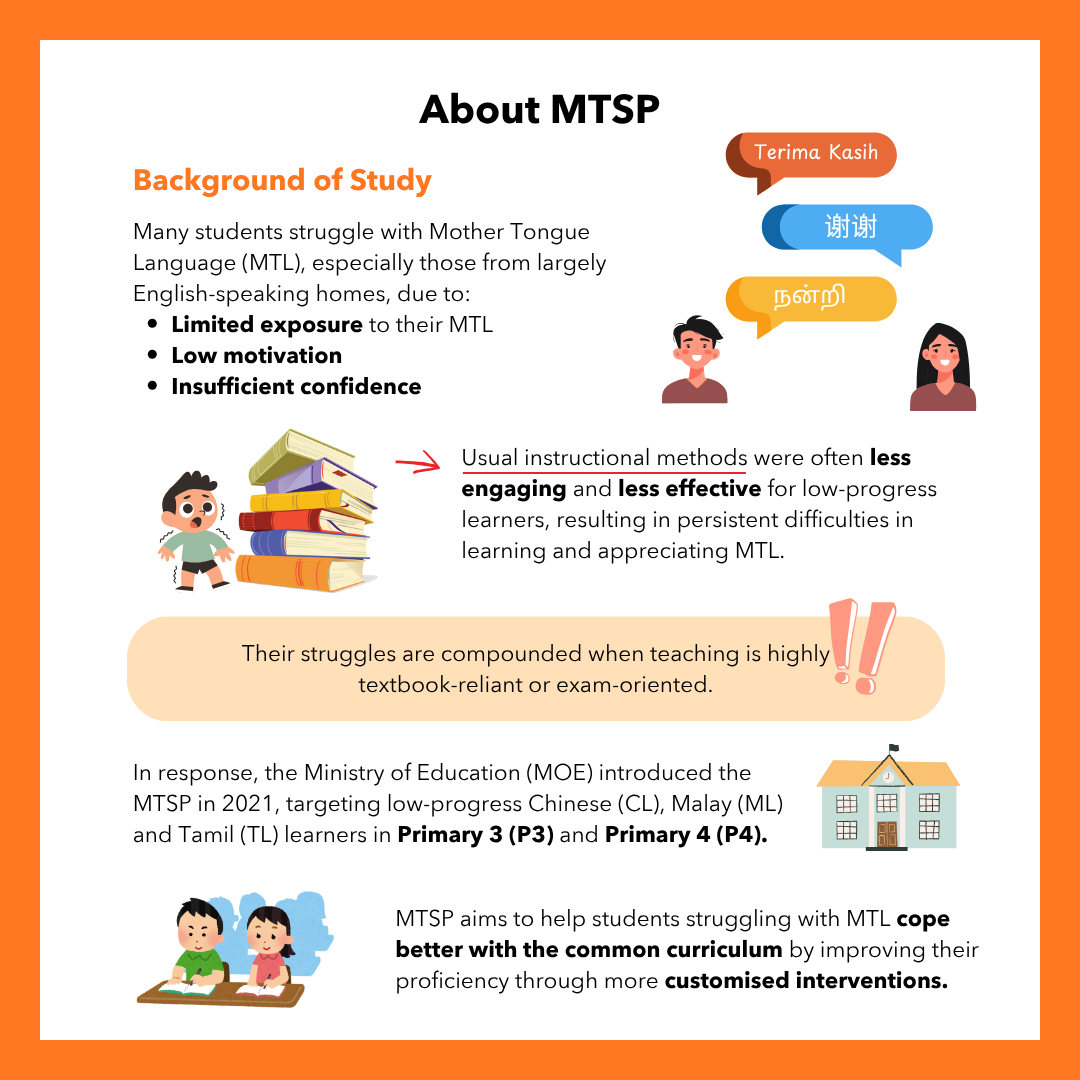
- Introduction to the Mother Tongue Support Programme (MTSP)
- Research Methodology
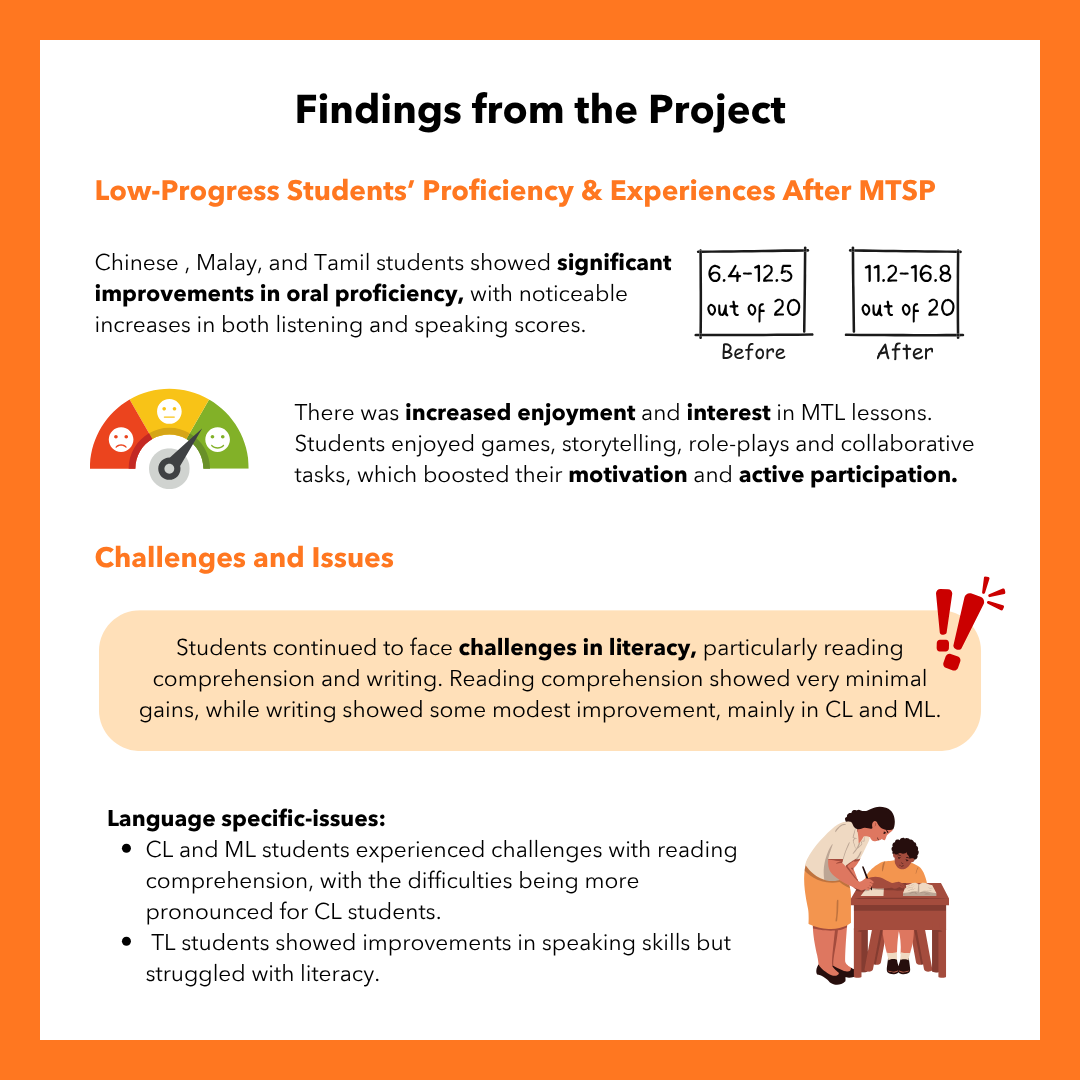
- Research Findings
- What Does This Mean for Teaching and Learning?
- Related Links
- Further Readings
- Research Team
- Phase 1 (Longitudinal)107 Primary 3 StudentsPhase 2 (Cross-Sectional)223 Primary 3 and Primary 4 Students
- Phase 1 (Longitudinal)17 MTL TeachersPhase 2 (Cross-Sectional)35 MTL Teachers
- Primary Schools
Primary school (Primary 3 and 4)
Mother Tongue
Chinese
Malay
Tamil

Principal Investigator

Co-Principal Investigator

Co-Principal Investigator
Knowledge Resource Bank
Mother Tongue Support Programme
 How did the Mother Tongue Support Programme (MTSP) help students with challenges in MTL learning?
Key Insights
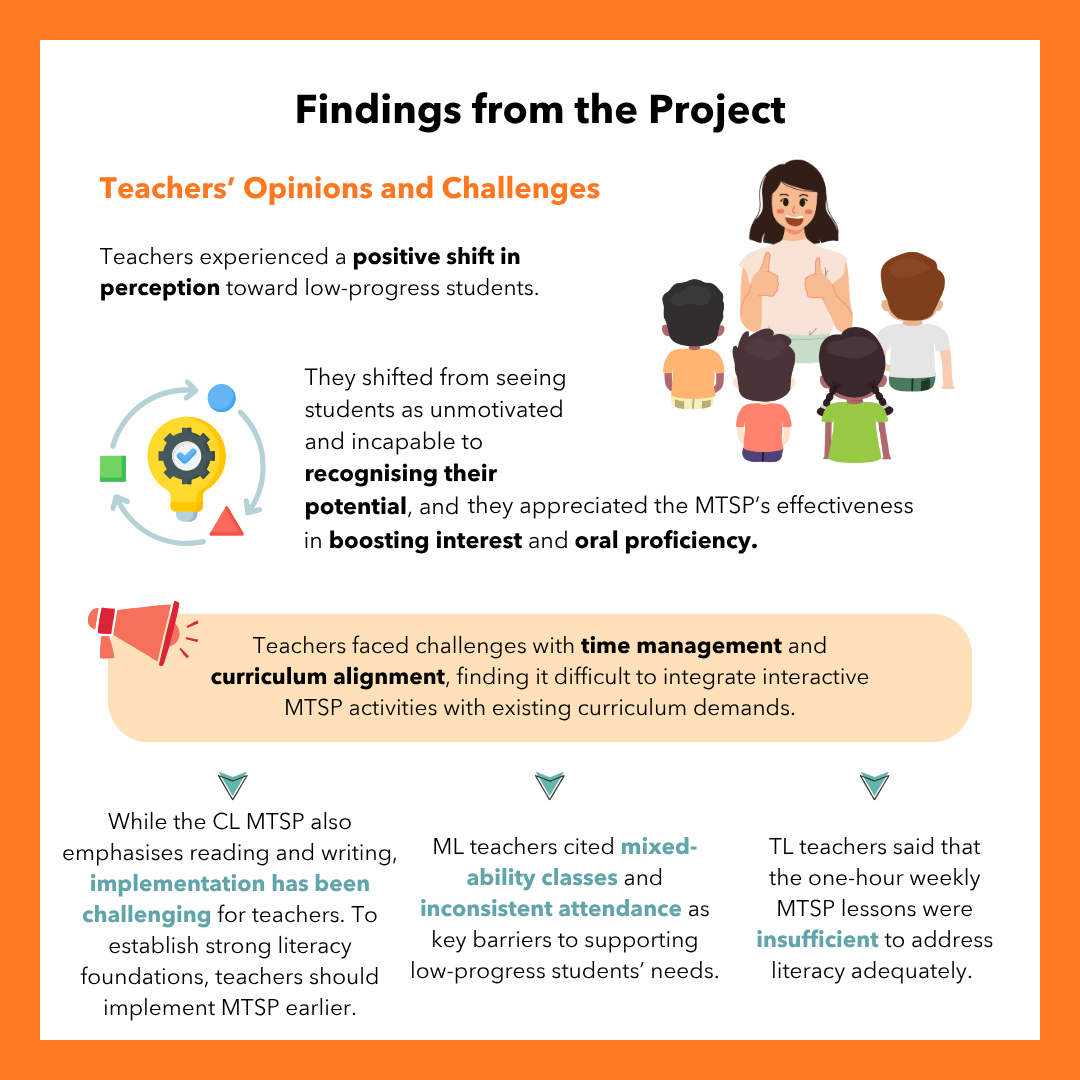
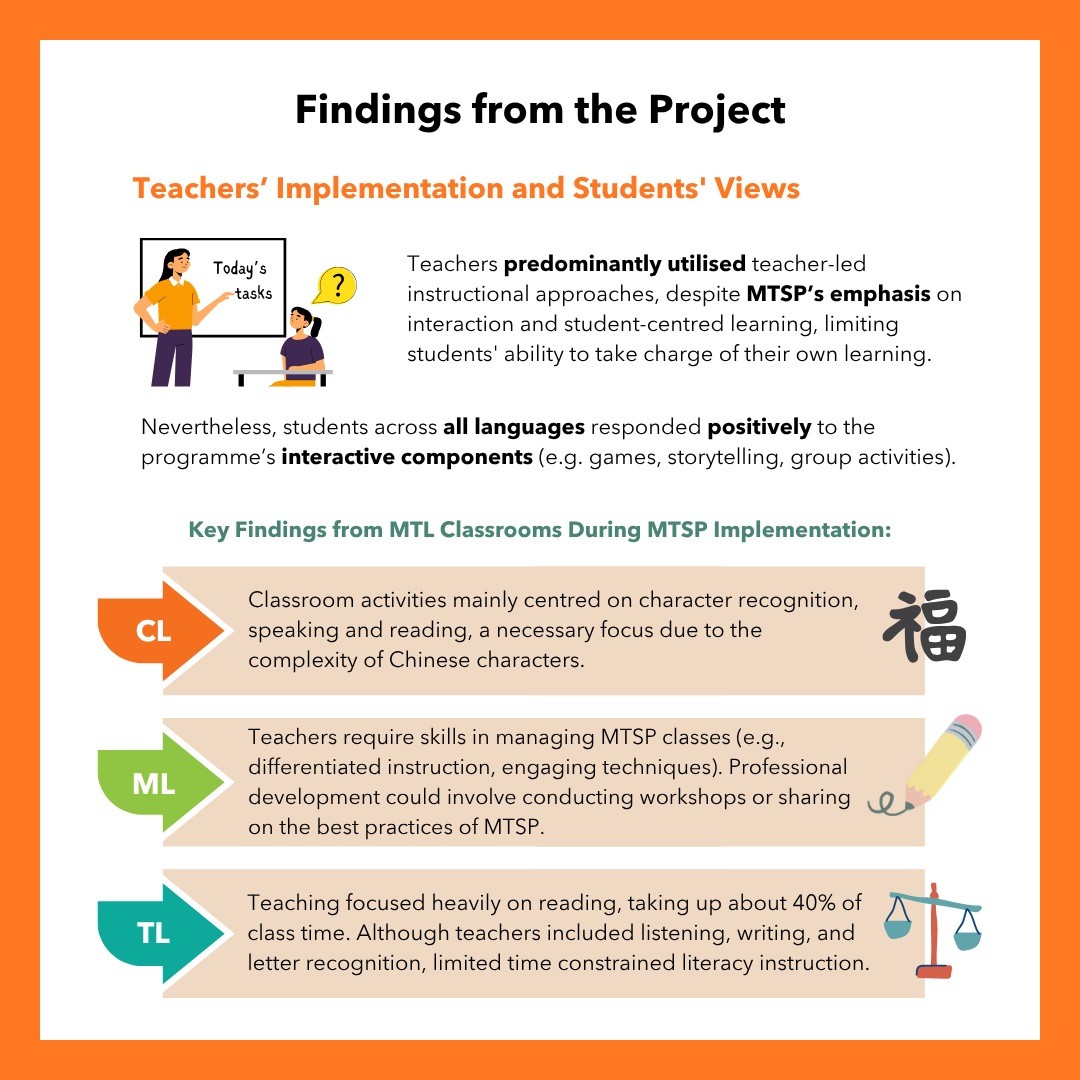
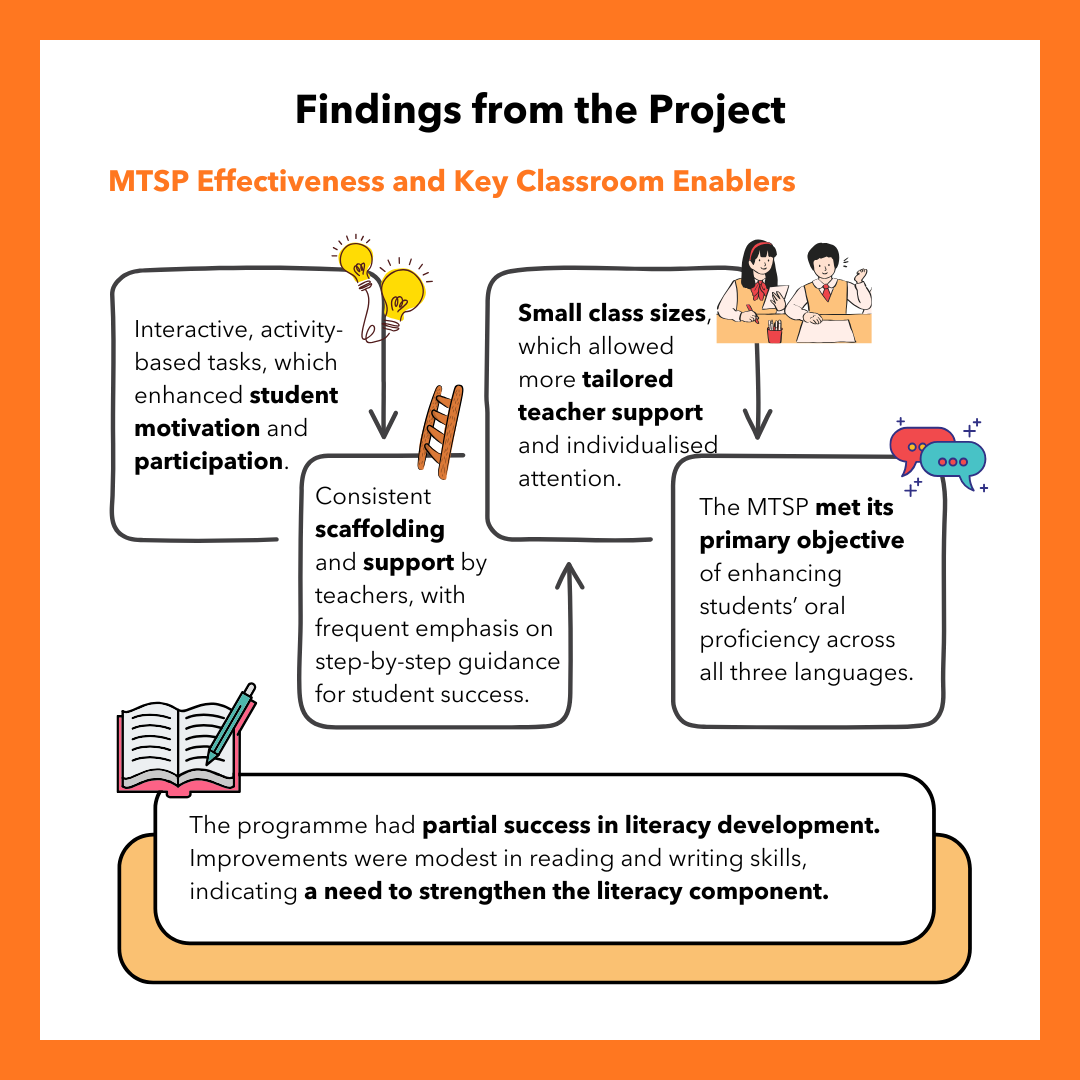
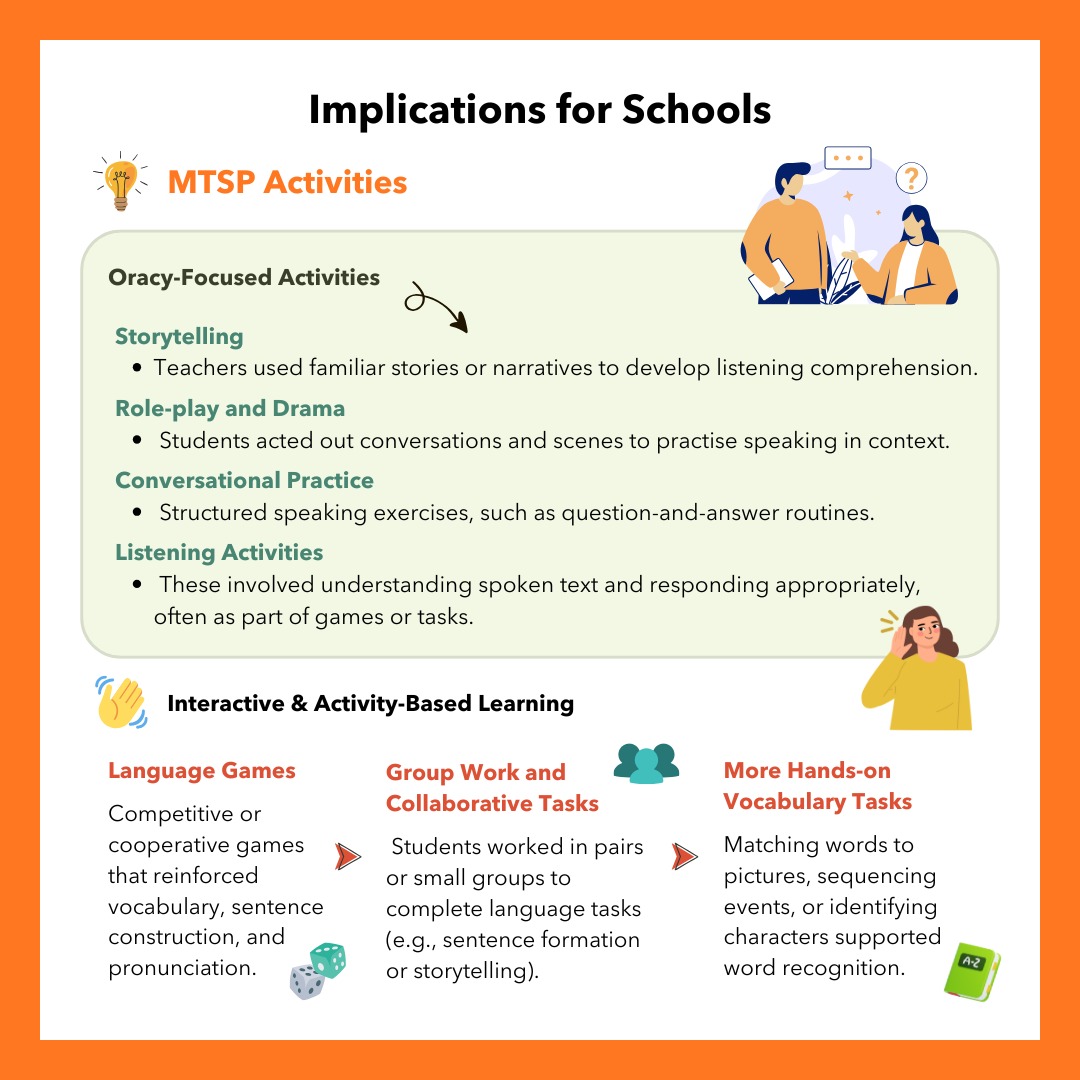
- Through the engaging and interactive lessons from the MTSP, students experienced significant improvements in their speaking skills and confidence.
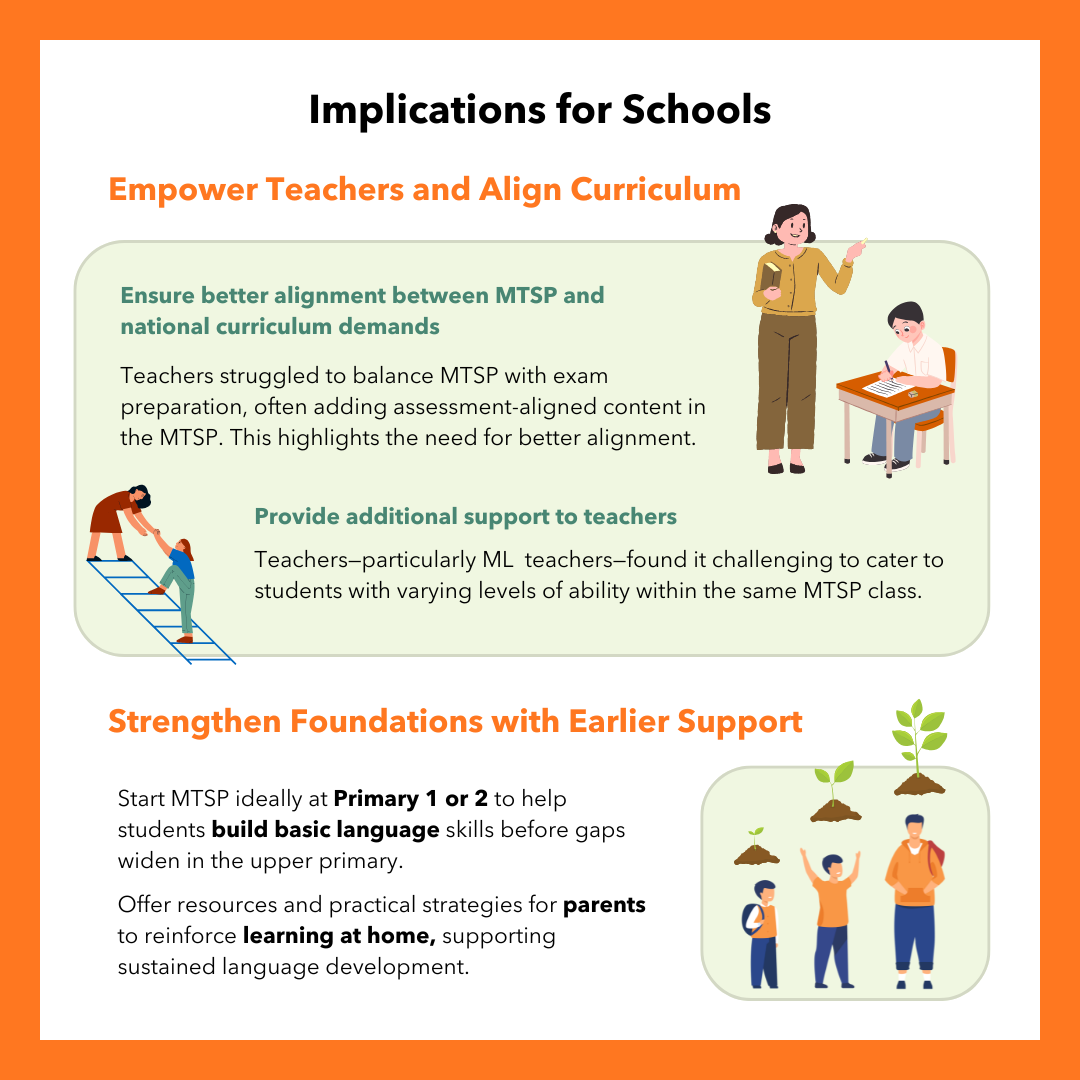
- Teachers needed support in managing diverse abilities and aligning MTSP activities with curriculum demands.
- Despite increased motivation, students still faced challenges in reading comprehension and writing.
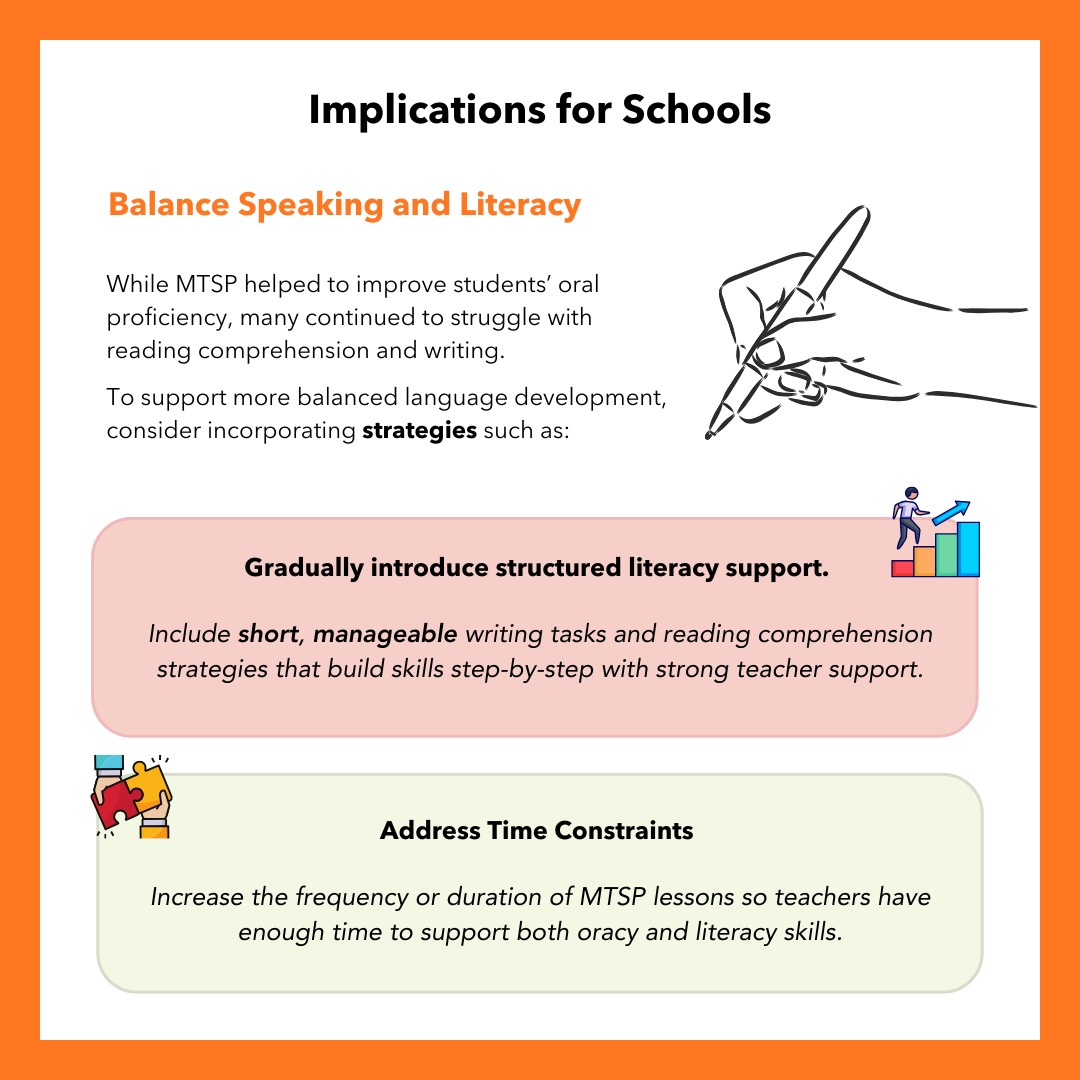
- To help students better, it is important to:
- Align classroom activities closely with assessment standards.
- Balance speaking practice with targeted literacy support.
- Start early and actively involve parents in language learning.
 Introduction to the Mother Tongue Support Programme (MTSP)
 Research Methodology
Research Findings
 What Does This Mean for Teaching and Learning?
 Related Links
- The Bilingual Dreams: Reasons to Learn Mother Tongues and Practical Tips
- Raising Bilingual and Biliteracy Proficiency in Young Children
- Leisure Reading in Two Languages
- Children who are weak in mother tongue get a leg-up
Further Readings
For educators interested in the research methodology behind MTSP, you may refer to:
Research Project
Research Team
To learn more about this research, please contact Dr Goh Hock Huan at hockhuan.goh@nie.edu.sg.
Principal Investigator
- Dr Goh Hock Huan, Education Research Scientist, Centre for Research in Pedagogy & Practice
Research Scientist, National Institute of Education – Office for Research.
Co-Principal Investigators
- Assoc Prof Mohd Mukhlis Bin Abu Bakar, Head, Asian Languages & Cultures
Associate Professor, National Institute of Education – Asian Languages & Cultures. - Assoc Prof Seetha Lakshmi, Associate Professor, National Institute of Education – Asian Languages & Cultures
NIE Collaborator
- Dr Wong Hwei Ming, Assistant Centre Director, Education, Centre for Research in Pedagogy & Practice
Senior Research Scientist, National Institute of Education – Office for Research
MOE Collaborators
- Mdm Xu Jinhong (Lead Specialist (Chinese Language), Mother Tongue Languages Branch, Curriculum Planning & Development Division, Ministry of Education)
- Mdm Salha Binte Mohamed Hussain (Lead Specialist (Malay Language), Mother Tongue Languages Branch, Curriculum Planning & Development Division, Ministry of Education)
- Mdm S Seethalaksmy (Lead Specialist (Tamil Language), Mother Tongue Languages Branch, Curriculum Planning & Development Division, Ministry of Education)
- Mdm Noor Azimah Mohd Haad (Assistant Director (Malay Language), Mother Tongue Languages Branch, Curriculum Planning & Development Division, Ministry of Education)
- Mdm Foo Ai Fen (Senior Curriculum Resource Development Officer (Chinese Language), Mother Tongue Languages Branch, Curriculum Planning & Development Division, Ministry of Education)
 Acknowledgement
This study was funded by the Education Research Funding Programme, National Institute of Education, Nanyang Technological University, Singapore (project no. OER 08/20 GHH). Any opinions, findings, and conclusions or recommendations expressed in this material are those of the author(s) and do not necessarily reflect the views of the Singapore MOE and NIE.
This knowledge resource was extracted and reconstructed from the published materials from the research team by Ms Shee Yi Xuan, Katherine with input from Dr Goh Hock Huan and Ms Lorraine Ow and presented on 25 July 2025.