How do teachers use DI to support diverse learners in the Singaporean education system? This study explores teachers’ experiences, challenges, and enablers in implementing DI, offering key insights and practical recommendations to better support diverse learners in mainstream classrooms. Discover what’s working—and what needs to change!
 How findings from Differentiated Instruction for Diverse Needs can help your students
Key Insights
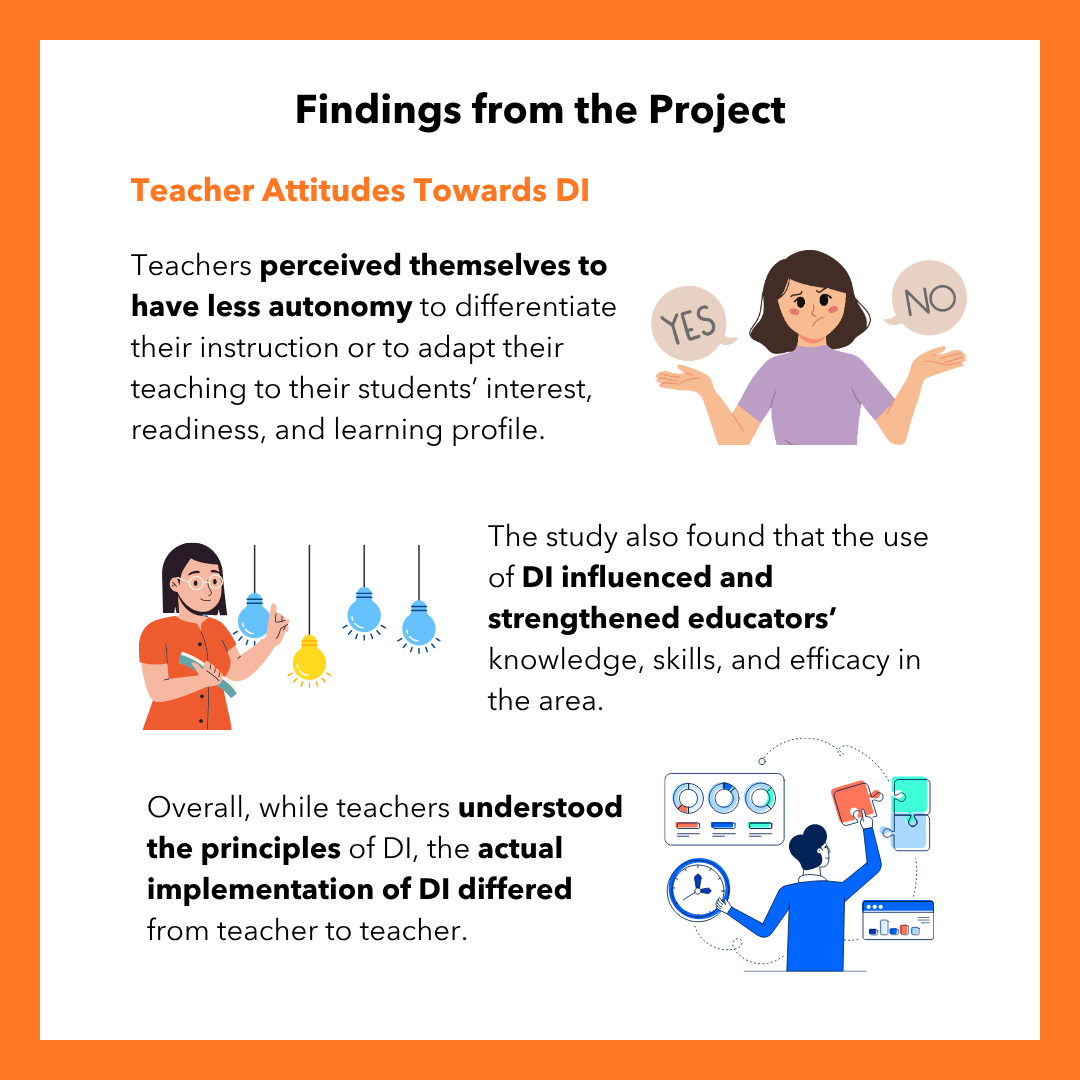
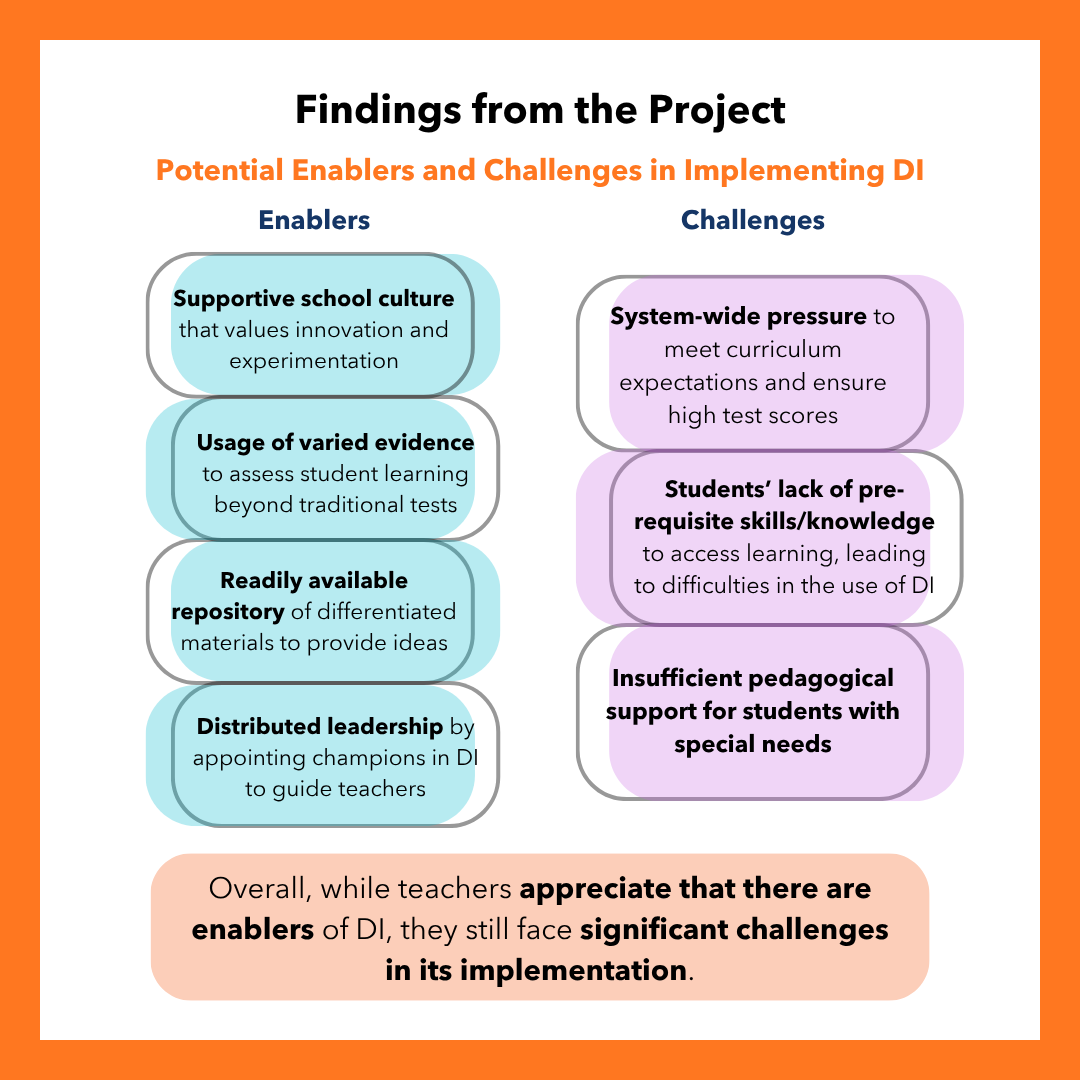
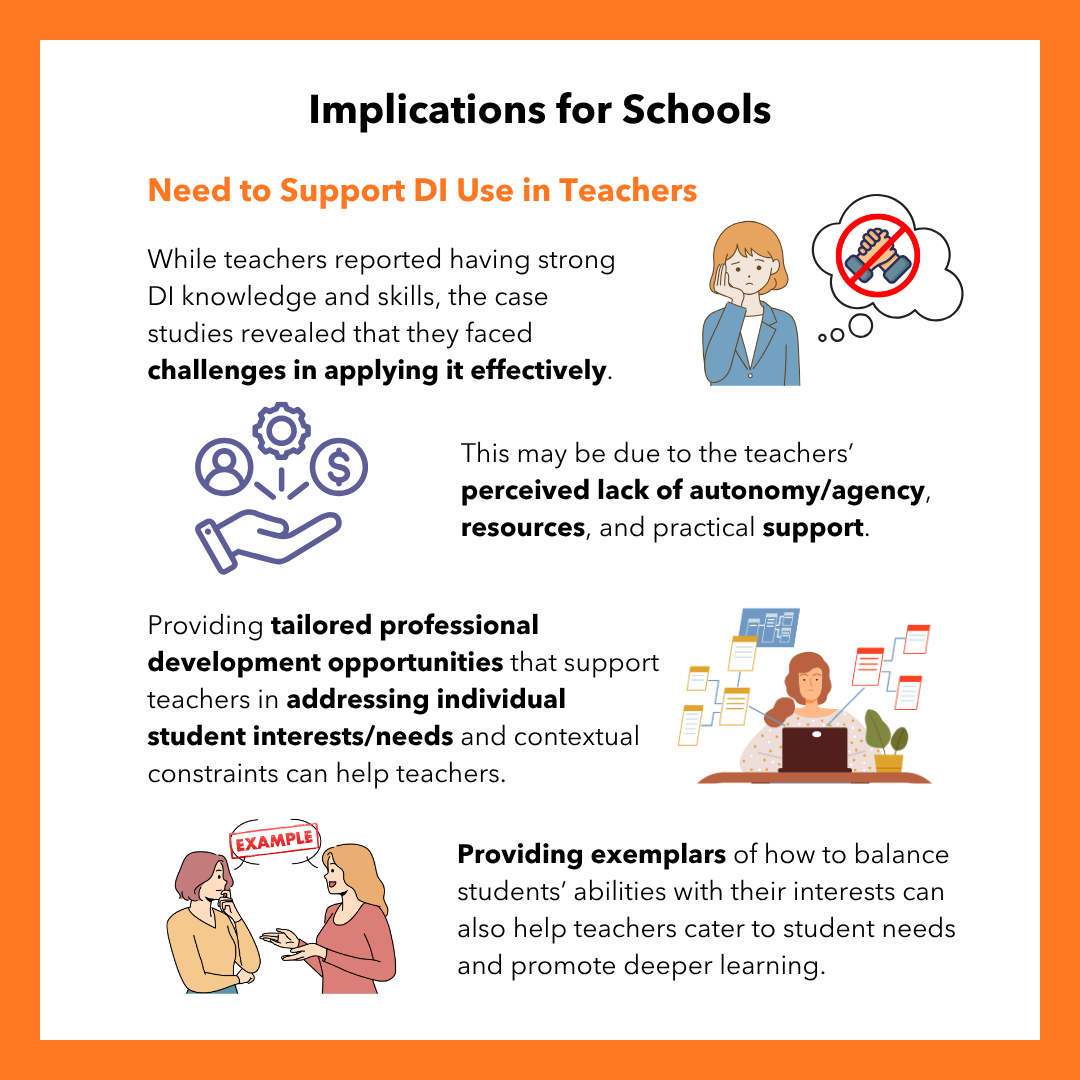
- While teachers were found to understand and have knowledge of Differentiated Instruction (DI), they faced challenges in applying DI effectively.
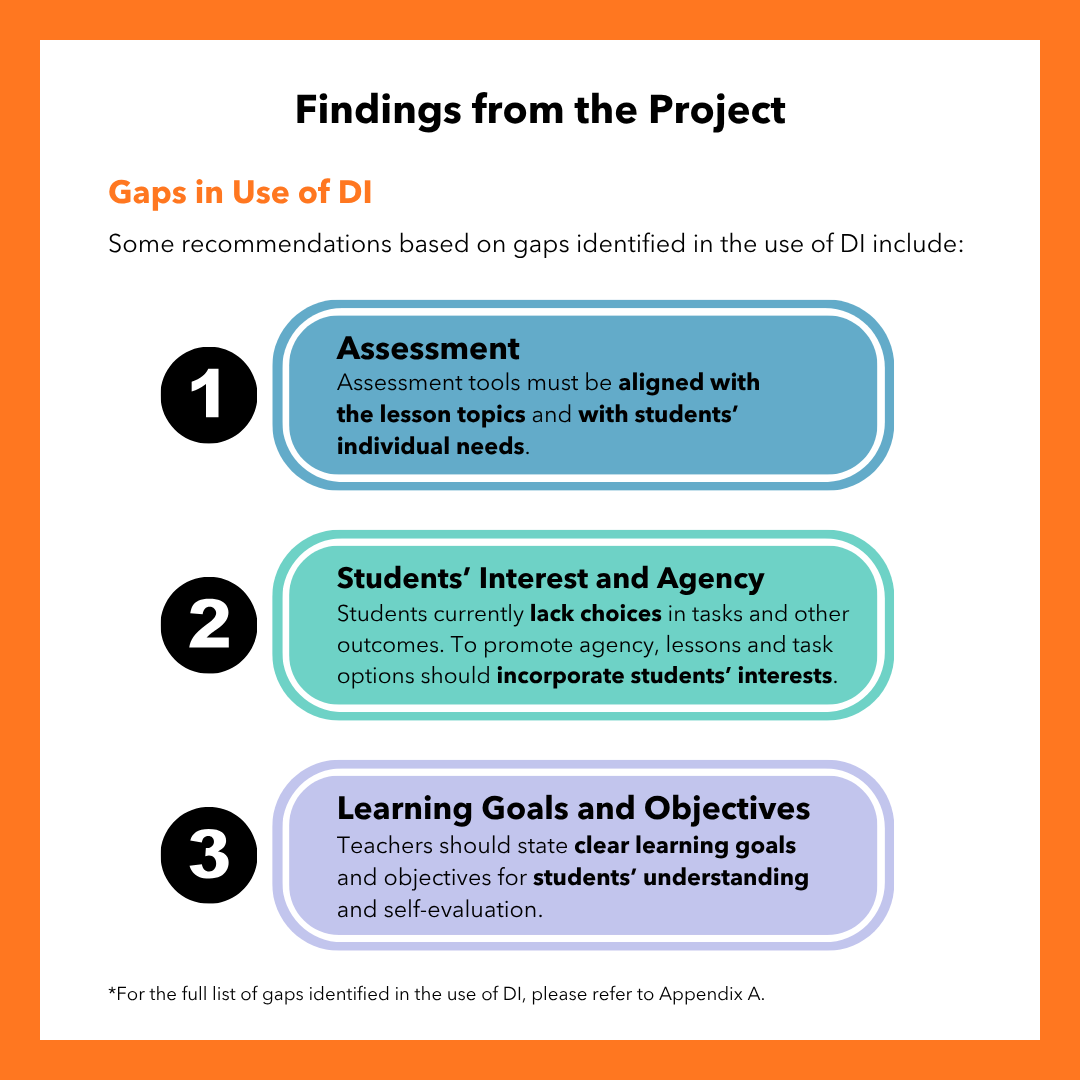
- Some identified gaps in DI implementation include:
- Poor alignment of assessment tools with the lesson topic and students’ individual needs.
- Fewer chances for students to exercise their agency.
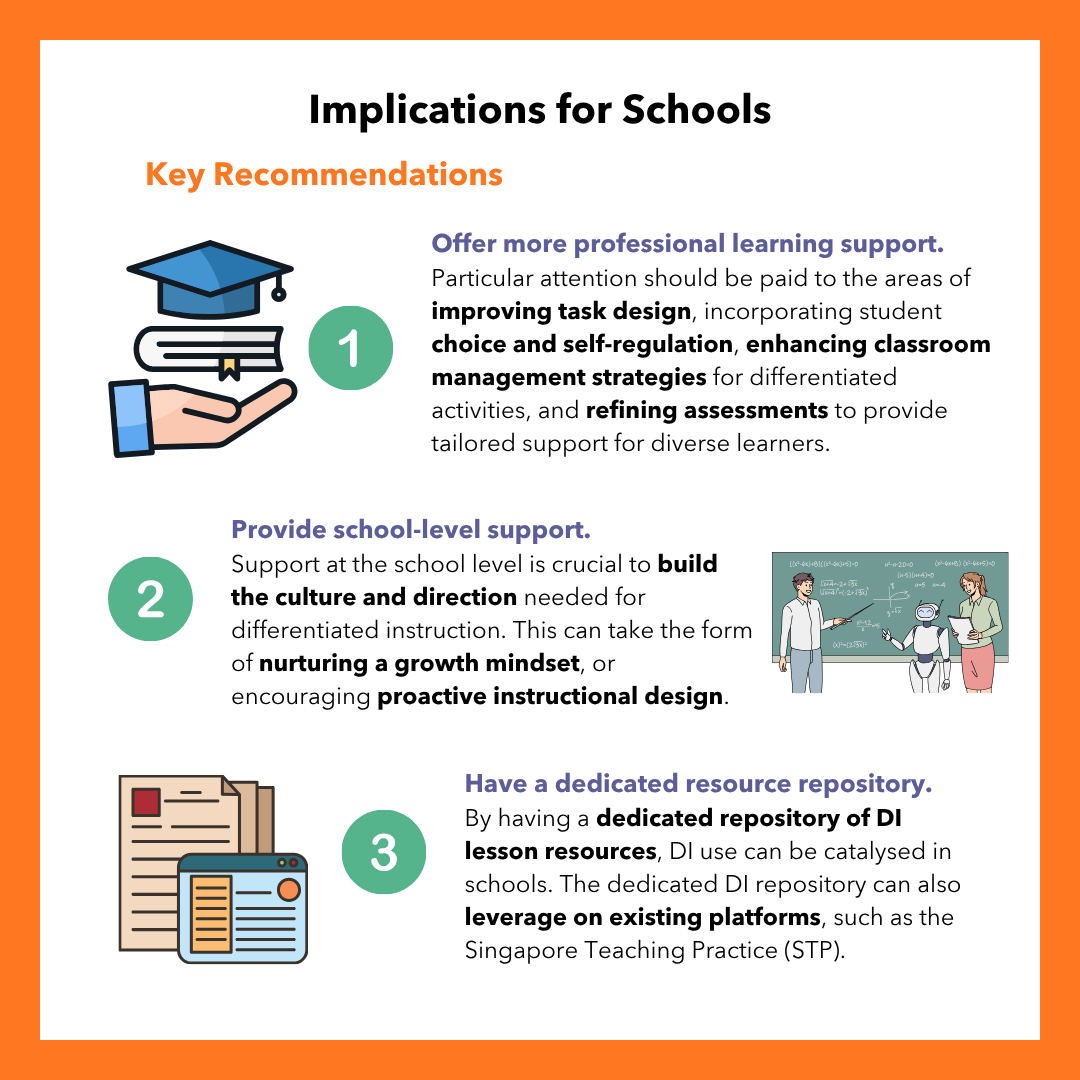
- There is a need for schools to better support DI use in teachers, such as by:
- Having more professional learning support.
- Having a dedicated DI resource repository.
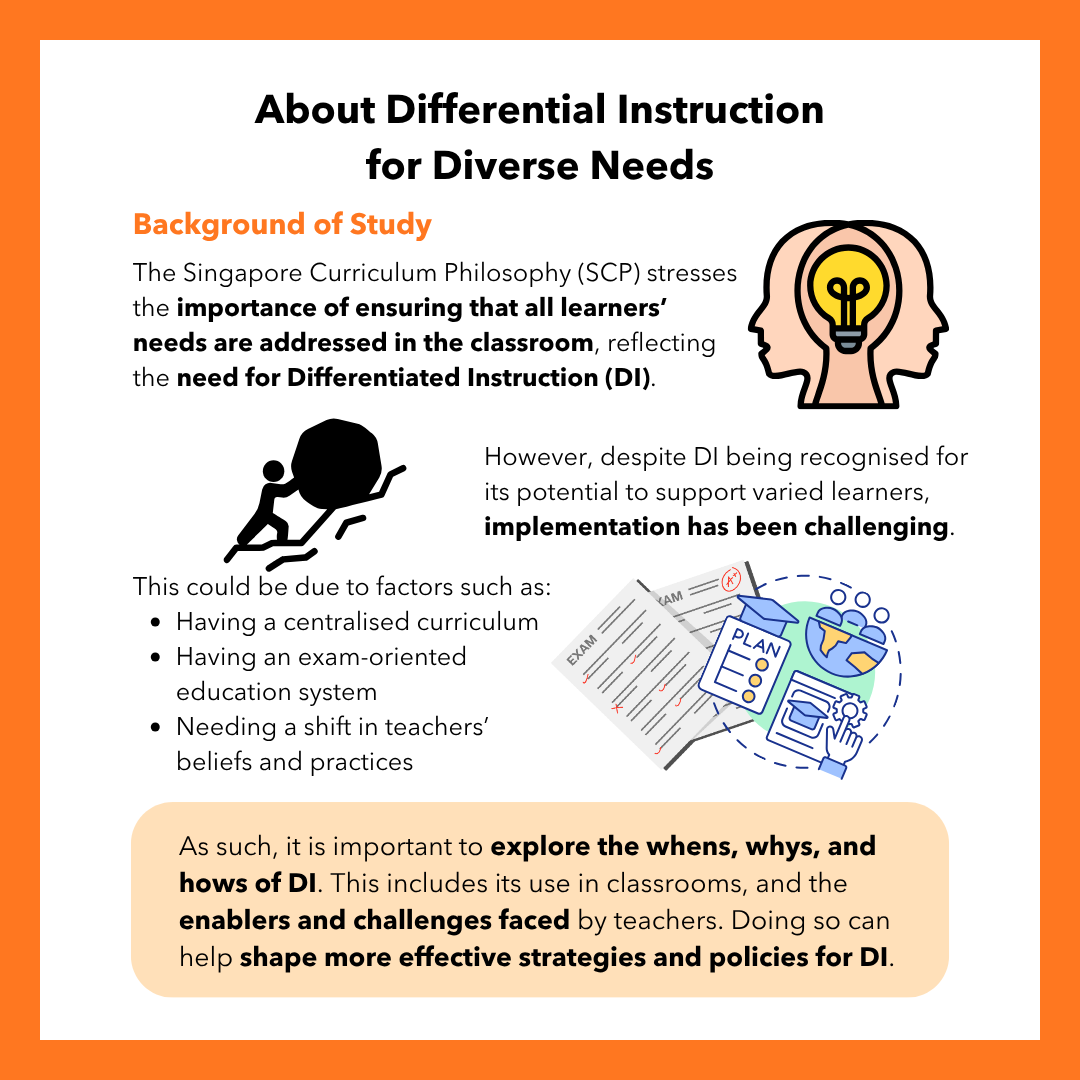
 Introduction to Differentiated Instruction for Diverse Needs
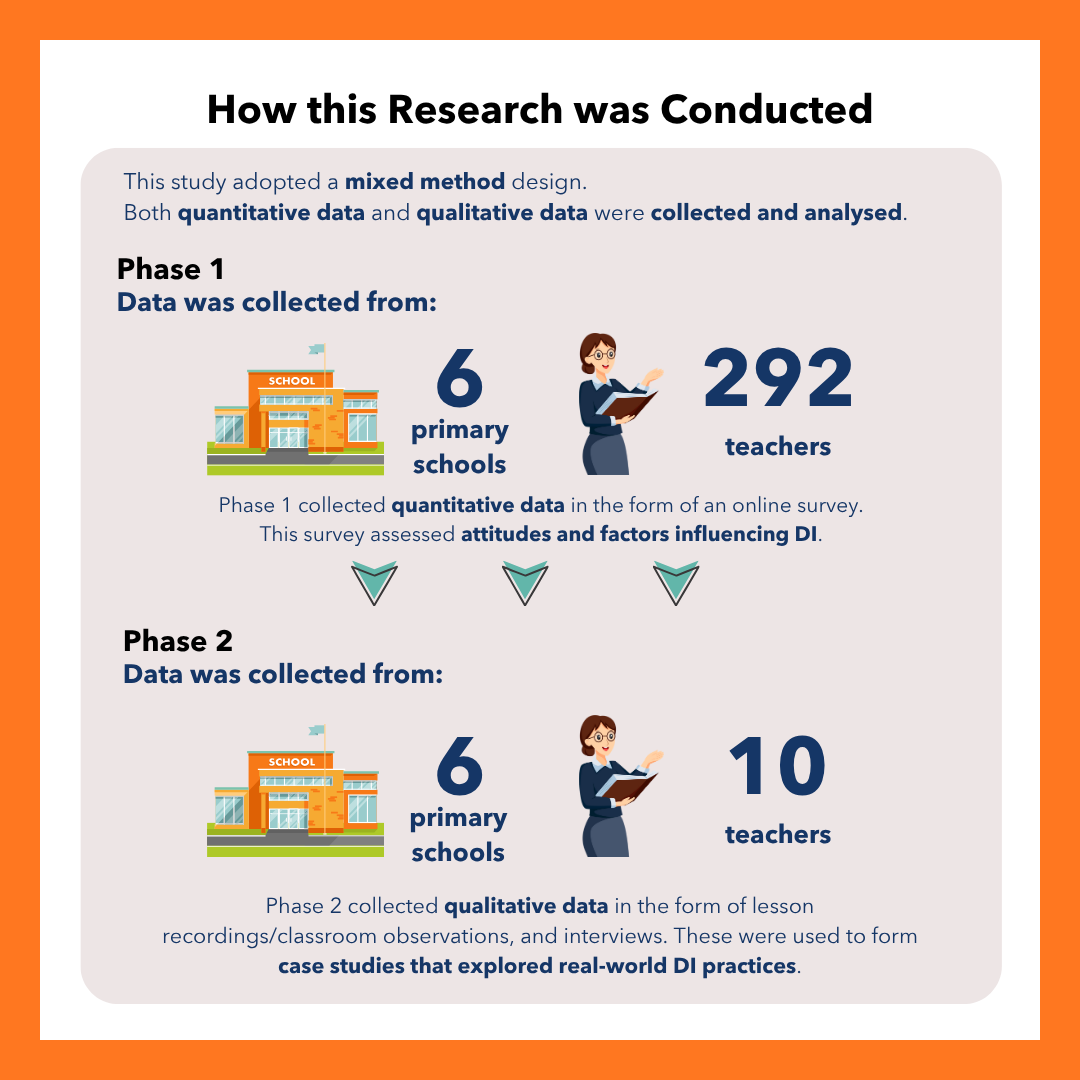
 Research Methodology
 What Does This Mean for Teaching and Learning?
 Related Links
Further Readings
For educators interested in the research behind Differentiated Instruction for Diverse Needs, you may refer to:
Research Project
Research Team
- To learn more about this research, please contact Dr Letchmi Devi d/o Ponnusamy at letchmi.p@nie.edu.sg.
Principal Investigator
- Dr Letchmi Devi d/o Ponnusamy, Assistant Dean, Professional & Leadership Development, Office of Graduate Studies and Professional Learning, and
Senior Lecturer, National Institute of Education – Psychology and Child & Human Development
Co-Principal Investigator
- Dr Thana Luxshme Thaver, Assistant Dean, Professional & Leadership Development, Office of Graduate Studies and Professional Learning, and
Senior Lecturer, National Institute of Education – Psychology and Child & Human Development
 Acknowledgement
- This study was funded by the Education Research Funding Programme, National Institute of Education, Nanyang Technological University, Singapore (project no. OER 04/21 LDP). Any opinions, findings, and conclusions or recommendations expressed in this material are those of the author(s) and do not necessarily reflect the views of the Singapore MOE and NIE.
This knowledge resource was extracted and reconstructed from the published materials from the research team by Ms Shee Yi Xuan, Katherine with input from Dr Letchmi Devi d/o Ponnusamy, Dr Thana Luxshme Thaver, and Ms Lorraine Ow and presented on 20 June 2025.