The Conversations Continue: From Research to Impact
What does it mean for education research to make a real difference in schools? That question sat […]
Read More
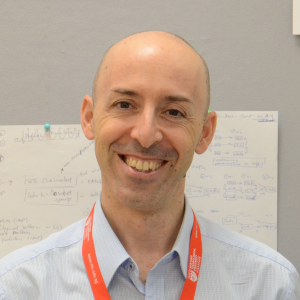
Q: Differentiated instructions are mostly talked about or researched on at the primary and secondary school level. However, at the preschool level, we can already see diverse learning styles and paces. So, how can we approach differentiated instructions at the preschool level, for example, to Math?
A: We can certainly observe diverse progression at the preschool level. Mathematically speaking, this is because children enter preschool education with different basic numeracy skills and the acquisition and development of mathematical skills follows an in-cascade pattern (basic skills supporting the understanding of more advanced skills). Indeed, heterogeneity at the preschool level is notably larger than at the formal school level because, somehow, schools serve as equalizers of the differences that children show at early stages in development. From a practical point of view, this means that classifying children into different learning styles is less problematic at the formal school level than at the preschool level. For instance, low-progress learners in formal school share similar cognitive profile and we can adapt instruction and pedagogical approaches according to that cognitive profile.
Nonetheless, heterogeneity at the preschool level responds, mainly, to different degrees of mathematical exposure at early stages in development. In other words, we cannot actually differentiate low-progress learners and suggest pedagogical approaches that take into account the cognitive profile of preschool children. At the preschool level, children are still developing an understanding of the foundations of the math skills that will be acquired over the school years.
Although we see that preschool children are widely different, there is evidence that they look more alike than we (adults) think. In his new book Face à face avec son cerveau (“Face to face with your brain”), the great neuroscientist Stanislas Dehaene dives into neuroscience evidence and underscores similarities in how young children learn.
Of course, there are diverse progressions, but all children share mathematical intuitions that support the understanding and development of math abilities. Importantly, preschool children with different numerical skills benefit from similar pedagogical approaches. Thus, efforts at the preschool level should be placed on providing all children with opportunities for numerical development that ameliorate the differences that are already observed at early stages rather than providing differentiated instruction.
Such opportunities for numerical development are clearly described in the NEL framework and include aspects such as understanding Arabic numbers, magnitudes, relations between quantities, patterns, and regularities. For children with poorer numerical skills—those with lack of numerical exposure during the early stages of development—it is crucial that connections between those aspects and the real world are made explicit.
Subscribe to our newsletter to receive the latest information about our articles and events. Email us at sgteach@nie.edu.sg for assistance.
On topics related to teaching and learning, we invite you to contribute articles that focus on the following:
We welcome contributions that explore how educators are shaping the future of learning in a rapidly changing world marked by technological advancements and global challenges.
If you have a classroom or education research story to share, we invite you to send in your contribution articles.
Submit your contribution here:
SingTeach complies with the Personal Data Protection Act 2012 of Singapore
For questions, please contact the editorial team: sgteach@nie.edu.sg