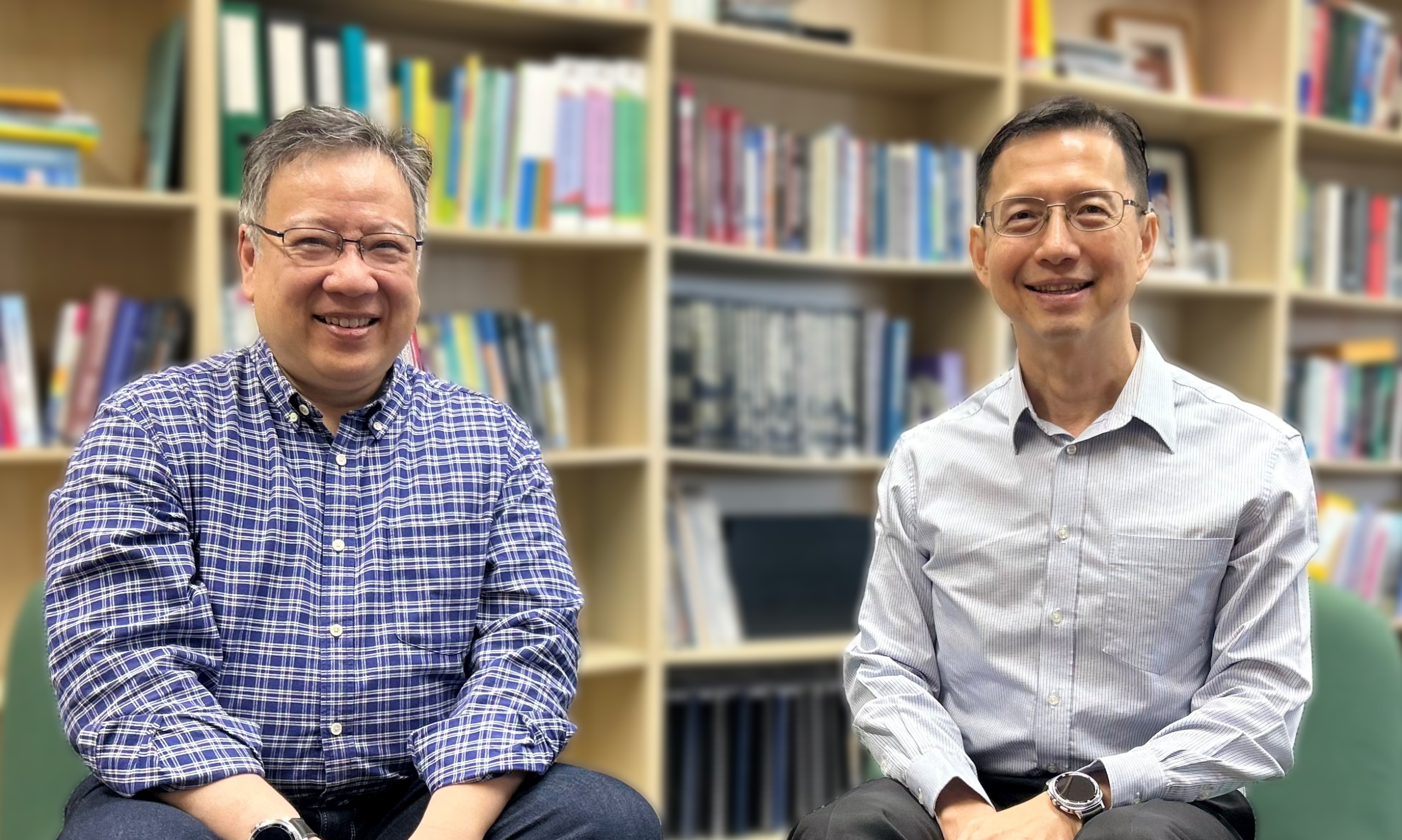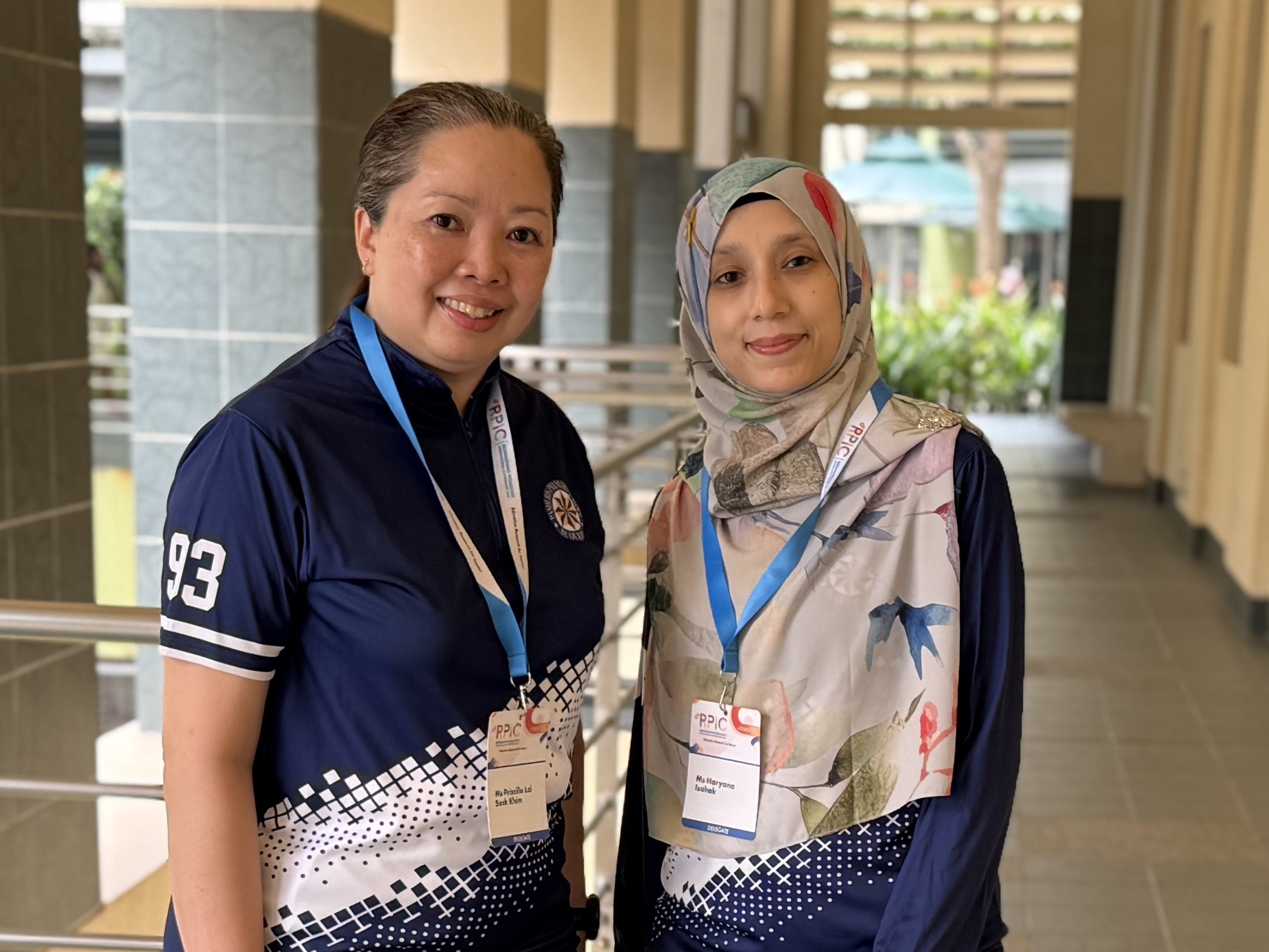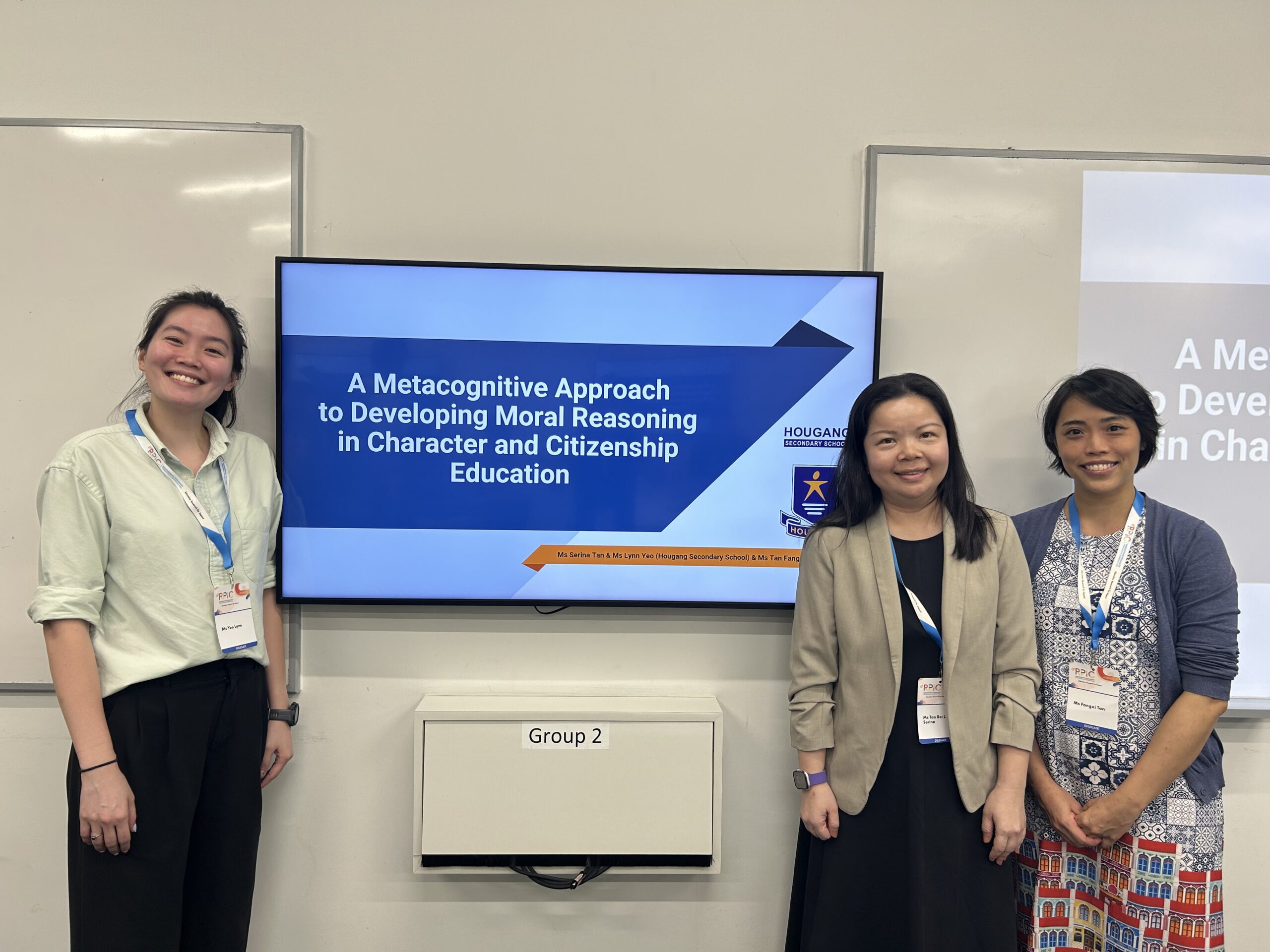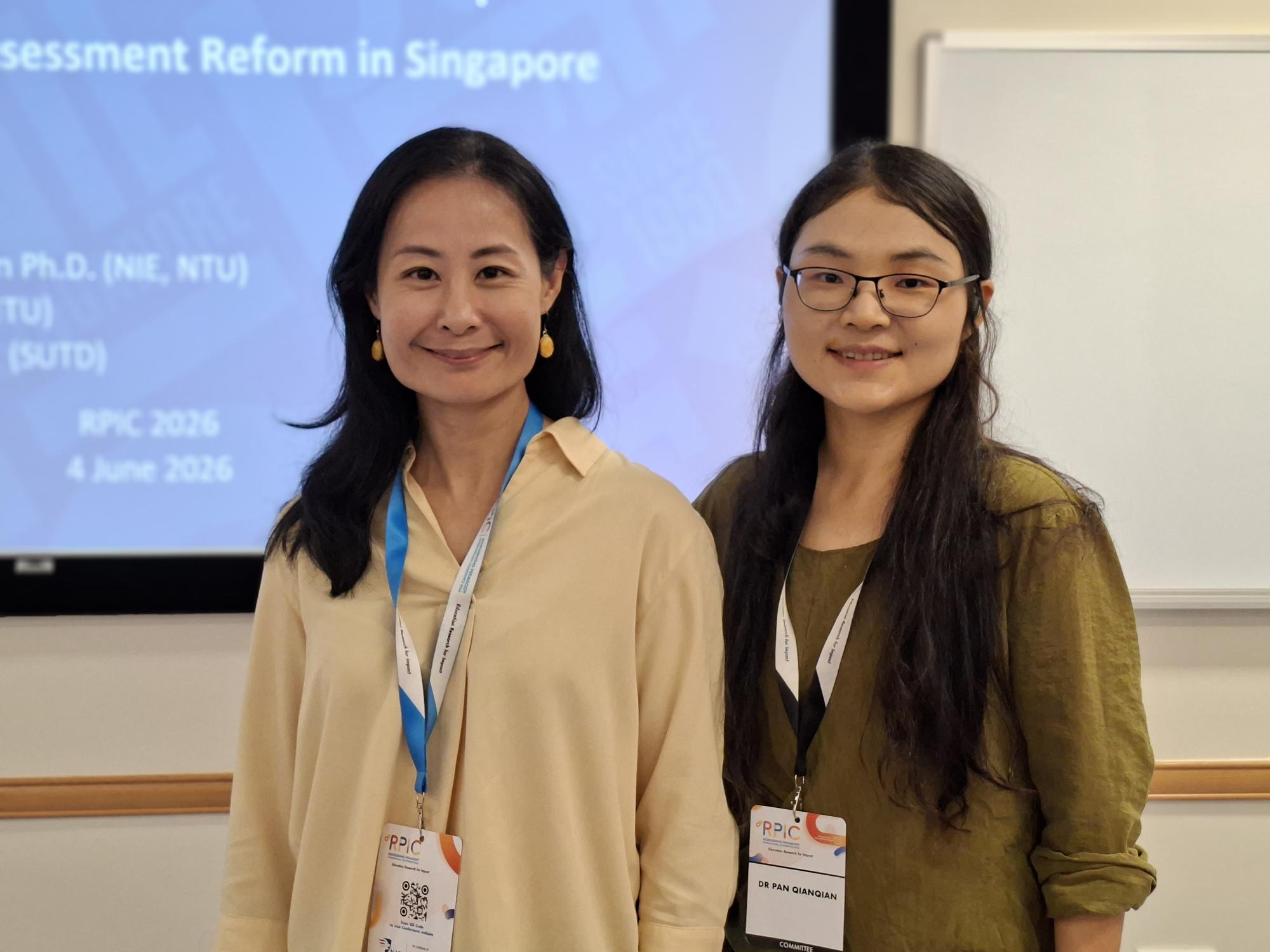
The Conversations Continue: From Research to Impact
What does it mean for education research to make a real difference in schools? That question sat […]
Read More
Primary school
Science



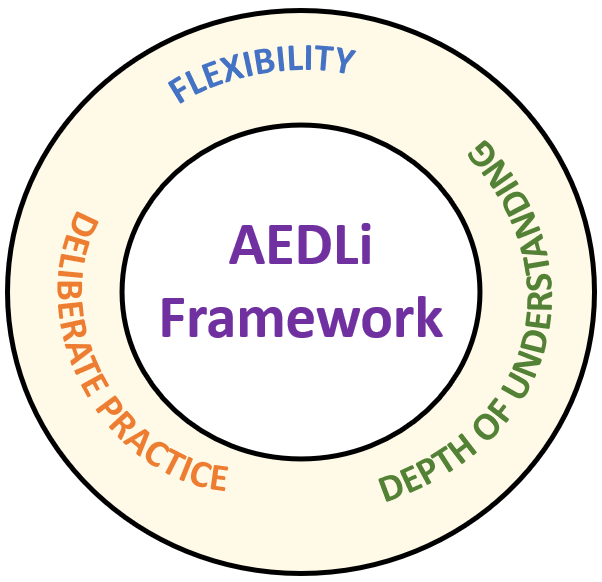
 How the Adaptive Expertise for Disciplinary Literacy Instruction (AEDLi) Framework can Help Science Teachers:
This framework:
How does it work for science teachers’ professional development (PD)?
1Adaptive expertise (AE) denotes the abilities to ‘apply knowledge effectively to novel problems or atypical cases in a domain without glossing over distinctive features or factors’ (Crawford, Schlager, Toyama, Riel, & Vahey, 2005, p.5).
 Why is the AEDLi Framework for Science Teachers Important?
Learning the language of science is important as language serves multiple functions in science classrooms:
However, the language of science has many distinctive features and can be challenging to learn. Hence, there are calls for more explicit disciplinary literacy instruction (DLi) in science classrooms.
In teaching the language of science, science teachers face numerous demands, such as knowledge about integrating language and content learning in multilingual classrooms.
An earlier project (OER 16/16 SLH) has:
The AEDLi Framework for Science Teachers was hence motivated by a drive to enhance our understanding of science teachers’ development of AE in DLi.
 How was the Research Carried out?
 Researchers first worked with teachers on improving their teacher language awareness (TLA) through different interventions, including workshops and researcher-teacher collaborative inquiries of students’ science writing.
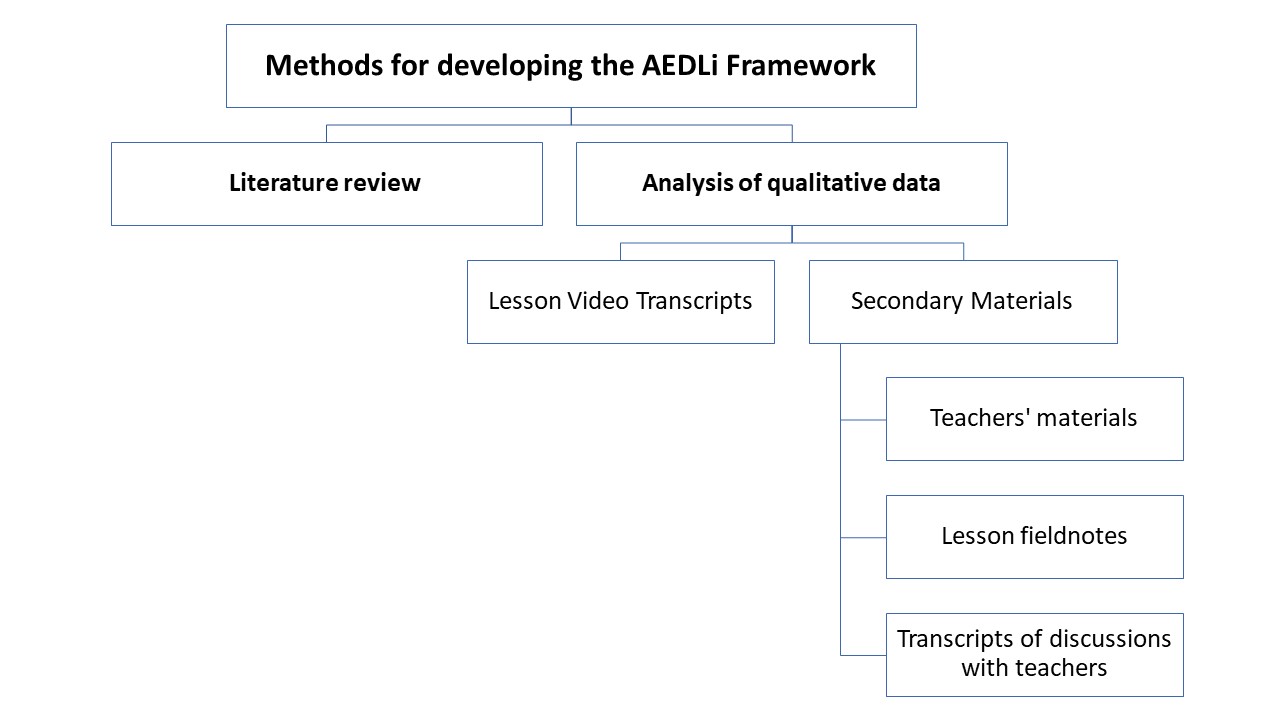
The Adaptive Expertise For Disciplinary Literacy Instruction (AEDLi) Framework was subsequently developed to guide this study using two methods:
Application of the AEDLi Framework for Science TeachersWhat can the Adaptive Expertise for Disciplinary Literacy Instruction (AEDLi) Framework be used for?
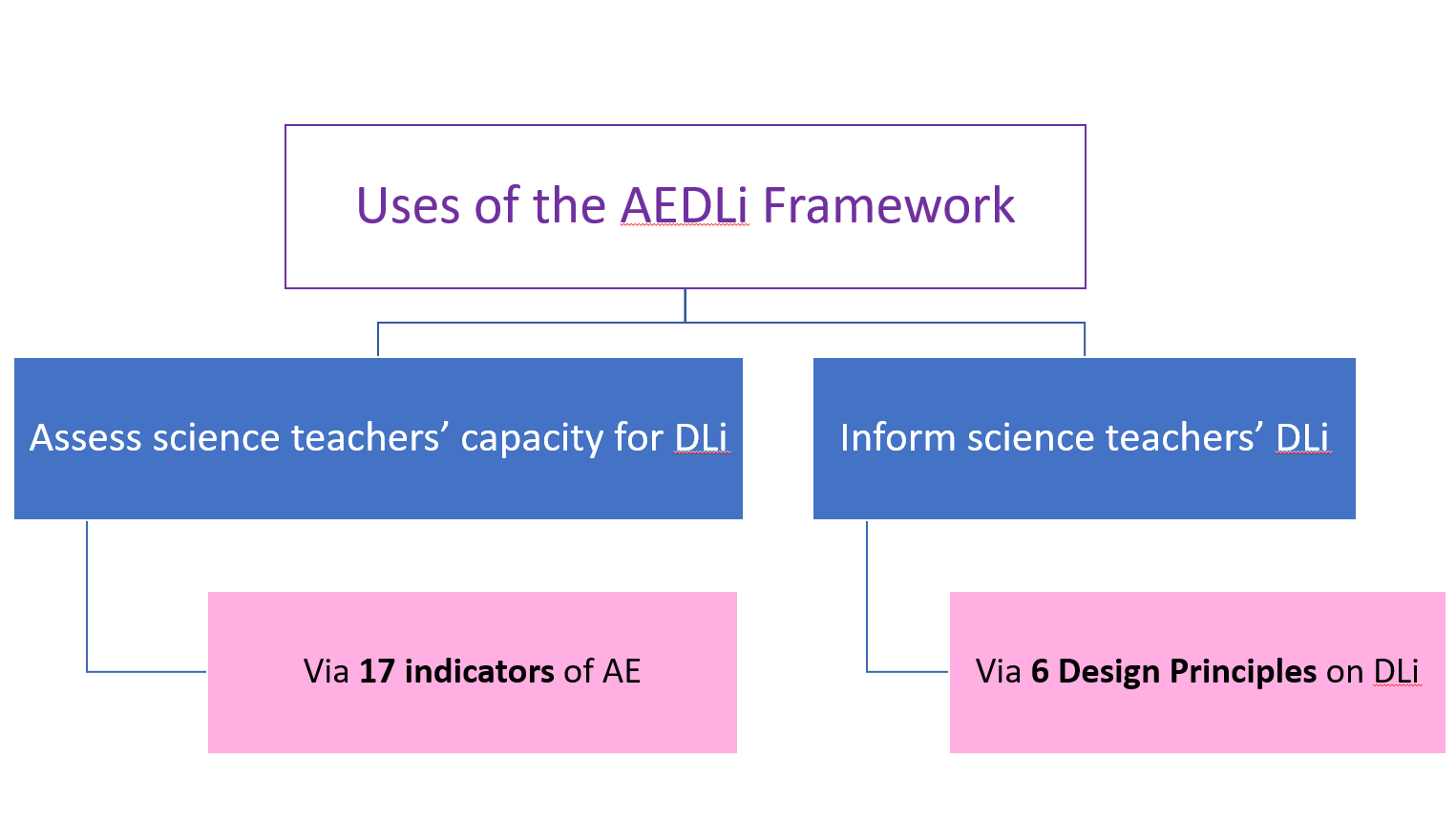
1) Assess science teachers’ capacity for DLi with 17 Indicators
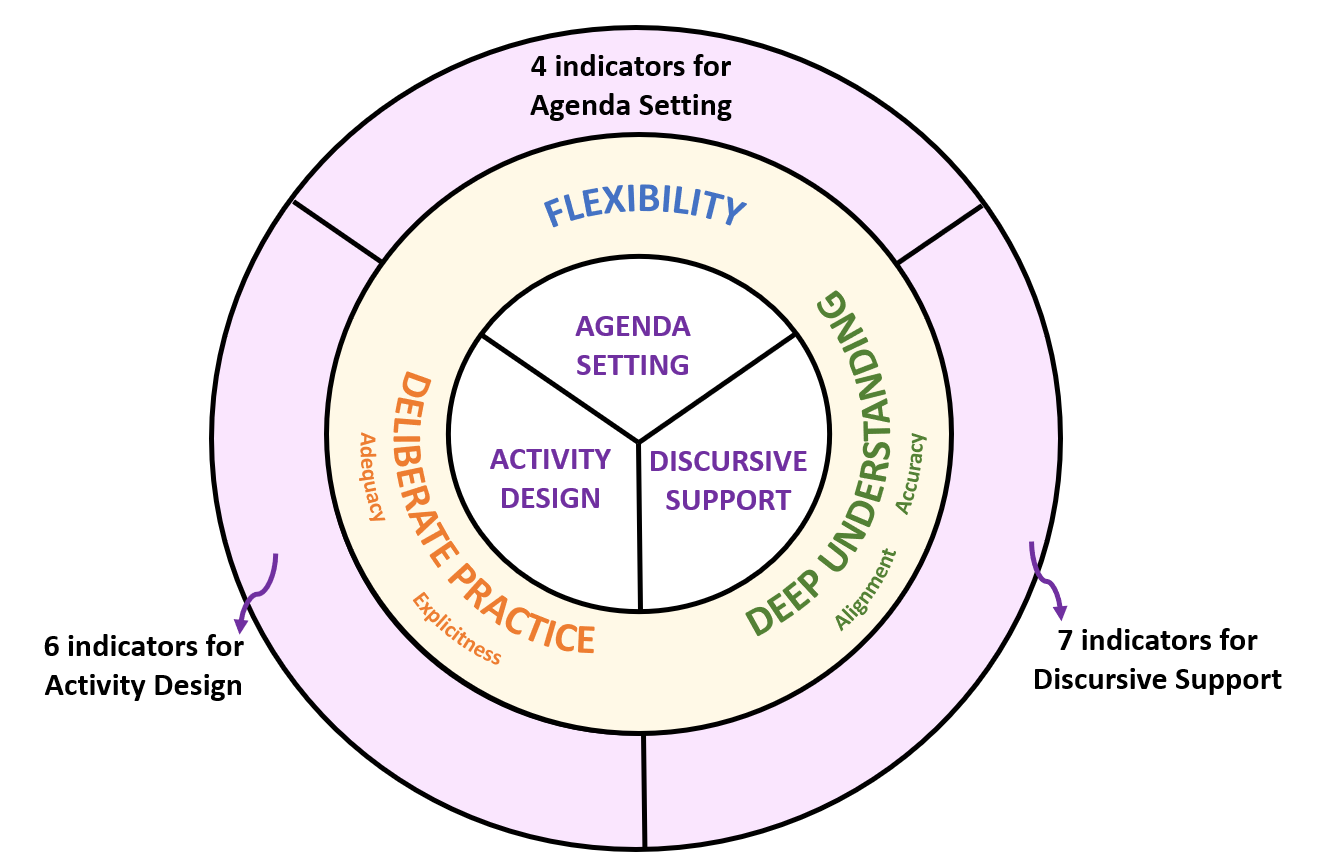
Below is a visual representation of the AEDLi framework in relation to the dimensions of AE, lesson components and 17 indicators:
(2) Inform science teachers’ DLi with 6 design principles
The 6 design principles on DLi are:
2 The fundamental literacy (F-Lit) objective is used to denote lesson objectives related to developing students’ DL. The term ‘fundamental literacy’ came from Norris & Phillips (2003), who differentiated between fundamental literacy and derived literacy. The latter refers to the knowledge of science while the former relates to the use of language in science and include literacy practices such as reading and writing.
 How can the AEDLi Framework be Used in School Practices?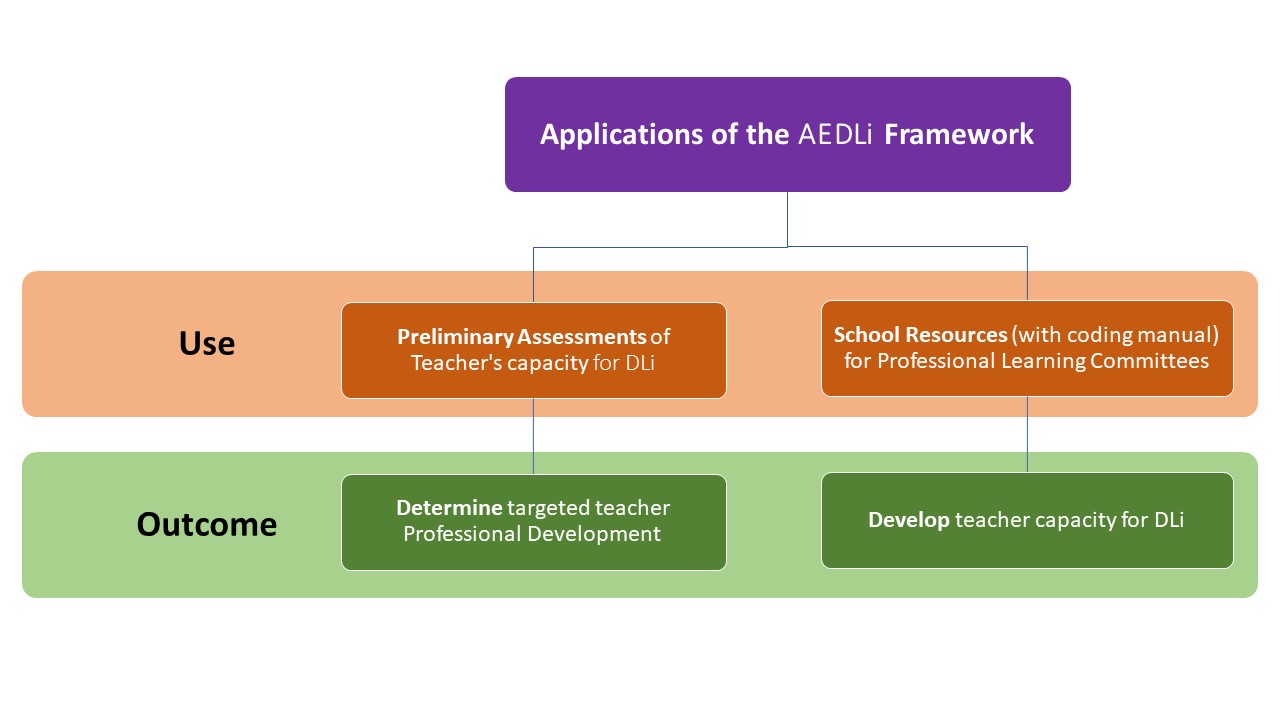
 Related Links
Related publications
 Further Readings
References (cited articles)
 Research Projects
The following projects are associated with the Adaptive Expertise for Disciplinary Literacy Instruction (AEDLi) framework for Science Teachers:
Research TeamTo learn more about this research, please contact Dr Seah Lay Hoon (former PI) at lhseah@nus.edu.sg or Dr Sun Baoqi (covering PI) at baoqi.sun@nie.edu.sg.
Principal Investigator
Dr Seah Lay Hoon, National University of Singapore (formerly of NIE)
Dr Sun Baoqi, Centre for Research in Child Development (CRCD), Office of Education Research (OER), NIE
Co-Principal Investigators
Assoc Prof Rita Elaine Silver, English Language and Literature (ELL), NIE
Assoc Prof Tan Aik Ling, Natural Sciences and Science Education (NSSE), NIE
External Collaborator
Dr Chin Tan Ying, Ministry of Education, Singapore
Research Associate
Ms Linda Tay (formerly of NIE)
Research Assistant
Mr Terence Titus Chia (formerly of NIE)
AcknowledgementsThe Adaptive Expertise for Disciplinary Literacy Instruction (AEDLi) Framework was funded by Singapore Ministry of Education (MOE) under the Education Research Funding Programme (OER 18/19 SLH) and administered by National Institute of Education (NIE), Nanyang Technological University, Singapore. Any opinions, findings, and conclusions or recommendations expressed in this material are those of the author(s) and do not necessarily reflect the views of the Singapore MOE and NIE. Consent from participants of this research were obtained based on ethics approval by NTU/NIE IRB ref: < IRB-2019-07-026>.
This knowledge resource was written by Dr Seah Lay Hoon and Ms Linda Tay with input from Mr Jared Wong and Ms Monica Lim as of 12 June 2023.