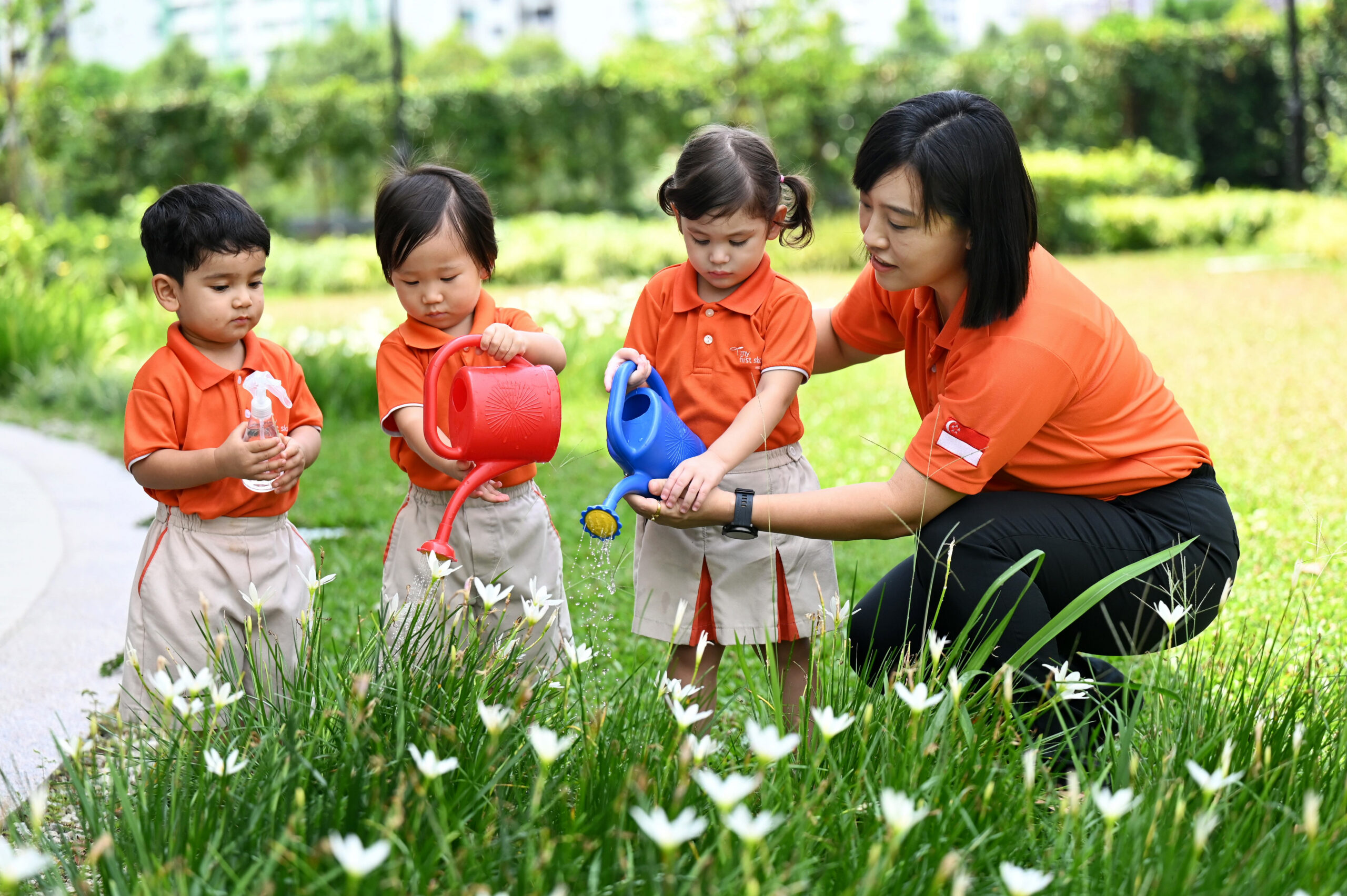
Young Children’s Voices in Mathematical Problem Solving
Contributed by Dr Ho Siew Yin and Sng Wei Qin Abbie, from NTUC First Campus, for SingTeach Virtual […]
Read More
Anglican High School took part in the 3rd Research-Practice Connection@East Zone, co-organized by the School Partnership Unit at the National Institute of Education, the Academy of Singapore Teachers and the East Zone Cluster. The engagement began with a research–practice sharing session, followed 6 months later by teachers presenting how they had applied the ideas. On 8 March 2025, the team from Anglican High School shared how learning analytics can support Knowledge Building (KB) discourse. In this article, three experienced teachers reflect on integrating KB into Chemistry and Social Studies.
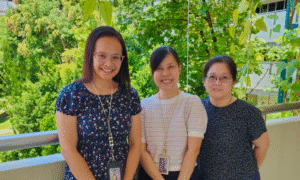
The three teachers from Anglican High School.
“For students, KB nurtures questioning, testing, refining, self-directed learning, confidence and meaningful contribution to collective understanding.”
– Audrey, on the positive impact of KB on students
I have always been drawn to pedagogies that amplify student voices. When I encountered Knowledge Building (KB), I saw how it complemented approaches I already used, such as Modelling Instruction. While Modelling engages students in scientific discourse and model construction, KB – through Knowledge Forum (KF) and principles like Idea Diversity and Rise Above – enables equitable idea development and avoids premature consensus.
Before introducing KB to students, I involved teachers as facilitators. We constructed a Knowledge Wall on “Facilitating Knowledge Building” and applied scaffolds such as “My new idea is…” and “I read and found out…” to sustain inquiry, affirming KB’s alignment with our school’s focus on enriching learning. Together with my colleague, Noriff, we designed a KB workshop for teachers, trialled it with students and refined scaffolds based on feedback.
In my Secondary 4 Chemistry class, students explored “What makes a reaction exothermic or endothermic?” They generated theories, tested ideas and connected concepts, with questions on the KB Wall guiding subsequent experiments and problem-solving tasks. In Secondary 3, students posted ideas on KF to investigate reactant mixtures, prompting peers to rethink methods and move from rote formula use to deeper reasoning.
These experiences showed me how KB empowers both teachers and students. Facilitating intentionally alongside colleagues, we developed an Anglican High School (AHS) KB starter kit. For students, KB nurtures questioning, testing, refining, self-directed learning, confidence and meaningful contribution to collective understanding.
As a teacher, I constantly seek ways to engage students and deepen learning. My journey with KB began with the goal of helping students develop E21CC and become active co-creators of knowledge. This was strengthened during the East Zone Research-Practice Connection networking session in 2025, where Audrey and Keng Wei introduced me to KB and Dr Teo Chew Lee’s idea of shared improvement. Inspired, we incorporated KB into lessons and professional development, resulting in the AHS KB Starter Kit.
KB shifted my focus from “what I teach” to “what students learn and build together.” Lessons became dynamic spaces of inquiry, where students question, critique and improve each other’s ideas. One Social Studies lesson stood out: while exploring what allows diverse societies to live harmoniously, students initially gave predictable answers. Reading each other’s posts on KF led a student to highlight that conflict is inevitable, and harmony depends on how societies manage it. This sparked rich discussions connecting ideas to real-world examples and shared values, demonstrating KB’s power to cultivate critical and collaborative thinking.
My vision is for KB to become a cornerstone of our pedagogy. I plan to dedicate time each term for students to engage on KF, fostering a culture of inquiry where learning is active, collaborative and prepares students for adaptive, problem-solving challenges in the real world.
Audrey and I attended the East Zone Research-Practice Connection sharing by Dr Teo and were inspired by how KB aligns with 21CC. We decided to embark on KB, which emphasizes co-construction of ideas and sustained inquiry, fostering richer learning, deeper thinking and student agency. Participating in KB has also strengthened my pedagogical leadership as a covering subject head, giving me new ideas to integrate KB into the curriculum and lead planning with a research-informed perspective.
Since adopting KB, I have used more open-ended tasks to help students co-construct explanations on chemical reactions. Students ask more questions, clarify peers’ ideas and build knowledge collectively. KB has also enhanced collaboration among chemistry teachers – Audrey and I regularly exchange ideas and refine lessons. This reflective practice has improved professional learning and will help anchor KB in the curriculum, supporting instructional consistency and shifting the department from content delivery to student-driven investigations.
Challenges include limited time for deep discussions and varying student readiness, as KB relies on collaboration and engagement. Nevertheless, I see these as part of the ongoing design challenge that drives continual innovation.
“Participating in KB has also strengthened my pedagogical leadership as a covering subject head, giving me new ideas to integrate KB into the curriculum and lead planning with a research-informed perspective.”
– Keng Wei, on the empowering role of KB