
Young Children’s Voices in Mathematical Problem Solving
Contributed by Dr Ho Siew Yin and Sng Wei Qin Abbie, from NTUC First Campus, for SingTeach Virtual […]
Read More
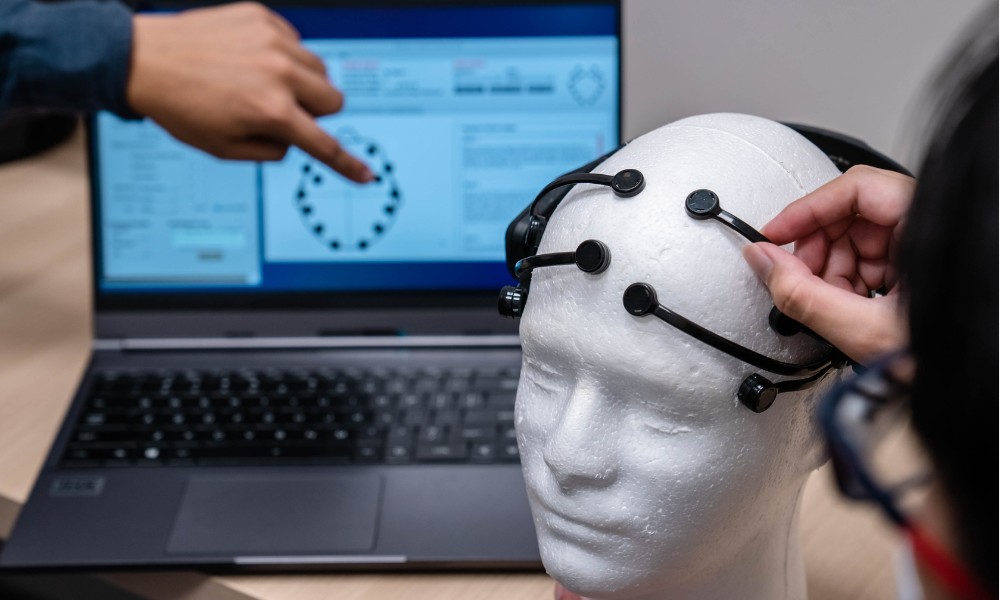
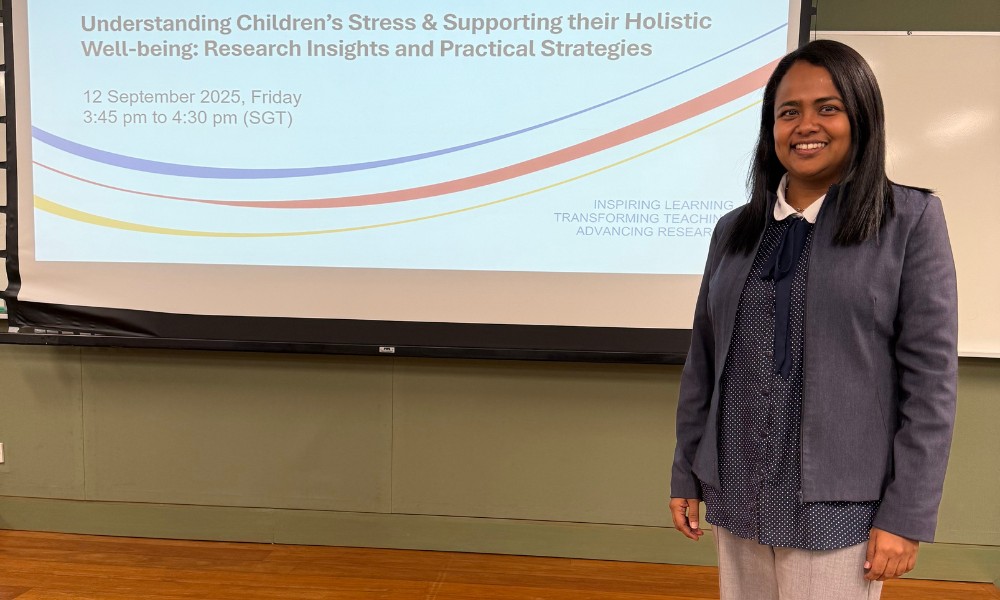
Being bilingual has positive implications for cognitive and educational development, especially in adults and children with diverse learning needs. Professor Annabel Chen, Director of the Centre for Research and Development in Learning (CRADLE) at Nanyang Technological University (NTU), explores the intersection of brain science and bilingual education, shedding light on how the brain’s remarkable neuroplasticity supports lifelong language learning. From cognitive reserve in bilingual adults to tailored interventions for children, her findings challenge misconceptions about language acquisition.

Being a clinical neuropsychologist, Professor Annabel Chen’s work primarily focuses on understanding how brain function impacts cognitive, emotional and behavioural abilities.
“Through my work using neuroimaging techniques such as functional Magnetic Resonance Imaging (fMRI), we observe that the aging brain remains remarkably plastic, meaning it retains the ability to learn and adapt,” Annabel shares.
This is called neuroplasticity; even as certain regions of the brain shrink in size (atrophy) or our thinking (cognitive processes) slow down with age, other regions of the brain network compensate – often by recruiting alternative neural networks or increasing activity in other brain areas to maintain function (Chen & Goodwill, 2022).
For example, older adults may rely more heavily on bilateral activation (using both hemispheres) compared to younger individuals who tend to show more left-lateralized language processing (Archer et al., 2016; Chen et al., 2013; Wu et al., 2014).
How do these findings impact our understanding of bilingual education? Annabel shares three key implications.
“Contrary to the myth that only children can learn languages effectively, the aging brain is capable of acquiring and using new languages,” Annabel says. Older learners may approach language differently, focusing more on meaning and context than memorization, and benefit from strategies tailored to their cognitive strengths (e.g., using stories or conversation over drills).
Longitudinal and neuroimaging research by other researchers (e.g., Bialystok et al., 2007; Perani et al., 2017) shows that bilingual individuals often show later onset of dementia symptoms, even when brain pathology is present. “This suggests that bilingual experience builds cognitive reserve – protective brain capacity that buffers against age-related decline,” Annabel explains.
For younger students, educators should recognize that supporting bilingualism does not just serve cultural or communicative goals, it also actively supports long-term cognitive resilience. For adult educators, they can consider offering beginner language classes in a community learning programme for seniors or parents in their home languages (e.g., Mandarin, Tamil, Malay). Annabel suggests using visual aids, music and interactive storytelling – techniques that align with how the aging brain best absorbs new information.
“For adult learners, learning through conversation, role-play, or storytelling is often more effective than memorising grammar rules,” she adds.
Another method is to consider promoting intergenerational learning programmes, where older adults can learn new languages with children or support children in bilingual reading. These programmes could utilize multimodal approaches which incorporate music, rhythm, storytelling or community dialogue to enhance language learning, as these tap into preserved procedural and emotional memory systems in aging brains.
As educators, we often hear that every child learns differently. But what if we could actually see those differences in the brain? Thanks to advances in neuroimaging, researchers can now observe how children with learning difficulties such as dyslexia and autism process language, and how bilingualism interacts with these processes. “These insights are helping us develop more precise, evidence-based strategies to support students who need them most,” Annabel explains.
In her recent research at NTU, she studied how children’s brains engage during language and memory tasks, especially when they are learning in more than one language. Using brain imaging techniques like fMRI, her research team examined a key brain system called the cerebro-cerebellar network, which connects areas involved in language, attention and motor coordination.
They found that this network plays an important role in verbal working memory – a foundational skill for reading and language learning. Interestingly, children with dyslexia showed differences in how strongly the parts of this network work together, compared to peers without reading difficulties (Kwok et al., 2023). “This tells us that reading challenges are not just about ‘trying harder’. They reflect real, measurable differences in how the brain is wired and functions,” Annabel notes.
In bilingual learners, these differences can be even more complex as each language they use may rely on different cognitive processes. For example, English (an alphabetic language) and Chinese (a logographic language) place different demands on memory, visual processing and phonological awareness. “This means that intervention strategies need to be script-sensitive and responsive to the learner’s overall language profile,” Annabel adds.
There’s a common concern that exposing children with learning difficulties to two languages might confuse them or slow their development. However, the evidence increasingly shows the opposite.
Studies from around the world have shown that bilingualism does not harm children with dyslexia or autism. In fact, bilingual children on the autism spectrum have been found to develop language and social skills just as well as – sometimes even better than – their monolingual peers (Hambly & Fombonne, 2012; Gilhuber, Raulston, & Galley, 2023; Vender et al., 2019;2021).
Dyslexia is associated with differences in the brain’s dorsal and ventral reading pathways, making it harder to link sounds and letters or recognize words quickly. “Bilingual learners with dyslexia may struggle even more when learning a second language with a different writing system (e.g., character-based Chinese vs alphabetic English),” Annabel explains.
However, being bilingual does not contribute to additional difficulties for dyslexia (Vender & Molani, 2021) and provided an advantage in performing better than monolingual learners with dyslexia (Vender et al., 2019). “Bilingual exposure may also enhance metalinguistic awareness – the ability to think about and manipulate language – because they are constantly switching between two systems,” Annabel shares.
Annabel’s earlier work (Bhattacharjee et al., 2020) also showed that language proficiency influences how the brain responds to interventions, even in typically developing bilingual adults. While this study did not involve children with special needs, it reinforces the idea that learning interventions, whether in the classroom or through more novel techniques like brain stimulation, are more effective when they are tailored to the learner’s linguistic and cognitive background.