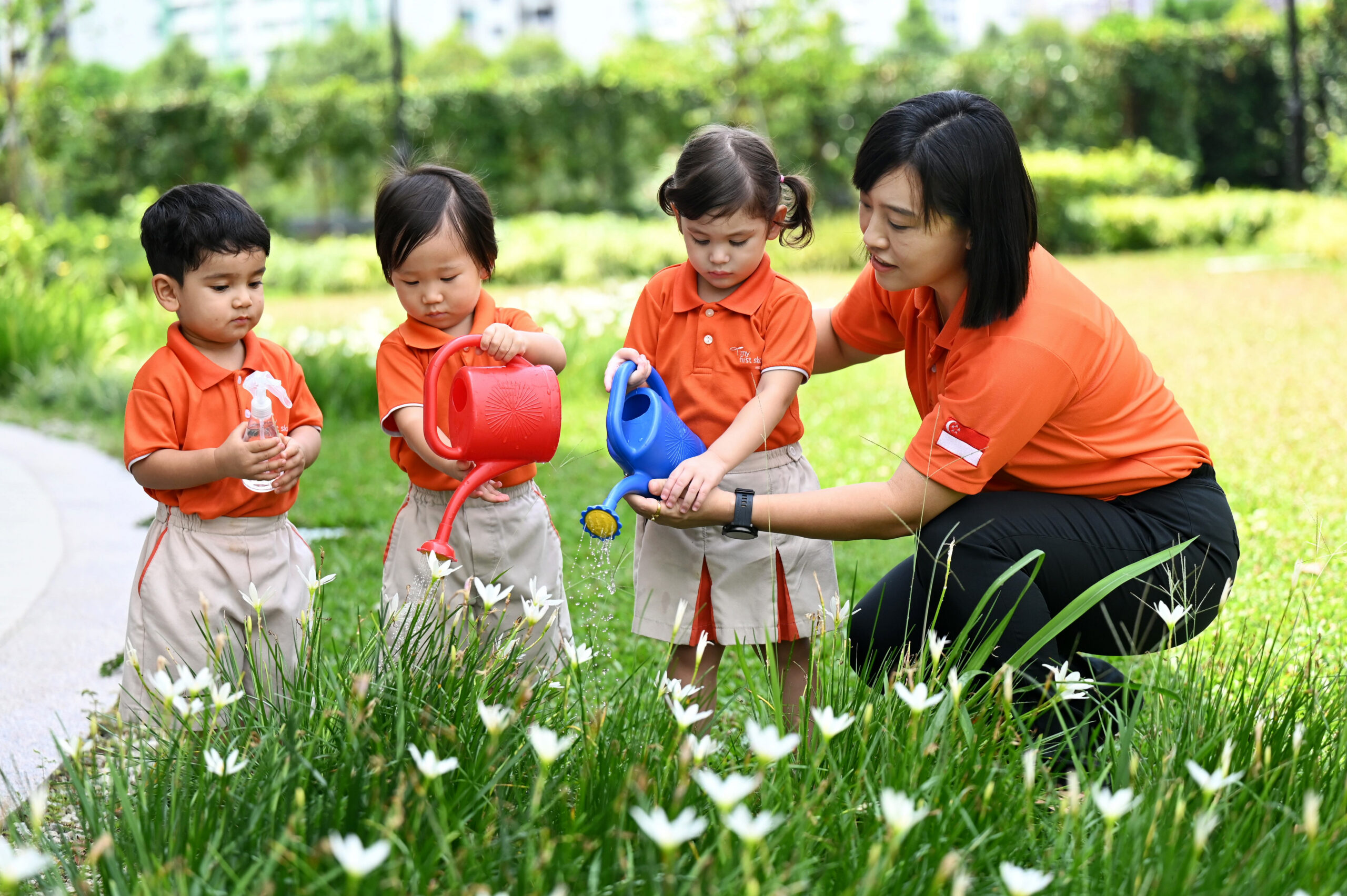
Young Children’s Voices in Mathematical Problem Solving
Contributed by Dr Ho Siew Yin and Sng Wei Qin Abbie, from NTUC First Campus, for SingTeach Virtual […]
Read More
Given the dominance of Differentiated Instruction (DI) in conversations in schools, this article gives voice to three educators working from and with the ground. Their insights shed light on the uniquely Singaporean ways in which DI has been (re)interpreted and enacted to accommodate the structures and cultures of our local context. Their sharing offers creative and practical ideas – reflecting flexibility, technological integration and sensitive balancing of group vs. individual needs – for how they have approached DI.
Ms Hairunisa D/O Syed Ibrahim, Teacher, CHIJ (Kellock)
Fitting the Pieces: DI in Singapore’s Classrooms
Singapore’s classrooms are unique – where else would we find nearly 40 students in a room, each with diverse learning needs, yet working within a structured system that values flexibility? With large class sizes, a wide range of abilities and a culture of inclusivity, I have always believed that DI is not just beneficial – it is essential.
Singapore’s students come from different backgrounds, with varying academic strengths, language proficiencies and cultural experiences. It’s a bit like a classroom full of different puzzle pieces that, when put together, make the bigger picture even more exciting. For DI to work, it must address the unique needs of each student – no two pieces are exactly the same.
Making DI Work in Singapore
Effective DI in Singapore balances structure, flexibility, peer collaboration and technology to support diverse learners. A structured yet flexible seating approach fosters both collaboration and stability. While students benefit from engaging with different peers, assigned seating remains crucial for order and peer learning. Flexible seating also allows students who need closer teacher support to be positioned accordingly.
Mixed ability grouping further enhances DI by ensuring students of varying strengths work together. Those who grasp concepts quickly deepen their understanding by explaining ideas to peers, while others receive support in a natural and encouraging setting. This approach not only enhances academic learning but also nurtures interpersonal skills, fostering a classroom environment where students actively support one another.
Classroom setup and inclusivity are key. Seating arrangements should ensure every student feels valued, regardless of background or ability. Group discussions and projects help students express ideas, challenge assumptions and build confidence. In Singapore’s multicultural classrooms, these interactions foster a supportive and inclusive environment – where students teach, learn and grow together!
Customizing learning tasks is crucial in Singapore’s classrooms, as a one-size-fits-all approach does not effectively meet the diverse needs of students. Tiered assignments help students engage with the same content at different levels. For example, in a Primary 5 Social Studies lesson on the Physical Environment of Southeast Asia, students may demonstrate their understanding in different ways – some might create an infographic on river features, others may analyse how rivers impact human settlements and economies, while a few may engage in a debate on river conservation. This ensures that all students are challenged and engaged, allowing them to express their learning in ways that align with their strengths.
Technology plays a key role in DI. Digital tools like self-paced quizzes and interactive platforms allow students to learn at their own pace, giving teachers real-time insights into progress. In Singapore’s classrooms, with large class sizes and diverse needs, this ensures targeted support and eases the teacher’s workload – because even superheroes need a little help now and then!
Towards A More Inclusive and Engaging Future
Ultimately, DI in Singapore is about providing multiple access points to learning, ensuring every student can succeed within our structured yet adaptable system. By balancing structure with flexibility, fostering peer learning and integrating technology, we can create an inclusive and engaging learning environment that meets the diverse needs of our students. And who knows? We just might discover a few more puzzle pieces that fit perfectly together.
Mr William Wong, Subject Head of 21st Century Competencies & Science Teacher, Dunman Secondary School
A Distinctly Singapore Approach to DI
We need to move beyond a narrow view of DI that reduces it to individual achievement and self-directed learning. To develop an effective model, DI in Singapore must reflect our nation’s educational strengths and cultural values; our success stems from a system of centralized long-term planning that values both personal excellence and collective responsibility. A distinct Singapore DI model would harness three strengths: communitarian values, whole-class instruction and technology-enabled personalization, to meet diverse student needs while preserving instructional coherence and collective responsibility.
Communitarian Values
Singapore’s communitarian culture emphasizes balancing individual preferences with collective responsibility. A uniquely Singaporean approach to DI should not promote isolated learning but encourage students to engage with learning from different perspectives, guided by common learning objectives. For example, in a project-based learning experience on environmental sustainability, students could take on different roles while working together to create an integrated proposal. The teacher facilitates the integration of ideas, ensuring that each student’s contribution strengthens the overall project. This reflects Singapore’s social ethos, where success is defined by both individual achievement and contributing to the common good.
Whole-Class Instruction
Whole-class instruction provides a strong foundation for differentiation, especially in Singapore’s large classrooms where instructional efficiency is important. Teacher-led instruction enables all students to develop an understanding of foundational content before engaging in complex tasks where they support one another to deepen their collective understanding.
In this approach, students engage with the same task at varying levels of complexity, with more ready students clarifying concepts for peers while those needing support benefit from collaboration. All students work toward shared learning goals, with teachers providing targeted scaffolding to ensure each student contributes meaningfully to the group’s success.
Technology-Enabled Personalization
Our state-sponsored Student Learning Space (SLS) enables personalized learning at scale which is critical in Singapore’s large classrooms. SLS allows teachers to create virtual “learning stations” with tasks tailored to students’ readiness and learning profiles. Through varied learning pathways and scaffolding, students navigate content at their own pace while working toward shared goals, empowering them to take ownership of their learning while ensuring appropriate support.
A uniquely Singaporean approach to DI balances personal growth with collective responsibility, ensuring that differentiation supports both individual success and the broader social fabric. To be true to the spirit of DI, we must have the courage to critically examine Singapore’s strengths and cultural values and be willing to forge a path different from others. Only when we ground teaching and learning in our local context will we truly be practicing differentiated instruction.
Mr Hanif Abdul Rahman, Principal Master Teacher, Physical Education and Sports Teacher Academy (PESTA)
Implementing Differentiated Instruction in PE
While we know that differentiated instruction (DI) is essential to meeting diverse student needs, implementing it in Physical Education (PE) presents unique challenges in Singapore. Large class sizes, expansive learning spaces and the need to address psychomotor, cognitive and affective development require a pragmatic yet effective approach to ensure meaningful learning for all students.
Challenges in Implementing DI in PE
Managing a class of 30 to 40 students in an open space requires strategic engagement. It is not just about managing the class but ensuring optimal learning for all students, regardless of their profiles.
PE also integrates multiple learning dimensions, from physical skills, to understanding of games concepts, and socio-emotional development, making the incorporation of DI principles and practices more complex. Students have varying abilities and confidence levels; some excel in movement while others struggle with coordination, and some collaborate well in designing movement solutions while others shy away from interactions.
The key challenge is to ensure that implementing DI enhances learning rather than merely managing the class, ultimately creating meaningful and inclusive PE experiences for all students.
The Importance of Ongoing Formative Assessment
An important enabler of DI is formative assessment. Teachers must continuously assess students’ skills, engagement and effort, while making real-time adjustments to ensure optimal challenge levels. This includes modifying task complexity, adapting equipment, and varying group compositions to scaffold learning appropriately. Engaging students in self-assessment and peer feedback further strengthens their learning. Encouraging them to reflect on their performance and support their peers fosters a growth mindset.
Practical DI Strategies in Large PE Classes
To implement DI effectively in large PE classes, Singapore PE teachers can adopt these strategies:
While implementing DI in PE presents challenges, the rewards are significant. With careful planning and intentionality, teachers can create inclusive and engaging lessons that empower all students. The joy of seeing students master skills and grow in confidence makes the effort worthwhile. With dedication and adaptability, Singapore PE teachers can shape active learners prepared for lifelong movement and well-being.
Subscribe to our newsletter to receive the latest information about our articles and events. Email us at sgteach@nie.edu.sg for assistance.
On topics related to teaching and learning, we invite you to contribute articles that focus on the following:
We welcome contributions that explore how educators are shaping the future of learning in a rapidly changing world marked by technological advancements and global challenges.
If you have a classroom or education research story to share, we invite you to send in your contribution articles.
Submit your contribution here:
SingTeach complies with the Personal Data Protection Act 2012 of Singapore
For questions, please contact the editorial team: sgteach@nie.edu.sg